 See more like this on Google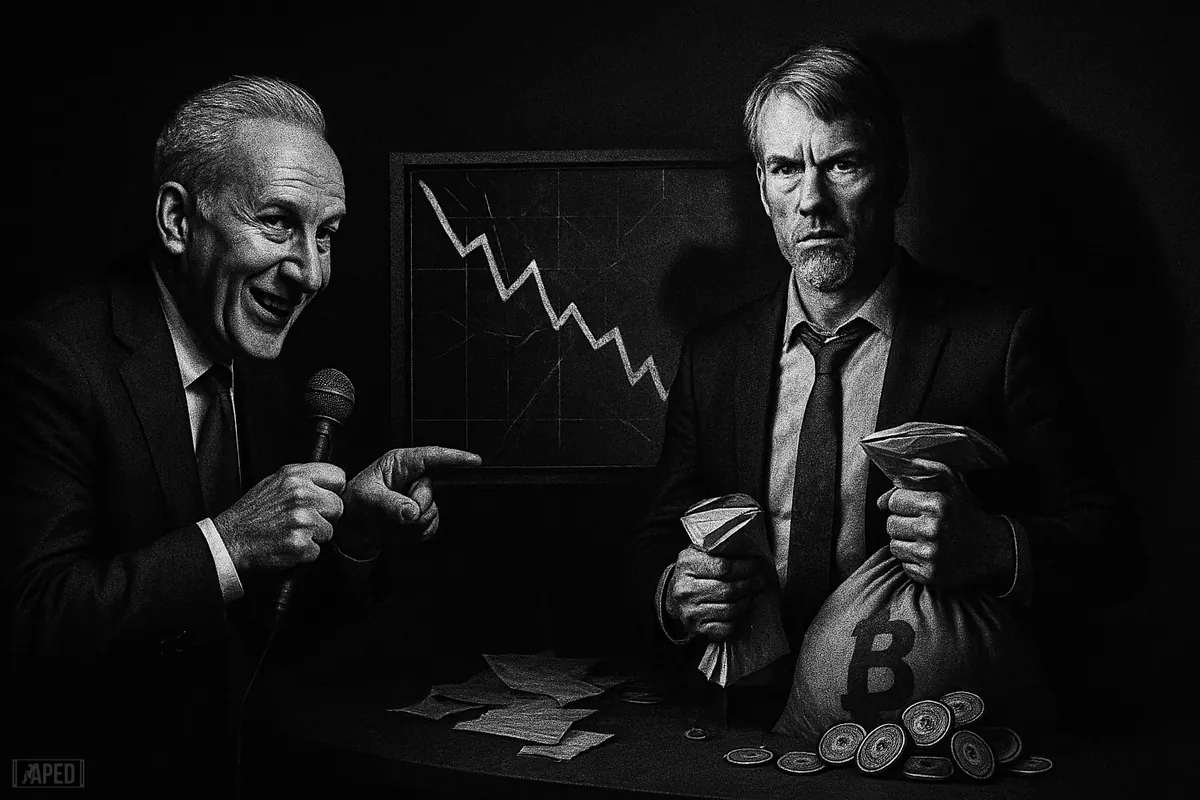
Share article
Share article
Enjoy articles without ads?
Register for free and get unlimited access to all articles.
Schiff pokes the bruise as Strategy keeps buying
That jab landed because the math is visible in real time. Strategy's stack has grown to 762,099 BTC, valued near $53.88 billion at the time of the update, with an average entry price reported around $75,699. With Bitcoin$80,660.10 trading around $71,000, the company is sitting on an estimated 6.7% paper loss on the aggregate position.
The bigger story is the $44.1 billion liquidity runway
This is why the Schiff vs Saylor back-and-forth keeps resurfacing. Schiff frames the approach as reckless exposure dressed up as conviction. Saylor frames it as an engineered accumulation vehicle designed to outlast cycles, with the corporate structure acting like a permanent bid.
If the capital pipeline stays open, the "4.5% down" quip becomes irrelevant to the Strategy playbook. If it tightens, the market starts asking tougher questions about cost of capital, dilution risk, and how much downside the balance sheet can tolerate.
What would break the bull case, and what flips it bullish again
The invalidation risk is also clean: a sustained breakdown below $71K would deepen the company's paper loss and raise the temperature on any leveraged or debt-adjacent concerns investors associate with Strategy's model, even if no near-term solvency issue is implied by the numbers cited.
Watchlist takeaway
- BTC $71,000: near-term line in the sand for narrative control.
- BTC $74,326: Strategy's latest buy price, a close back above it reduces headline pressure.
- BTC $75,699: Strategy's stated average cost, the "back in profit" psychological trigger.
- $44.1B capital runway (STRC/STRK): the real lever, if it's usable on attractive terms, Saylor can keep building. If it's constrained or expensive, Schiff's "how did you manage that?" turns from trolling into a market question.
People Referenced

Peter Schiff
American stockbroker, economist, and media commentator; CEO and Chief Global Strategist of Euro Pacific Capital and host of The Peter Schiff Show.

Michael Saylor
Michael J. Saylor is the co-founder and Executive Chairman of Strategy Inc. (formerly MicroStrategy), a BI software pioneer and prominent Bitcoin inve
