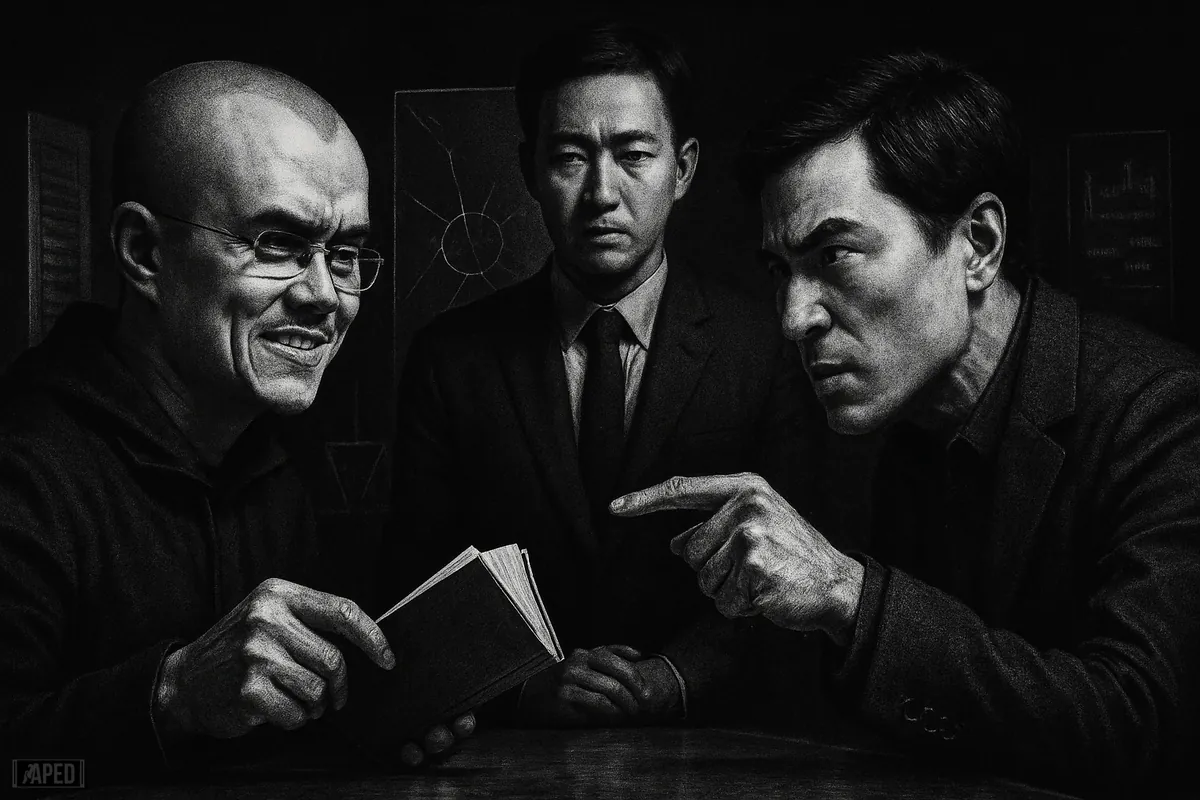
Crypto loves a comeback arc, but this week it got a reboot of an older genre: exchange-founder beef. After Binance founder Changpeng Zhao, better known as CZ, published his memoir Freedom of Money on April 8, OKX founder Star Xu jumped in with a very un-PR response, calling CZ a "habitual liar" over what he says are fresh false claims in the book. [1]
The flare-up is not about a new product launch, a token listing, or some stealth M&A whisper on CT, short for Crypto Twitter. It is about old grievances from the OKCoin era getting dragged back into public view, this time in hardcover.
Register for free and get unlimited access to all articles.
The memoir reopened a long-running dispute
At the center of the clash is CZ's retelling of his short stint at OKCoin, the predecessor brand tied to today's OKX. In the memoir, CZ reportedly revisits earlier allegations that Xu tried to undermine him and questioned his fitness as chief technology officer. He also ties Huobi founder Leon Li into the story, saying Li told him in 2025 that Xu had reported him to Chinese authorities, and that a screenshot existed to support the claim. [2]
That passage appears to have been the trigger. Xu said CZ was again spreading falsehoods after serving prison time and accused him of continuing to mislead the public. The language was unusually direct even by crypto-founder standards, where subtweets are normally preferred over full-frontal attacks. [3]
Xu says he did not want to reopen the file, but did anyway
Xu's public response framed the dispute as something he would rather leave in the past. Still, he argued that because CZ revived the issue first, he felt compelled to answer. To back his side, he shared an old YouTube video from roughly a decade ago that he says shows evidence related to contract forgery allegations. [4]
That move matters because it shifts the exchange from opinion into evidence theater, a familiar pattern in crypto spats. Founders rarely just deny claims anymore. They post screenshots, old clips, and half-archived receipts, then let CT turn it into a jury trial.
Why this rivalry still has teeth
This is not random founder sniping. CZ and Xu have history going back to 2014 and 2015, when CZ joined OKCoin as CTO and exited not long after. The fallout reportedly involved a dispute over a 10 percent equity stake and disagreements tied to the Bitcoin.com domain transaction. Those details have lingered for years as one of the industry's more durable grudges. [5]
That is why the memoir hit a nerve. It did not just mention a rival. It reopened one of early crypto's unresolved power struggles, rooted in ownership, reputation, and who gets to write the official version of events. Memoirs are branding exercises as much as recollections, and Xu clearly does not want CZ's version to harden into accepted history.
For all the noise, traders did not treat the fight as market-moving news. Binance Coin was around $600.45 at the time of reporting, down roughly 1.1 percent over 24 hours, which was broadly in line with a wider market pullback of about 1.5 percent.
That is a useful reality check. Founder drama still commands attention, but not every viral quote turns into price action. The market seems to view this one as reputation warfare, not a change to Binance's operating outlook or OKX's near-term business.
The culture angle matters too
There is a reason stories like this travel fast. Crypto still runs partly on founder mythology, and memoirs are one way that mythology gets minted. When a rival publicly rejects the narrative, the dispute becomes bigger than personal animus. It becomes a fight over legacy.
Community reaction has followed that script. Some users have treated Xu's post as overdue pushback. Others see the whole thing as two veterans relitigating ancient history for attention. Either way, the episode shows how thin the wall remains between crypto's corporate layer and its internet culture layer. In this industry, executive communications can still read like diss tracks with compliance teams standing nearby.
Why It Matters
The practical takeaway is simple: this feud is loud, but it is not yet consequential in a business sense. No fresh legal filing, operational disruption, or token-specific catalyst has emerged from the exchange.
What does matter is the signal. Crypto's biggest founders are still shaping public memory in real time, and the receipts war around those memories can influence trust even when prices barely move. Readers should watch for one thing next: whether either side escalates with verifiable documentation rather than more narrative swings. Until then, this looks less like a market event and more like legacy management, done the crypto way.
Your reviews help us improve the quality of both current and future articles. All reviews are public and visible to other readers. We use both ratings and comments to improve future articles and to revise any articles that do not meet our standards.
 See more like this on Google