See more like this on Google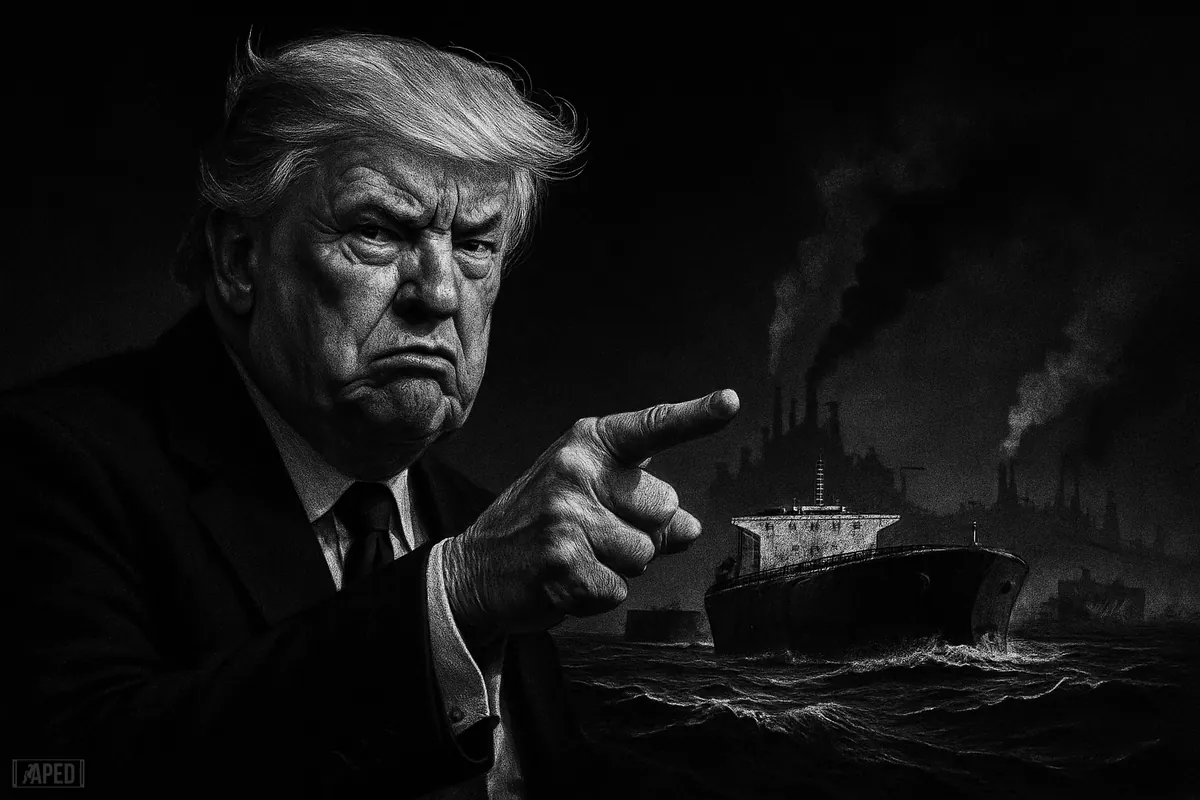
Share article
Share article
That move matters well beyond commodities desks. Hormuz is one of the world's key oil chokepoints, and with shipping still heavily restricted, traders are now pricing not just disruption but the risk of a deeper military escalation. [2]
Enjoy articles without ads?
Register for free and get unlimited access to all articles.
The immediate catalyst
Trump's latest social media post was blunt even by his standards. He warned Iran to reopen the strait by Tuesday and said the alternative would be "Power Plant Day, and Bridge Day," an explicit threat to target infrastructure if Tehran refuses. [3]
Markets did not need much time to react. During early Asian trading on Monday, Brent crude traded above $111 a barrel, while West Texas Intermediate hovered around $112. The source reporting varies slightly on intraday highs, but the direction is clear enough: oil has broken above the psychologically important $110 mark and is now trading at its highest level since March. [4]
Why Hormuz is the whole story
Another key signal is the shape of the futures curve. Brent's prompt spread has widened beyond $10 a barrel in backwardation, meaning near-term oil is trading at a hefty premium to later deliveries. In plain English, the market is screaming that supply available right now is far more valuable than supply promised later. That spread is now wider than peaks seen during the early shock after Russia's 2022 invasion of Ukraine.
OPEC+ added barrels, but the market shrugged
OPEC+ did approve a 206,000 barrel-per-day output increase for May over the weekend. Under normal conditions, that would at least cool some of the headline risk. This time, it looked more like box-ticking than a proper supply answer.
The problem is simple: quotas are not the same as deliverable barrels. Some producers are constrained by the conflict itself, and Persian Gulf export routes remain impaired by Iranian restrictions. Russian exports have also faced fresh disruption after Ukrainian drone strikes hit a Baltic Sea export terminal, removing another source of confidence from the supply picture.
So while OPEC+ can announce more output on paper, traders are focused on what can physically move. Right now, that remains a bit of a mess.
Physical markets are flashing harder than futures
One of the more important details in this story is how much more violent the physical market response has been than the benchmark move implies. Dated Brent above $140 is not just a scary headline, it suggests refiners and end buyers are scrambling for cargoes they can actually secure and insure. [4]
That scramble is now spilling into alternative supply routes. Buyers are reportedly bidding more aggressively for crude from outside the Gulf, including barrels tied to the US Gulf Coast and other Atlantic Basin suppliers. When that happens, the squeeze broadens. It stops being a regional disruption and starts dragging in global replacement demand.
Shipping behaviour is also telling. Iran has reportedly allowed limited passage for vessels from countries it considers friendly, and Iraq has received some exemption from the restrictions. Even so, carriers remain wary. Legal permission and commercial willingness are not the same thing, especially when insurers, crews, and shipowners are all reassessing risk by the hour. [6]
The macro hit is already landing
That creates a nasty policy mix. Central banks already have enough on their plate, and a fresh energy shock complicates any path toward easier monetary conditions. If oil stays elevated, consumers get squeezed, transport costs rise, and margins narrow across sectors that have nothing to do with drilling or tankers.
Diplomacy looks thin, and that is the risk premium
Iran has reportedly told mediators it will not meet US officials in Islamabad, and ceasefire efforts remain stalled. Oman has discussed possible ways to restore shipping flows, but there is no evidence yet of a breakthrough strong enough to calm the market. [7]
Why it matters
The cleanest read is this: oil above $110 is not just a reaction to one inflammatory post, it is the market assigning a bigger probability to prolonged disruption at the world's most important crude chokepoint.
For now, the market is treating diplomacy as noise and deliverable barrels as king. Hard to argue with that, even if the tape already looks overheated.