 See more like this on Google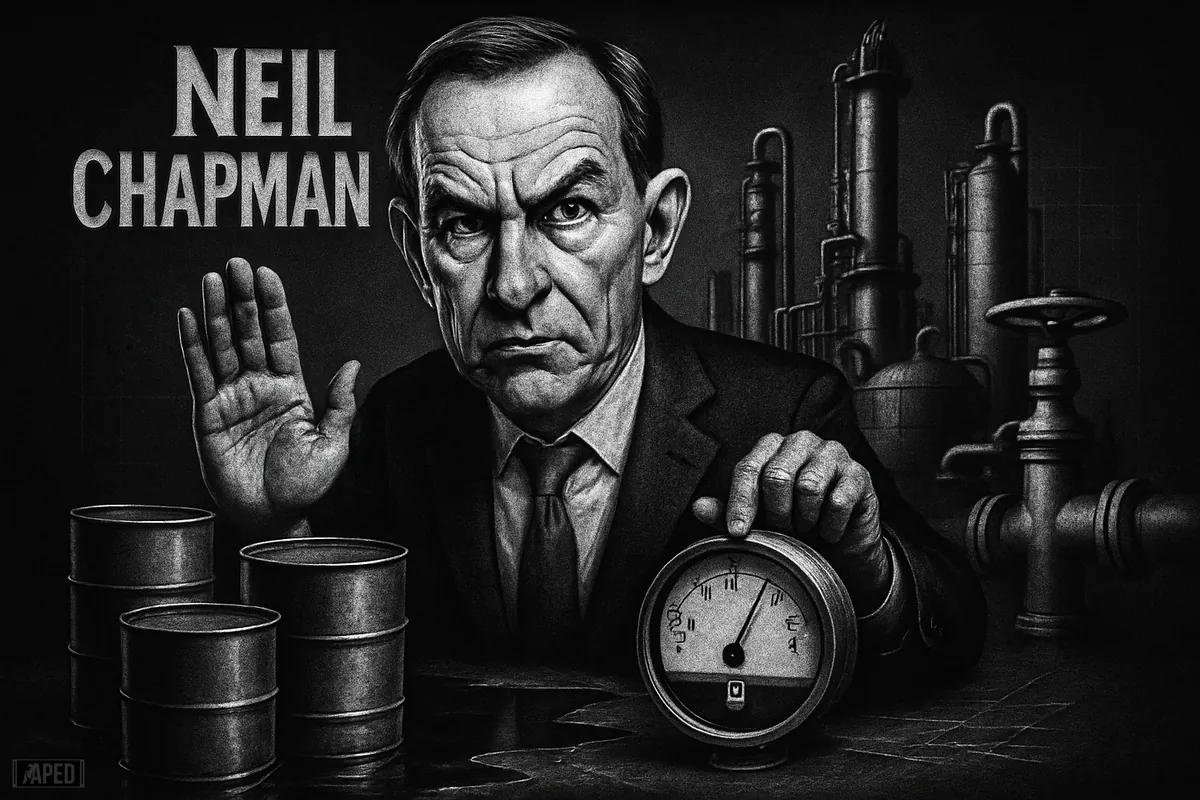
Share article
Share article
Enjoy articles without ads?
Register for free and get unlimited access to all articles.
Exxon's warning is really about inventories, not just headlines
Oil traders love a geopolitical flashpoint, but Chapman's message was more specific than "things look tense." His focus was inventories, the actual barrels sitting in storage that help smooth out disruptions. When those buffers get too thin, the market loses its shock absorbers. Prices can then move sharply because buyers are competing for immediate supply, not just betting on future risk.
That distinction matters. A market can survive scary headlines if tanks are full. It struggles when supply is already being drawn down and there is little spare cover left. Exxon's view is that the system is moving into that second category.
The Strait of Hormuz disruption is amplifying an already thin market
The latest pressure point is the Strait of Hormuz, the narrow shipping corridor that handles a significant share of global oil flows. According to the source material, disruption tied to Tehran's closure of the chokepoint has cut off about one fifth of world oil movements, with cumulative supply losses potentially exceeding 1 billion barrels by the end of the month. [1]
Why official stockpile data may look better than reality
Commercial inventories are the barrels private buyers, refiners, and logistics players rely on in day-to-day operations. If those tanks and pipelines are thinning faster than the topline suggests, the market is more fragile than many casual observers realize.
This is the part where the spreadsheet matters a little. A buffer supported by emergency reserves is not the same as a healthy commercial market. Once strategic releases slow or stop, the underlying tightness gets exposed very quickly.
The $150 to $160 Brent call is aggressive, but not random
A Brent move to $150 or $160 a barrel would be a major shock, but Exxon is not floating that range for vibes. The logic is simple: when inventories get critically low, physical buyers start bidding against one another for prompt barrels. That can push prices materially above levels justified by normal supply-demand balance.
Markets have seen versions of this before, though not always with the exact same trigger. The lesson is that low inventory environments leave very little room for policy mistakes, shipping disruptions, or producer underperformance.
Investors are already repositioning
The source notes that energy investors have started rotating toward oil-linked names as supply visibility worsens. That tracks with a classic market response: when crude fundamentals tighten, producers and related energy equities often attract fresh attention before the full commodity move plays out. [5]
Still, this is not a clean "up only" trade. Oil stocks can benefit from higher prices, but sharp spikes also raise the odds of demand destruction, political intervention, or a sudden diplomatic breakthrough that cools the market. Anyone treating the sector like a guaranteed mint should probably log off and touch some grass.
Why crypto traders should care, even if they do not trade oil
The Bigger Picture
Exxon's warning boils down to a simple but uncomfortable message: the market is not just nervous, it may be under-buffered. Inventories have already been drawn down heavily, Hormuz disruption is compounding the strain, and strategic reserve support cannot hide commercial weakness forever.
For readers, the practical takeaway is to watch three things: whether shipping disruptions ease, whether official inventory draws continue at the current pace, and whether governments lean harder on emergency stockpiles. If those do not improve soon, the $150 Brent scenario stops sounding like a hot take and starts looking like a live risk.