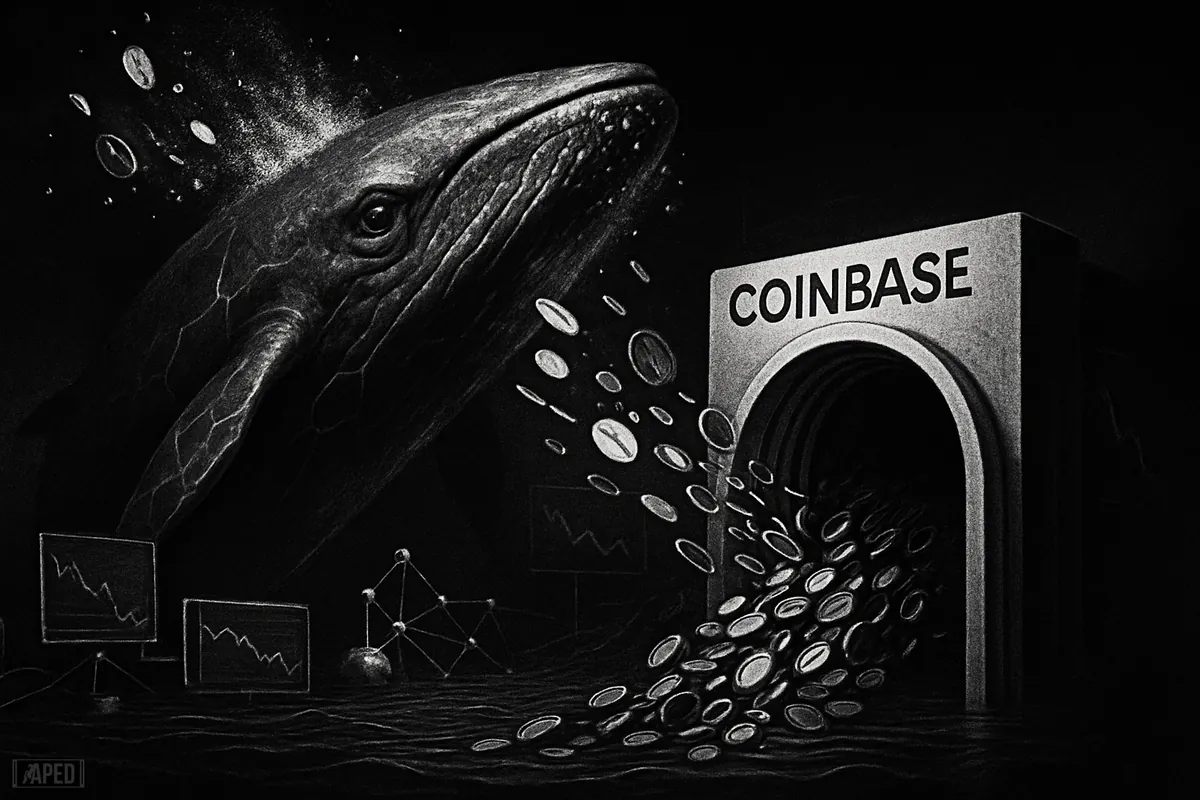
Ethereum$2,366.44 just got a reminder that old coins still matter. A dormant ICO-era whale has moved 15,000 ETH to Coinbase, a transfer worth roughly $31 million at the time of the move, and traders are treating it as a possible sell signal rather than harmless wallet shuffling. [1]
The transfer was flagged earlier this week by on-chain tracker The Data Nerd, which linked the wallet to an early Ethereum$2,366.44 participant that had been inactive for about two years. Exchange deposits do not guarantee a sale, but when size like this lands on Coinbase instead of a fresh self-custody address, the market usually assumes distribution is at least on the table. [2]
Register for free and get unlimited access to all articles.
What the wallet data suggests
According to the tracking data, the whale originally accumulated around 17,400 ETH at an average cost near $11.60 per coin, reportedly during Ethereum$2,366.44's early trading period around the ICO era. On that basis, the 15,000 ETH now sent to Coinbase would have cost roughly $174,000 back then. [3]
At current pricing, that stack has swelled into more than $30 million. Even for crypto, that is a proper return, and it explains why traders watch these old wallets so closely. Early holders tend to have an unusually low cost basis, which means they can sell into weakness or strength without worrying too much about local price noise.
The timing matters because ETH has already been under pressure. The source material notes Ethereum was down about 8.9% over the previous seven days, which means the whale move landed into an already shaky tape rather than a euphoric breakout. [4]
That combination often spooks the market more than the raw transfer size itself. A large dormant holder waking up during volatility can feed a simple narrative: smart money may be rotating out, or at least reducing exposure. Sometimes that read is wrong, but narratives move price in crypto almost as much as confirmed sales do.
There is also a liquidity angle. $31 million is not existential for Ethereum, one of the deepest crypto markets, but it is still large enough to matter on a short time frame if sold aggressively. If the coins are worked through spot order books in chunks, the effect could be muted. If they are dumped into a thin session, traders will notice quickly.
Dormancy breaks are usually more signal than noise
Wallets that have sat still for years carry psychological weight. They represent supply the market has mentally filed away as inactive. Once that supply starts moving, traders reassess assumptions about how much "real" overhang exists.
That said, not every exchange deposit becomes a full exit. Whales move funds to centralised venues for several reasons: selling, collateral management, OTC routing, or simply consolidating holdings. Without follow-through data showing fills, the cleanest conclusion is narrower: a historically significant holder has made 15,000 ETH liquid and sale-ready. [5]
The next tell is whether the whale sends the remaining ETH, whether Coinbase-linked outflows suggest internal reshuffling, and whether ETH sees unusual spot selling around the same window. If the market absorbs the transfer without a deeper breakdown, the move may end up being more headline than damage.
If ETH starts losing key support while more old wallets wake up, the story changes fast. One whale is manageable. A cluster of long-dormant holders heading for exchanges is a different beast.
Risk box
The bearish read is straightforward: dormant supply is re-entering the market during a weak stretch for ETH. The invalidation is equally clear: if there is no visible follow-on selling and Ethereum stabilises despite the deposit, this looks more like treasury management than a proper exit. In crypto, coins hitting an exchange are a warning, not a verdict.
Your reviews help us improve the quality of both current and future articles. All reviews are public and visible to other readers. We use both ratings and comments to improve future articles and to revise any articles that do not meet our standards.
 See more like this on Google