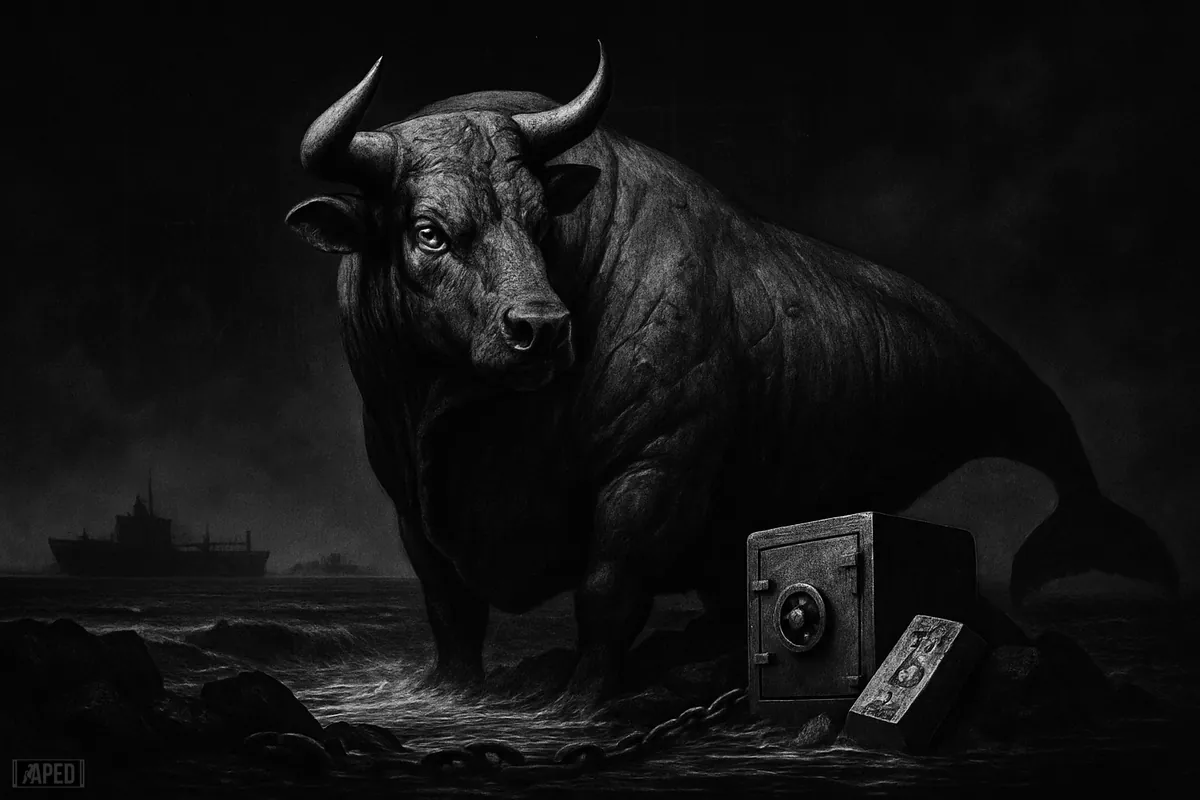
Bitcoin$81,659.35 is being stress-tested again, this time against the Hormuz crisis and the old "digital gold" pitch. The key question is simple: when geopolitics turns messy, does BTC trade like a risk asset, or does it finally start acting like a hedge? [1]
Price action so far suggests a partial decoupling narrative is emerging, but it is nowhere near settled. Bitcoin$81,659.35 held around $70,618 in the source snapshot, up on the day, even as the market weighed renewed concerns around the Strait of Hormuz, one of the world's most important oil chokepoints. That matters because a genuine disruption there would not just hit energy markets, it would tighten global risk conditions fast. [2]
Enjoy articles without ads?
Register for free and get unlimited access to all articles.
What the market is actually testing
The Hormuz angle is not really about regional headlines alone. It is a live test of whether Bitcoin can absorb macro fear without instantly trading like levered tech. For years, BTC has been marketed as "digital gold", but in actual panic windows it has often behaved more like a high-beta liquidity vehicle, sold alongside equities when traders rush for cash. [3]
This episode looks a bit different. Bitcoin has shown resilience while traditional safe-haven logic has become less clean than usual. Gold has not delivered a straight line higher in every recent risk-off pocket, and that has reopened the argument that BTC may be carving out a separate lane, especially with institutional participation now much deeper than in prior cycles. [4]
Why the decoupling narrative has traction
There are a few reasons traders are taking the idea seriously rather than treating it as another CT slogan.
First, Bitcoin's market structure is more mature. Spot access is broader, large holders are more visible on-chain, and liquidity is less dependent on offshore leverage than it was in earlier cycles. That does not make BTC safe, but it does mean reactions can be less chaotic than the old days.
Second, the macro setup is more supportive of hard-asset narratives. A Hormuz-related supply shock would likely feed inflation fears through oil. That is exactly the sort of backdrop where scarce, non-sovereign assets get a proper look from capital hunting insulation from fiat and policy mess. [5]
Third, Bitcoin's pitch has shifted from pure speculation to portfolio tool. That shift is still incomplete, and plenty of flows remain mercenary, but the investor base is broader than it was when every headline sent the market into a leverage wipeout.
Anyone declaring full decoupling already is getting ahead of themselves. One decent spell of resilience does not rewrite Bitcoin's history.
BTC still trades 24/7, still attracts speculative capital first, and still tends to react violently when liquidity conditions tighten. If the Hormuz crisis were to escalate into a broader global deleveraging event, there is every chance Bitcoin gets sold with everything else in the first leg down. That has been the pattern before: correlation breaks only after forced selling clears. [6]
There is also a timing issue. Gold's role as a safe haven is built over decades of behaviour across multiple crises. Bitcoin is still trying to prove it can hold that line consistently, not just for a few sessions while sentiment is mixed.
What to watch next
The cleanest signal is not one green day. It is how Bitcoin behaves relative to three things: oil, gold and equities.
If oil spikes on fresh disruption fears, equities wobble, and Bitcoin remains firm or grinds higher, the decoupling thesis gets stronger. If BTC starts tracking Nasdaq-style risk instead, then the digital gold narrative slips back into marketing copy.
Traders should also watch whether flows are happening in spot rather than just perp futures. A move driven by real buying is healthier than one inflated by hot money and positive funding. Without that distinction, a supposed safe-haven rotation can turn into a thin, dodgy squeeze.
Bitcoin does not need to replace gold to benefit from this moment. It only needs to show that, under geopolitical stress, it can behave differently from conventional risk assets often enough to earn a place in the hedge conversation.
That is the real shift under debate. The Hormuz crisis has not conclusively crowned BTC as digital gold, but it has put the thesis back on the table with more credibility than usual. [7]
Risk box
This move gets invalidated if geopolitical stress deepens and Bitcoin immediately re-correlates with equities in a broad risk-off flush. If BTC cannot hold up when the macro tape turns properly ugly, the decoupling story remains just that, a story.
Your reviews help us improve the quality of both current and future articles. All reviews are public and visible to other readers. We use both ratings and comments to improve future articles and to revise any articles that do not meet our standards.
 See more like this on Google