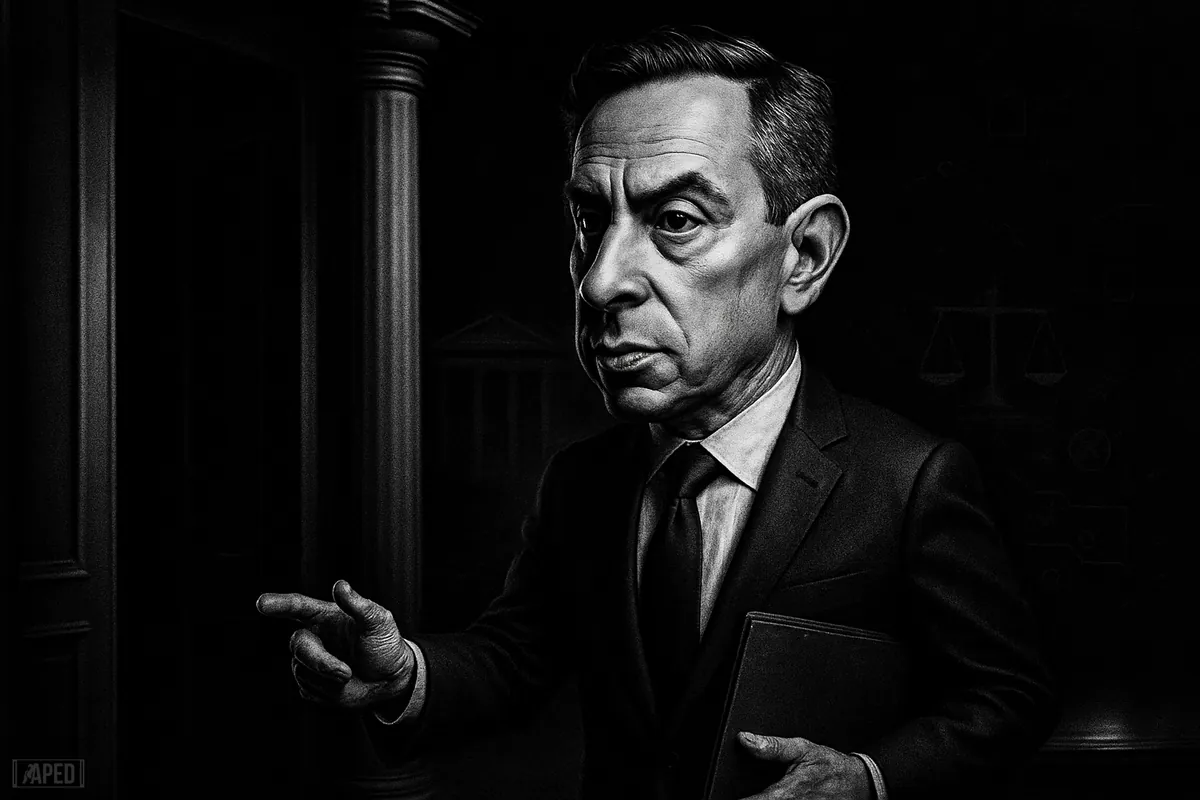
The personnel shuffle is real, but the market shrugged. David Sacks is out of his White House "AI and crypto czar" lane and into a broader tech policy seat, which matters more for the shape of Washington's agenda than for any immediate token tape.
David Sacks has ended his stint as the White House's point man on artificial intelligence and digital assets and joined the administration's technology council, according to reports citing the transition. The move shifts him from a title built around two politically hot sectors into a wider advisory role on tech policy. [1]
That is not the same thing as Sacks exiting the policy arena. If anything, it suggests the administration wants him involved across a broader set of issues rather than ring-fenced inside crypto and AI. Research tied to the announcement points to Sacks being named a co-chair or senior member of a new advisory structure focused on technology, placing him closer to strategic coordination than day-to-day sector evangelism. [2][3]
Register for free and get unlimited access to all articles.
What changes, and what does not
For crypto traders, the key point is straightforward: this is a Washington staffing story, not a market structure event. There was no accompanying executive order, no fresh enforcement framework, no tax update, and no indication of a new federal crypto package landing alongside the personnel change.
That matters because crypto tends to front-run vibes and then discover there is no actual catalyst underneath. A named advocate moving seats inside the White House can help shape tone, access and priorities, but it does not on its own alter how the SEC, CFTC, Treasury or Congress behave. Those institutions still determine the bits that bite.
Sacks has long been seen as one of the more industry-friendly voices in orbit around the administration, particularly on innovation, venture capital and lighter-touch regulation. His presence on a technology council could keep crypto in the room during broader debates over AI infrastructure, data policy, payments, national competitiveness and startup formation. It could also dilute the singular focus he had under the czar-style title. Both readings are live. [4]
The significance here is bureaucratic, which is not sexy but is usually where the real game is. White House councils can influence agenda-setting, interagency coordination and which issues get elevated to the president's desk. If Sacks now has a seat in a body covering tech more broadly, crypto may benefit from being framed as part of US innovation strategy rather than as a standalone political headache.
There is a catch. Broader tech councils also have more competing priorities. Semiconductor supply chains, AI safety, cloud infrastructure, cyber defence and antitrust all have larger political weight than token market plumbing. Crypto may gain a more stable advocate, but it also risks becoming one item on a very crowded docket.
That makes this move mildly constructive for the industry's access in Washington, but not obviously bullish in policy terms until there is evidence of follow-through. Traders looking for an instant "Sacks premium" are probably trading headlines, not substance.
Market impact has been limited
Nothing in the available reporting suggests a direct price reaction tied specifically to Sacks' move. Broader crypto markets were already trading softer, with majors in the red in the source material, and there is no clear sign that positioning, funding or open interest shifted because of this personnel change. [5]
That is the correct read, frankly. Staff reshuffles can matter over months, especially if they change who drafts memos, convenes agencies and frames policy choices. They rarely matter over the next four-hour candle unless paired with an actual rule change or a major political signal.
On-chain, there is no obvious flow pattern to attribute here either. This is not an ETF headline, a whale transfer story or a liquidity shock. It is a governance narrative, and those trade slowly.
Crypto has a bad habit of treating personnel as policy. Sometimes that works, often it does not. The risk here is assuming Sacks' move means the White House is either downgrading crypto by scrapping the czar framing or upgrading it by integrating it into the main tech agenda. Both claims may be overstated.
Titles inside government are often less important than proximity, process and remit. If Sacks retains influence over interagency discussion, the move may prove positive. If his portfolio broadens so much that crypto becomes peripheral, the industry loses a dedicated internal champion. At this stage, the reporting supports the first possibility more than the second, but only just. [6]
What to watch next
Formal remit: Watch for the White House to spell out the technology council's mandate and Sacks' exact role within it.
Replacement question: Check whether the administration appoints a new dedicated AI and crypto lead, or leaves those functions folded into the broader council.
Policy output: The signal that matters is not the title change, but whether it produces memos, executive actions, agency coordination or legislative pressure.
Agency tone: Monitor language from the SEC, CFTC and Treasury for any shift in posture over the next few weeks.
Market reaction: Ignore knee-jerk social chatter unless it shows up in real positioning data, flows or liquidity. For now, this is a Beltway story, not a tradable breakout.
Your reviews help us improve the quality of both current and future articles. All reviews are public and visible to other readers. We use both ratings and comments to improve future articles and to revise any articles that do not meet our standards.
 See more like this on Google