 See more like this on Google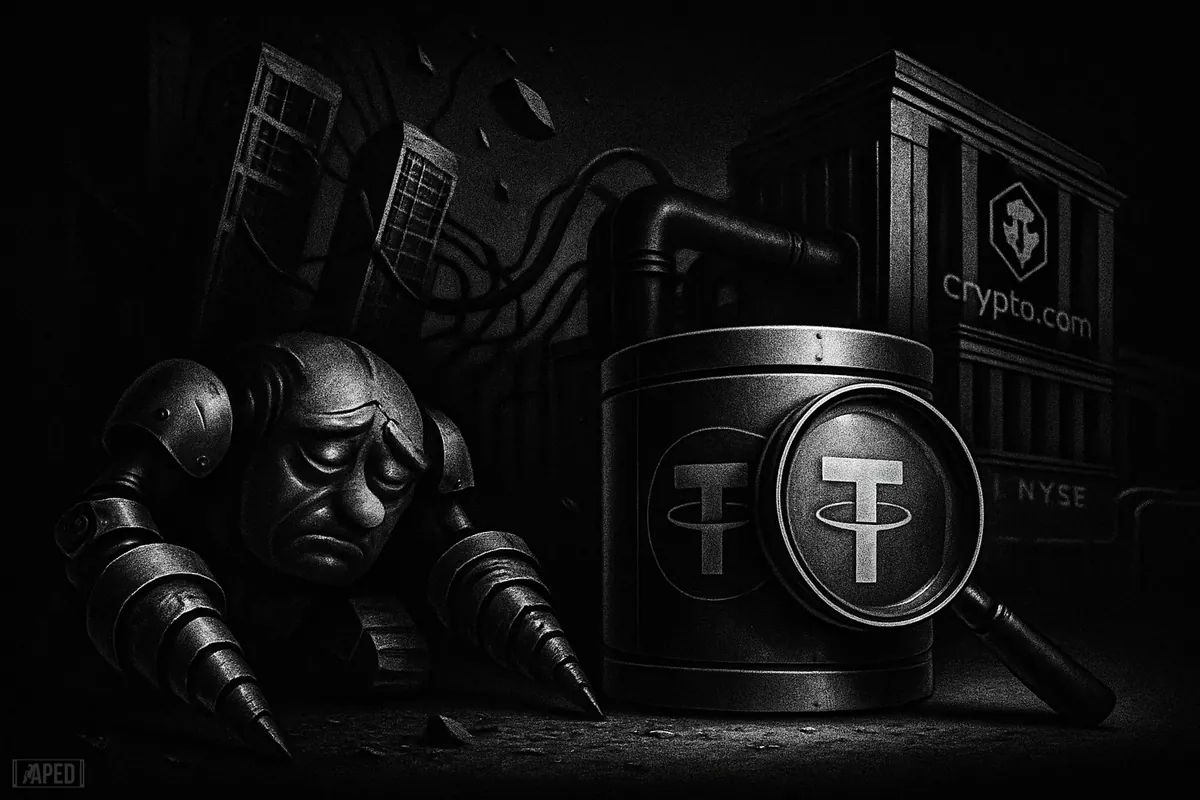
Share article
Share article
Intelligence Brief
72
Crypto.com Snapshot: Mining Pivots to AI, NYSE Expands ETF Options, Strategy Mulls $44B BTC Play
Crypto.com's latest market snapshot highlights four major developments: Bitcoin$80,659.13 mining difficulty drops 7.8% as operations shift toward AI, the NYSE expands options trading parity for crypto ETFs with traditional assets, MicroStrategy explores a $44B Bitcoin$80,659.13 acquisition, and Tether$0.999021 undergoes its first comprehensive audit of its $184B USDT reserve.
Mar 27 14:30
Crypto.com's latest market roundup lands with a familiar crypto contradiction: one sector is cutting costs hard enough to drag Bitcoin$80,659.13 mining difficulty down 7.8%, while another is busy pitching bigger ETF pipes, bigger treasury bets, and finally, maybe, a proper Tether$0.999021 audit. Growth story, meet stress test.
The company's Friday post flagged four developments from its "Snapshot Issue 251," each pointing to a different pressure point in the market. The headline figure was Bitcoin mining difficulty falling 7.8%, which Crypto.com tied to firms redirecting capital and infrastructure toward AI operations. That matters because mining difficulty adjusts to the amount of computing power securing Bitcoin$80,659.13. A drop of that size usually signals miners are unplugging machines, either because margins are weak, energy costs are too high, or better returns exist elsewhere. Right now, AI appears to be one of those alternatives. [1]
Two of the substantive replies picked up on that implication directly. One user argued the decline suggests "miners are bleeding," while another said the shift raises concerns about Bitcoin security being "quietly diluted." That overstates the immediate risk, but not the direction of travel. Difficulty reductions do not mean Bitcoin is suddenly insecure, they mean the network is adapting to lower hash rate. Still, if high-performance data center capacity keeps migrating from mining to AI, it would reinforce a broader trend: industrial crypto infrastructure is no longer captive to crypto.
Crypto.com's second item covered the NYSE lifting ETF position limits so options tied to spot Bitcoin and Ether products align more closely with gold and silver. That is a market structure story, not a slogan. Higher position caps can make it easier for institutional traders to hedge, warehouse risk, and run larger strategies around crypto ETFs without hitting outdated limits. If the change sticks and liquidity follows, it could deepen derivatives activity around regulated crypto exposure rather than around offshore venues. [2]
The third point bundled two treasury stories together: Strategy pursuing a $44 billion Bitcoin plan, and BitMine expanding what Crypto.com described as a $10 billion Ethereum$2,370.22 stash. Both fit the same corporate balance sheet playbook, just with different assets. Public and private firms are increasingly treating BTC and ETH as treasury reserve assets or strategic holdings, betting that capital markets will reward crypto exposure when packaged inside an operating company. That model has worked in some windows and punished late entrants in others. Either way, it keeps concentrating large token positions in a small set of corporate hands. [1]
The final item was the most politically sensitive: Tether undergoing what Crypto.com called the first full audit of its $184 billion USDT reserve. For years, Tether's reserve reporting has sat at the center of stablecoin credibility debates, with attestations providing snapshots rather than the kind of full-scale audit critics wanted. If this process produces a comprehensive, independently verified view of reserve composition, liabilities, and controls, it could shift the conversation meaningfully. If it falls short, expect the same argument to continue with bigger numbers attached. [3]
One reply questioned whether Tether would pass at all. It was speculative rather than evidentiary, but it reflects the market's core point of tension: USDT is systemically important enough that reserve transparency is no longer a niche accounting issue. It is a market infrastructure issue.
Enjoy articles without ads?
Register for free and get unlimited access to all articles.
Takeaways
Crypto.com's post was a digest, not a revelation, but the combination is telling. Bitcoin mining is under economic pressure. Regulated crypto derivatives are getting more room to grow. Corporate treasury accumulation is scaling up. Stablecoin scrutiny is not going away.
What to watch next
Watch Bitcoin hash rate and miner treasury disclosures for signs that the AI pivot is more than a temporary margin trade. Watch whether expanded ETF options limits actually translate into higher open interest and tighter spreads. Watch the details of any Tether audit release, especially the auditor, scope, reserve breakdown, and treatment of liabilities. Crypto loves headline numbers. The footnotes usually do the real work.
Companies Referenced





Tags
Original tweet
