Bitcoin$83,363.22 did not get a fresh macro shock on October 21, and that usually means the market goes back to arguing about structure, narratives, and where risk actually lives. Today's flow was light on headline-heavy catalysts and heavier on meta: security models, chain design, and the kind of debate that tends to matter more when price is waiting for its next reason to move. The practical read is simple. No major reset in trend, no obvious panic, but plenty of signal about what builders and long-term allocators still care about.
Enjoy articles without ads?
Register for free and get unlimited access to all articles.
Market Mood
Trading sentiment looked broadly neutral through the day, with no dominant risk-on or risk-off impulse in the story set. That matters because a flat headline environment often pushes attention toward second-order narratives: protocol design, infrastructure resilience, and the quality of assumptions sitting underneath the biggest assets. When traders are not being forced to react, they start picking apart the plumbing.
That is where today landed. The conversation was less about a coin "sending" and more about which architecture holds up better when the next wave of complexity arrives, especially if AI agents become more active participants in financial systems. It is not the sort of story that instantly nukes shorts or squeezes bears, but it can shape capital rotation over time.
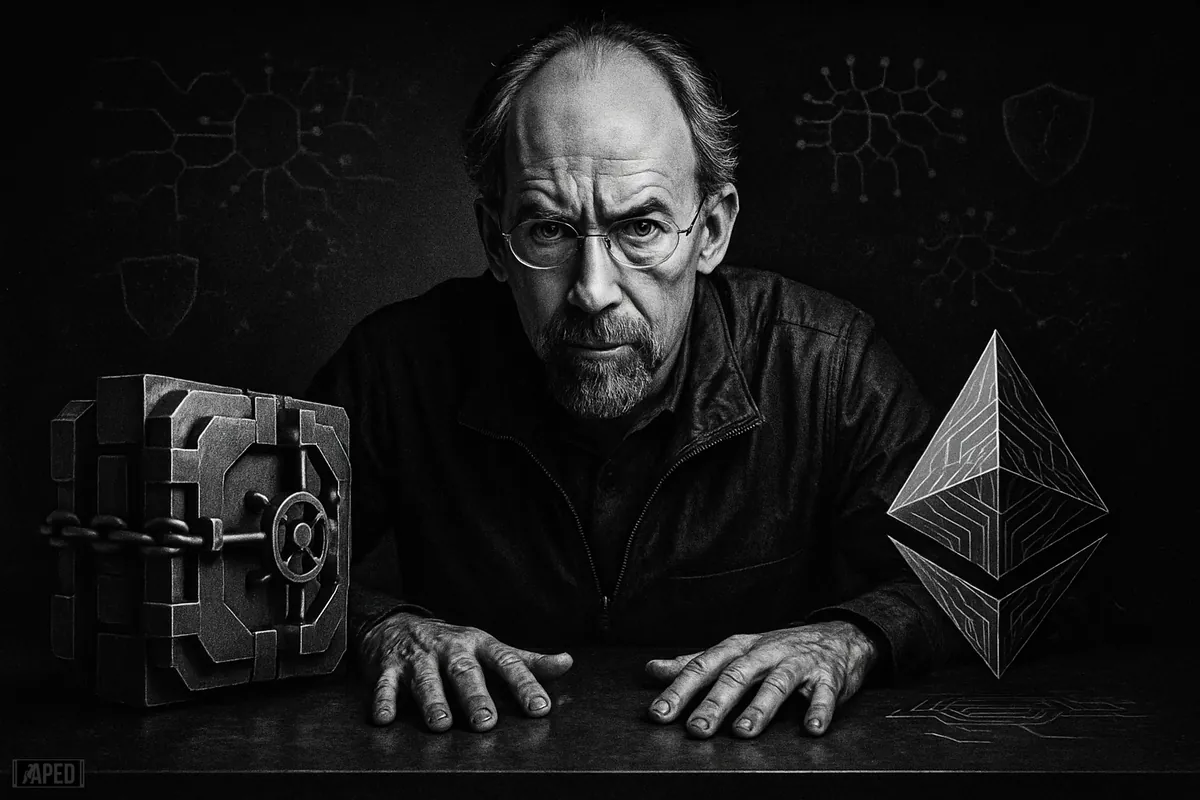
Adam Back pushes the Bitcoin versus Ethereum design debate back to center stage
The clearest thread feeding into today's discourse came from the prior cycle of reporting around Adam Back's comments on Bitcoin$83,363.22 and Ethereum$2,449.97 design tradeoffs. Back revived a familiar argument, but with a timely twist: AI security risk. His core point tied system safety to architecture, specifically the difference between Bitcoin's UTXO model and Ethereum's account-based model. [1]
That framing matters because it moves the debate away from culture-war talking points and toward operational risk. If AI agents are increasingly used to manage wallets, route payments, or interact with smart contracts, then the structure of the underlying ledger becomes a live security issue, not just a theoretical one. Back's suggestion was that UTXO-based systems offer cleaner containment and more predictable transaction boundaries, while account-based systems may expose broader attack surfaces as automation gets smarter and faster. [1]
AI has been bolted onto almost every crypto narrative at some point, but security is one area where the overlap is not fluff. Automated agents do not get tired, but they also do not "hesitate" before making catastrophic mistakes if permissions are broad and logic is flawed. In that context, the distinction between spending discrete outputs and updating shared account state becomes more than design philosophy.
For market participants, this does not instantly rewrite L1 valuations. Ethereum$2,449.97 is not suddenly invalidated because a prominent Bitcoiner restated a long-running critique. Still, the argument has bite because institutions and infrastructure providers are spending more time thinking about machine-operated finance. If that trend keeps building, chain architecture could become part of due diligence in a more serious way. [2]
What it means for BTC and ETH narratives
Bitcoin bulls will see this as another point in favor of simplicity, minimization, and harder security boundaries. Ethereum bulls will counter that programmability is the point, and that richer functionality naturally comes with more complexity that can be managed through tooling, standards, and better wallet design. Both camps have a case. The tradeable piece is not the debate itself, but whether new capital starts paying up for "safer by design" narratives over "more expressive by design" ones.
That distinction tends to show up first in allocator language, then in product decisions, and only later in price. If the market stays range-bound, expect this kind of thesis fight to keep getting airtime because it offers investors a way to position intellectually before they position financially.
Sentiment Check
Nothing in the day's story flow pointed to a broad deterioration in market structure. Just as important, nothing clearly reignited speculative excess either. That leaves crypto in a familiar state: high sensitivity to the next real catalyst, but not enough fresh information yet to force a repricing on its own.
Neutral days are easy to dismiss, but they have value. They reveal where attention naturally drifts when traders are not scrambling. Today, it drifted toward base-layer assumptions, security models, and whether the industry is actually prepared for autonomous software to touch real value. That is a more useful signal than another recycled "adoption is coming" headline.
The Bigger Picture
October 21 was a low-drama session on the surface, but not a meaningless one. The day's most relevant conversation asked a simple question: when more of crypto is operated by software, which systems break least badly? That is not pure ideology. It is a future market filter.
For now, the watchlist is straightforward. Keep an eye on whether the Bitcoin security-first narrative gains more traction with funds and infrastructure players, whether Ethereum defenders answer with better tooling rather than just vibes, and whether AI-linked wallet and contract risk becomes a real theme instead of a panel-discussion hobby. No fireworks today, but the underlying argument is live, and these are often the debates that matter before price catches up. [3]
Your reviews help us improve the quality of both current and future articles. All reviews are public and visible to other readers. We use both ratings and comments to improve future articles and to revise any articles that do not meet our standards.
 See more like this on Google