See more like this on Google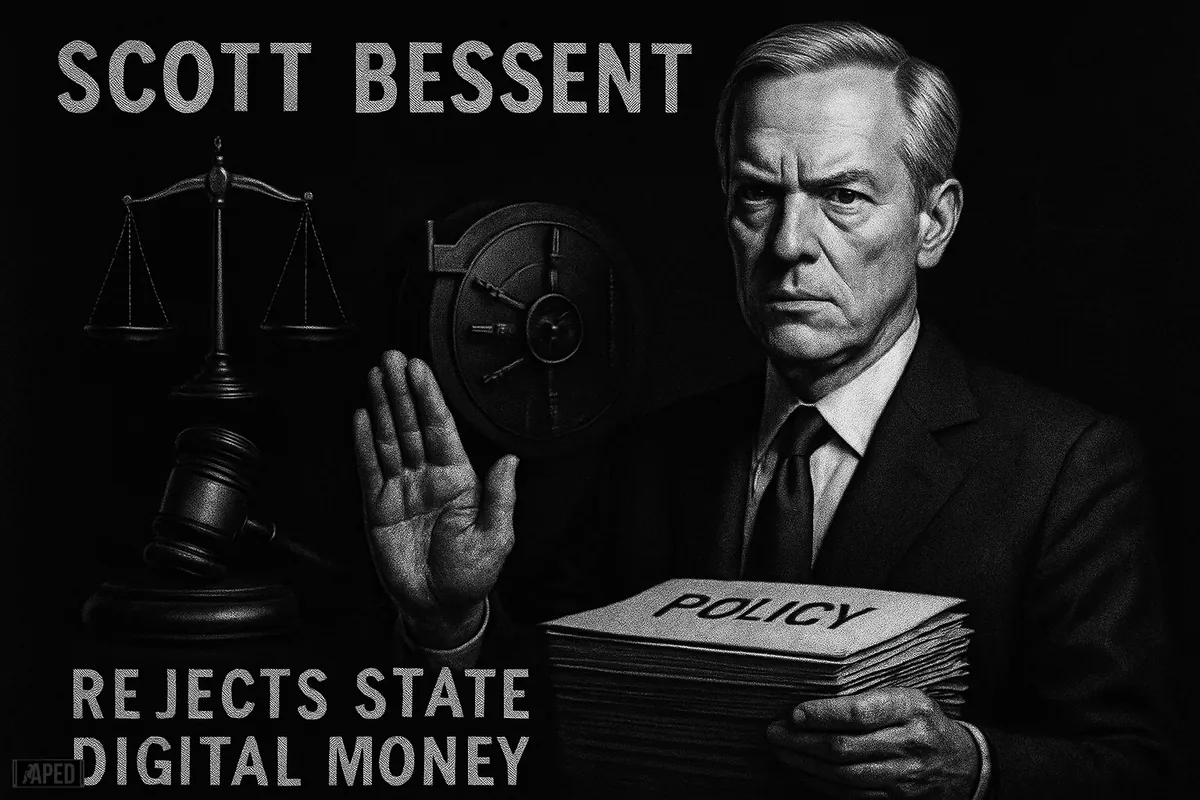
Share article
Share article
Scott Bessent gave crypto one of the day's clearest policy signals just after midnight UTC, backing the CLARITY Act and shutting the door on a US central bank digital currency. On a day short on headline volume, that was enough to keep the regulatory tone constructive and remind the market that Washington's debate is moving toward rule-setting, not outright hostility. [1]
Enjoy articles without ads?
Register for free and get unlimited access to all articles.
Regulation and Policy
Bessent backs CLARITY Act, rejects a US CBDC
Treasury Secretary Scott Bessent said he supports the CLARITY Act, adding weight to one of the industry's biggest asks: a defined market structure framework for digital assets. The bill is aimed at drawing clearer lines around how crypto markets are governed, which matters more than the usual political soundbites because firms, funds, and token issuers have spent years navigating overlapping or contested jurisdiction. [2]

The more immediate takeaway was his firm opposition to a US CBDC. That stance lines up with a large chunk of crypto-native sentiment, especially among Bitcoin holders and decentralisation-first builders who see state-issued digital cash as a surveillance-heavy alternative to open networks. For that crowd, Bessent's comments were not just policy housekeeping. They read as a signal that tokenised dollars in the US are more likely to come from private-sector rails, under regulation, than from a direct federal retail CBDC push. [3]
That distinction matters. A market structure bill can expand the playing field by telling exchanges, custodians, and issuers what the rules actually are. A CBDC fight, by contrast, has become a culture-war magnet that often muddies the broader digital asset conversation. By pairing support for CLARITY with rejection of a CBDC, Bessent effectively separated crypto regulation from the more politically toxic parts of the digital money debate.
Sentiment-wise, the story landed as a modest positive rather than a full-blown catalyst. There was no new law signed, no agency rule enacted, and no immediate compliance burden lifted overnight. Still, the direction of travel was hard to miss: clearer rules, less ambiguity, and no appetite from Treasury's top ranks for a federally controlled digital dollar model. On a slow news day, that counts as a proper signal.
Why today mattered
The market did not get a splashy ETF surprise, a major protocol exploit, or a fresh exchange collapse. Instead, it got something arguably more durable: another indication that US policy discussion is maturing from enforcement-by-vibes into framework-building. That does not remove risk, and it certainly does not guarantee smooth passage for any bill winding through Washington. Politics can still turn into a bit of a mess.
For now, the constructive read is simple. If the policy centre of gravity keeps moving toward statutory clarity and away from anti-crypto blanket rhetoric, the sector gets a better shot at long-term capital formation, product launches, and institutional participation. The invalidation is just as clear: if support for market structure reform stalls or fragments, today's optimism will look more like headline sugar than a real regime shift. [4]