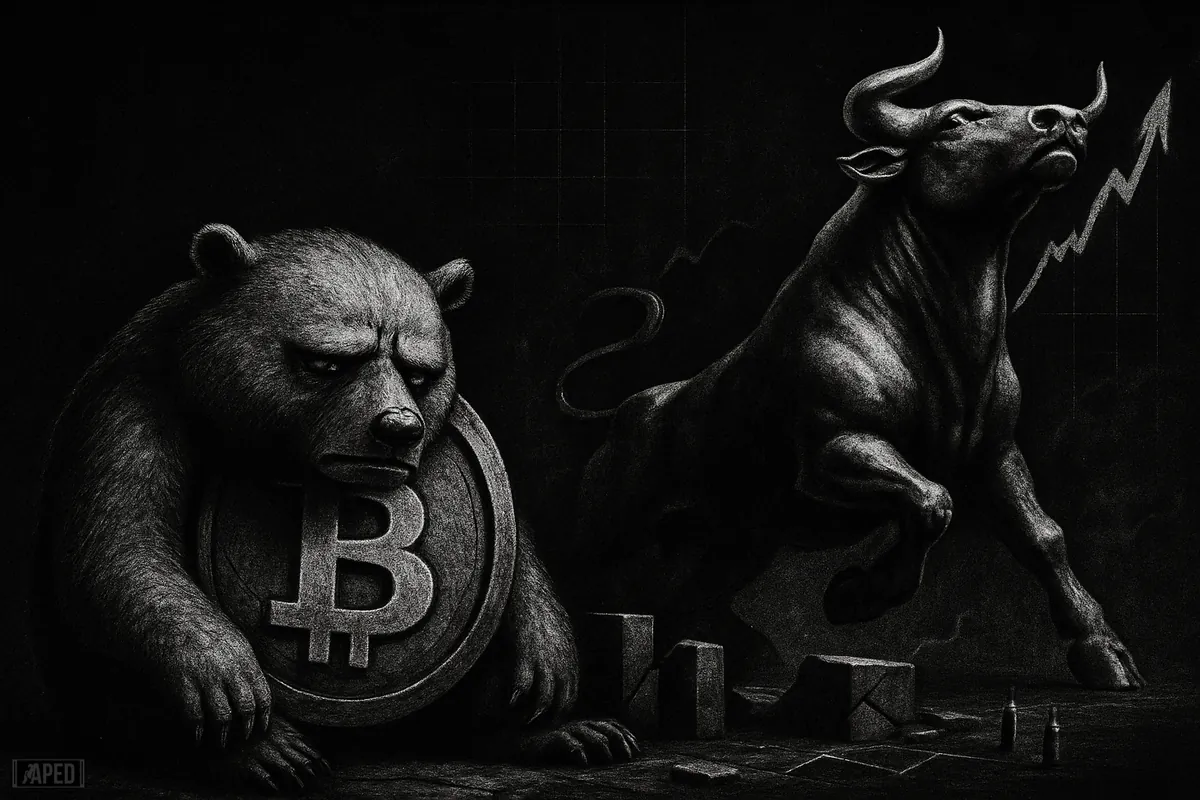
Bitcoin$80,585.34 spent the day stuck between institutional progress and macro drag. The trade was simple: TradFi kept building crypto rails while broad market mood stayed cautious, and that left BTC looking oddly flat versus the headlines. The key split was clear by the close, steady long-term adoption signals on one side, risk-off sentiment and headline jitters on the other.
Enjoy articles without ads?
Register for free and get unlimited access to all articles.
Market Structure and Risk Mood
Bitcoin trails equities, then macro gloom gets a name
By early morning, the awkward comparison was already in focus: U.S. stocks pushed to fresh record highs while Bitcoin$80,585.34 remained roughly 40% below its all-time peak. That gap matters because BTC is still sold as a high-beta, future-facing asset, yet it has not matched the equity market's latest breakout. For traders, that fed the "lagging or broken" debate rather than any clean bullish confirmation. [1]
Later in the day, CoinGecko put harder numbers on the sour mood, arguing crypto had already entered a winter phase in Q1 2026. Its data showed total market cap down 20.4% to $2.4 trillion, with hawkish Fed expectations and broader risk-off positioning doing most of the damage. That did not create the weakness, but it gave the market a framework for it. Once "winter" enters the chat, sentiment can get self-reinforcing fast. [1]
Government-linked BTC movement revives old overhang
Mid-morning, a much smaller but psychologically potent story hit tape. A $606,000 Bitcoin$80,585.34 transfer tied to the 2016 Bitfinex hack triggered fresh worries about a potential U.S. government sale. The amount itself was tiny by market standards, and the legal backdrop reportedly points toward returning the funds rather than dumping them, but crypto traders have a habit of reacting first and sizing nuance later. [2]
That matters less for immediate supply and more for reflexivity. Every time seized or court-linked Bitcoin moves on-chain, the market remembers prior government-sale fears. Even when the numbers are small, the headline can pressure short-term sentiment, especially on a day already leaning defensive.
Institutions, Regulation and the U.S. Policy Tone
Polymarket tightens integrity rules as scrutiny rises
Just after midnight UTC, Polymarket moved to tighten its market integrity framework, targeting insider trading and manipulation risks as prediction markets scale. This is one of those stories that looks niche until it isn't. Prediction markets are attracting more users, more political attention, and more regulatory heat, which means platforms now need surveillance and rulebooks that look a lot closer to serious financial venues.
For the sector, the signal is constructive. Stronger compliance controls are usually a tax on short-term chaos but a prerequisite for long-term legitimacy. If prediction markets want broader adoption, especially around elections, macro events, and real-world outcomes, cleaner market structure is not optional.
That cleaner-market narrative ran straight into another reminder that legacy compliance issues do not disappear on schedule. U.S. senators reportedly pressed the DOJ and Treasury over whether Binance's post-2023 settlement reforms are actually working, with Iran sanctions exposure back under the spotlight. [3]
This does not mean immediate new penalties are coming, but it keeps Binance under the kind of reputational pressure that can affect counterparties, regulators, and institutional comfort. Crypto's biggest venues are still being graded on whether "trust us, we fixed it" holds up under political review. That is not a small overhang.
SEC podcast debuts with crypto at the front of the agenda
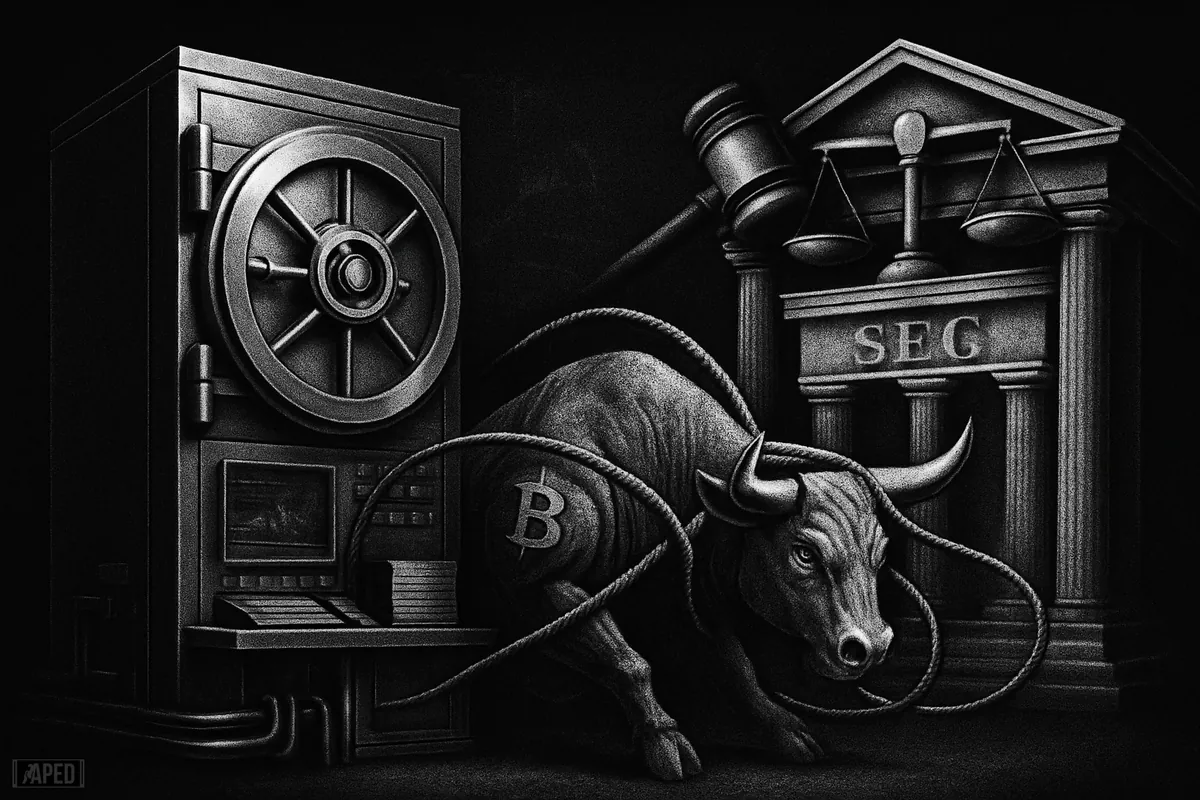
The U.S. tone improved materially by evening. The SEC's debut podcast reportedly put crypto near the center of its innovation agenda, with discussion framed around rulemaking, competitiveness, and how the U.S. can avoid falling behind. On its face, a podcast is not policy. In Washington terms, though, comms strategy often previews regulatory posture. [4]
The important shift here is cultural. A softer, more open SEC message lowers the temperature even without changing a single rule that day. Markets care about enforcement risk, and so do builders. If the agency is serious about clearer frameworks instead of regulation-by-ambush, that is a material tailwind for the U.S. crypto stack.
Products and Capital Flows
Goldman files for a Bitcoin income ETF
The biggest institutional development came at midday, when Goldman Sachs filed for a Bitcoin Premium Income ETF. The structure aims to deliver BTC-linked exposure with options-based income, effectively offering investors a way to hold a toned-down version of the trade, less upside explosiveness, but potential yield. [5]
That filing says two useful things. First, demand for Bitcoin exposure is maturing beyond simple spot products. Second, Wall Street is actively segmenting the BTC buyer base: some want pure directional upside, others want cash flow and lower volatility. That is classic asset-class normalization, not speculative tourist behavior.
Ethereum whale sends a stronger spot signal
Late afternoon brought a more direct on-chain bullish tell. A whale reportedly shuffled $225 million in USDC$1.0005 across exchanges, bought 32,007 ETH on Binance, then withdrew the coins. Exchange outflows after a large buy are one of the cleaner signs of spot accumulation because they suggest the buyer is not preparing an immediate flip. [6]
For ETH, that stands out because it contrasts with the broader winter narrative. One whale does not reverse a market, but large spot buys into weakness are worth tracking. If repeated, they often matter more than social sentiment because they reduce available exchange supply and show conviction where leverage traders usually show noise.
Cross-Chain Expansion and Technology Risk
XRP arrives on Solana
Ripple-linked momentum got a practical boost when wrapped XRP$1.518 launched on Solana through Hex Trust and LayerZero. The pitch is straightforward: XRP holders can now access Solana DeFi rails without waiting for Ripple's own ecosystem to provide the same breadth of activity.
This is more than a branding exercise. Wrapped asset expansion tends to follow user demand, and Solana keeps winning mindshare as a high-throughput venue for trading and DeFi experimentation. For XRP, the move broadens utility. For Solana, it adds another recognizable asset to the liquidity mix. Cross-chain growth is usually messy under the hood, but users mostly care whether the asset can be deployed somewhere useful.
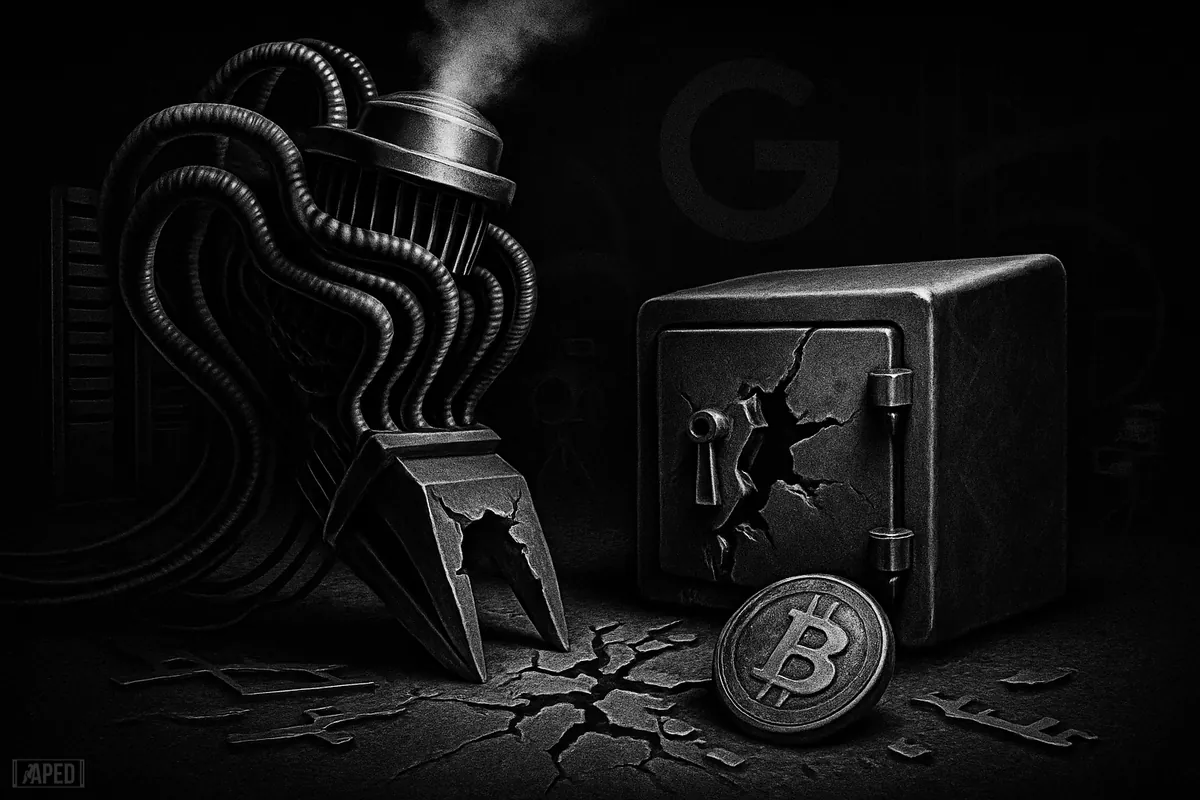
The most unsettling technology headline of the day came before Europe woke up. Research linked to Google suggested future quantum computers could potentially crack exposed Bitcoin public keys in as little as nine minutes. That is not a live exploit against Bitcoin today, but it sharpens a long-running concern: wallets with exposed public keys may eventually need migration before quantum hardware gets good enough to matter. [7]
The practical read is calmer than the headline. This is a medium-to-long-term protocol and wallet hygiene issue, not a reason to panic sell your bags before lunch. Still, it adds pressure for the Bitcoin ecosystem to take post-quantum migration paths seriously. Markets can ignore distant risk for a long time, until suddenly they cannot.
Small Caps, Liquidity Traps and Why Size Matters
RAVE DAO's collapse is a familiar warning
The ugliest tape of the day belonged to RAVE DAO, which appeared in two separate reports documenting a sharp unwind after a thin-liquidity rally. One account highlighted a 50.3% plunge on April 18, while another described a 44% drop after a week-long run-up. The exact framing differed, but the core point was the same: low-liquidity pumps can reverse brutally once buy pressure fades.
This is the part of the market where chart dreams meet order book reality. Thin liquidity means small flows can force outsized moves in both directions, and exits become expensive precisely when traders most want one. If there was a clean lesson from RAVE, it is that not every green candle is adoption. Sometimes it is just a shallow book waiting for exit liquidity.
The Bigger Picture
Monday's tape did not deliver one dominant narrative. It delivered a split-screen market. Institutions kept laying down more infrastructure through ETF filings and a friendlier U.S. regulatory tone. At the same time, macro caution, compliance scrutiny, and old headline risks kept traders from fully sending it.
That leaves a pretty clean watchlist. Bulls want follow-through from the Goldman filing, more signs that the SEC's softer language turns into actual rule clarity, and continued spot accumulation in majors like Ethereum$2,366.44. Bears will point to CoinGecko's winter call, Binance's renewed political heat, and the fact that Bitcoin still has not matched the strength seen elsewhere in risk assets. Translation: adoption is grinding forward, but price still wants proof.
Your reviews help us improve the quality of both current and future articles. All reviews are public and visible to other readers. We use both ratings and comments to improve future articles and to revise any articles that do not meet our standards.
 See more like this on Google