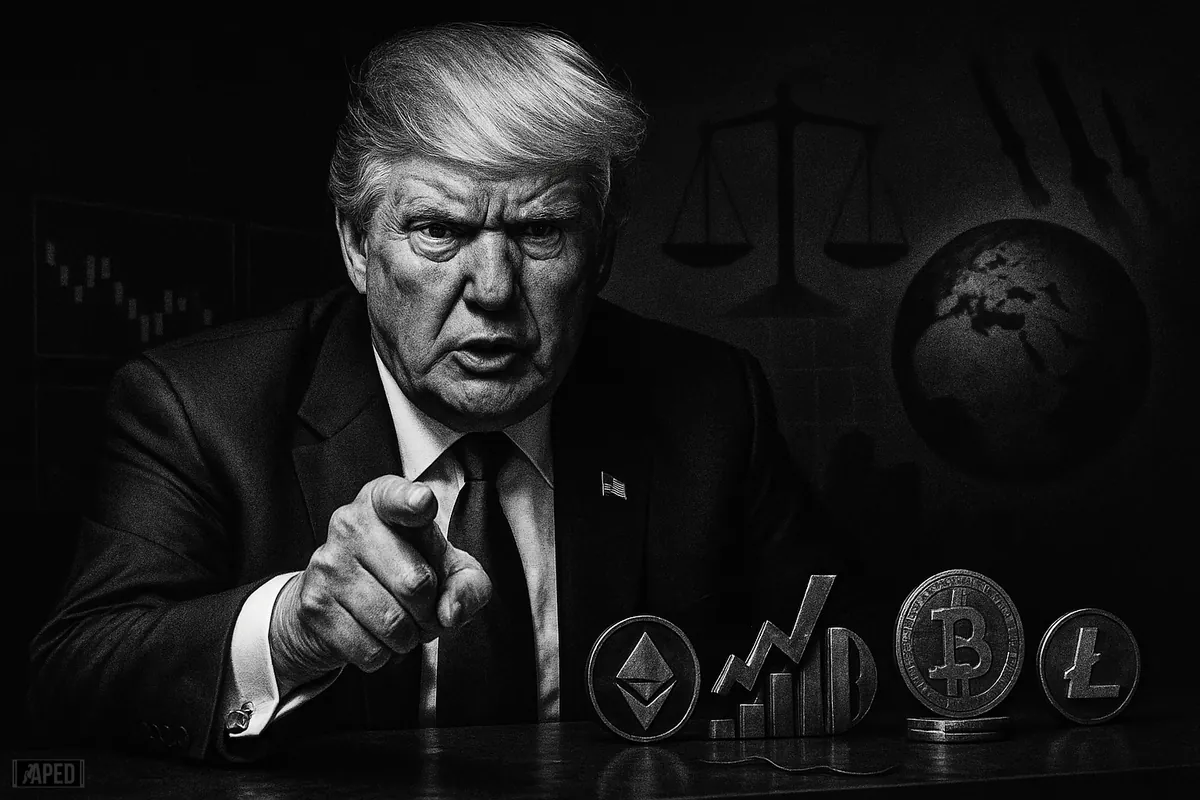
Risk is back on the tape. Bitcoin$80,323.74 is hovering near a key support zone around $71,000, majors are bleeding harder than BTC, and the market is now pricing a familiar headline trade: geopolitics up, crypto beta down. The trigger is President Donald Trump's renewed warning that the US could strike Iran if Tehran violates ceasefire terms. For traders, the clean read is simple: if the ceasefire holds, risk assets can stabilize. If it cracks, crypto likely gets sold first and asked questions later. [1]
BTC was recently around $71,215, down roughly 0.6% on the day in the source data. Ethereum$2,327.52 was weaker at about $2,187, off 2.7%, while Solana$76.56 and XRP$1.518 were down 2.7% and 3.7% respectively. Meme names looked even softer, which tells you this is not a selective rotation. When macro fear hits, the froth gets rekt first. [2]
Register for free and get unlimited access to all articles.
Why this headline matters to crypto
Crypto trades like a 24/7 global risk barometer when geopolitical stress spikes. Oil, the dollar, Treasury yields, and equityfutures all feed into the same machine. A renewed US-Iran escalation threat matters because it can quickly push energy prices higher, tighten financial conditions, and trigger a broad de-risking move across speculative assets. [3]
That does not mean every war headline automatically crashes Bitcoin. The market has repeatedly shown two-phase behavior. First comes the knee-jerk selloff as traders cut leverage and reduce exposure. Then, if the conflict does not spread or the damage looks contained, crypto often finds buyers fast. The problem for bulls is that this first move can still be violent enough to liquidate crowded longs.
Ceasefire risk is now the key variable
The current setup is less about abstract Middle East risk and more about whether the ceasefire framework actually survives. Trump's warning effectively puts a hard edge on the next few sessions. If Iran is seen as complying, markets can start fading the panic premium. If there is a violation, traders should expect a quick repricing across BTC, ETH, and high-beta altcoins. [4]
Recent market behavior supports that view. Reports tied to ceasefire optimism helped lift Bitcoin toward the $72,500 area, while renewed doubts pulled it back under $71,000. That range is doing a lot of work right now. It is the difference between a shaky consolidation and a momentum break lower.
Bitcoin remains the cleanest institutional proxy for crypto macro exposure, but altcoins usually absorb more damage during geopolitical stress. ETH, SOL, XRP, and meme coins are more sensitive to falling risk appetite, thinner order books, and forced unwinds in perpetual futures.
That pattern is already visible in the price action from the source material. BTC is down modestly, but ETH and major alts are down multiples of that move. If the headline flow worsens, traders should assume that alt/BTC pairs stay under pressure even if Bitcoin itself avoids a full breakdown.
For Bitcoin, the first line in the sand is the $71,000 area. It has already been tested, and repeated tests tend to weaken support if buyers do not step in aggressively. A decisive break below that zone would likely invite momentum selling and liquidation pressure, especially if it happens alongside rising oil and a stronger dollar.
On the upside, reclaiming the recent $72,500 area would suggest the market is fading the geopolitical scare for now. That would not erase the risk, but it would tell you traders are willing to carry exposure again.
Ethereum's weakness near $2,187 matters too. ETH has underperformed enough that another macro shock could drag it into a sharper catch-down move. Solana around $82 and XRP near $1.33 are also flashing the same message: this market is not in the mood to reward aggression without clear headline relief.
Derivatives could amplify the move
Geopolitical panic and leveraged crypto markets are a messy combo. Even when spot selling is moderate, perpetual futures can turn a small drop into a fast flush. That is especially true when traders have loaded into high-beta names expecting a post-ceasefire relief send.
The practical risk is not just direction, but speed. If ceasefire headlines break the wrong way during thin liquidity hours, liquidations can do most of the work. Traders should watch open interest, funding, and whether price drops are accompanied by sharp basis compression. That is usually the tell that leverage is being forced out, not just repositioned. [5]
Why a full-scale crash is not the base case yet
There is a difference between a risk-off shock and a structural crypto unwind. Right now, this looks more like event-driven macro stress than a crypto-specific failure. No major exchange blowup, stablecoindepeg, or protocol crisis is driving the move. That matters, because headline-driven selloffs can reverse quickly if the catalyst cools.
Bitcoin has also matured into a more macro-linked asset than it was in prior cycles. That cuts both ways. It means BTC gets hit when global risk sentiment sours, but it also means large buyers may step in if the move starts looking overdone relative to the actual geopolitical fallout.
The Bottom Line
This is a headline market, plain and simple. The ceasefire is the narrative, $71,000 is the BTC level, and altcoins are the weak link. If Trump's strike warning remains just a threat and the ceasefire holds, crypto can probably stabilize and claw back losses. If the truce breaks, expect a fast risk-off move with alts leading lower.
Watchlist: BTC $71,000 support, BTC $72,500 reclaim zone, ETH relative weakness, oil's reaction, and any sign that leverage is getting flushed instead of quietly reduced. If you are trading this, keep it simple. Headline risk is not the place to get cute with oversized bags.
Your reviews help us improve the quality of both current and future articles. All reviews are public and visible to other readers. We use both ratings and comments to improve future articles and to revise any articles that do not meet our standards.
 See more like this on Google