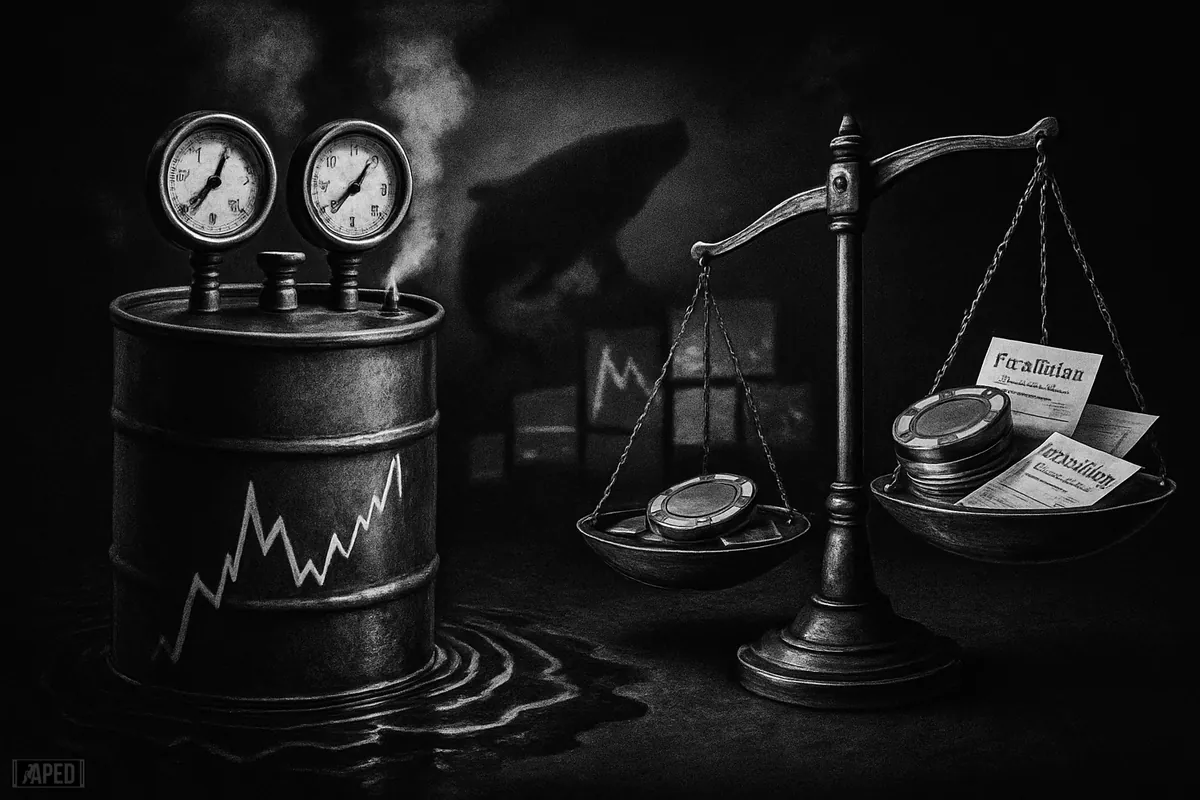
Crude Oil Hits $100 by March: Polymarket Resolves Major Macro Bet
Polymarket prediction markets resolved today that crude oil hit $100 by end of March, confirming a major macro outcome with $16.6M in betting volume. The resolution validates sustained expectations for elevated oil prices into June, reinforcing macro headwinds on crypto markets as traders weigh inflation and yield pressures amid geopolitical tensions.
Mar 31 07:30
Crude finally tagged $100 by the end of March, and Polymarket's biggest oil contract has now been settled. The market, "Will Crude Oil hit $100 by end of March?", resolved YES on March 31 after drawing $16.6 million in volume, turning a noisy macro trade into a confirmed call. [1]
Enjoy articles without ads?
Register for free and get unlimited access to all articles.
Polymarket's macro crowd got the headline right
The resolution matters because this was not a thin, novelty market. At $16.6 million, it was one of the larger macro bets on Polymarket, and it tracked a move that spilled well beyond commodities desks. A separate June contract also resolved YES, with roughly $3.2 million in volume, suggesting traders were not just betting on a quick spike but on oil staying structurally elevated into the second quarter. [2]
That distinction is important for crypto. A one-day wick through $100 is headline material, but a market that also prices persistence tells you traders were positioning for broader inflation and growth pressure, not just a geopolitical knee-jerk.
Earlier macro signals had already tied higher crude to weaker risk appetite in digital assets. One recent warning flagged Bitcoin$80,580.49 facing rising macro risk as WTI moved above $105, while another noted Brent surging past $116 amid US-Iran tensions. Polymarket's March resolution effectively confirms that traders who treated the oil move as a real macro regime shift, not a fade, were on the right side.
For crypto, higher oil feeds into the same stack of concerns that usually dents momentum: stickier inflation expectations, tighter financial conditions, and upward pressure on yields. That mix tends to hit high-beta assets first. If traders think energy is pushing CPI risk back onto the table, they are less likely to chase marginal altcoin strength and more likely to reduce leverage. [3]
Market structure says this was more than a meme bet
Prediction markets can drift into narrative trading, but the size and follow-through here make that harder to argue. The March contract resolved, and the June contract backed the same direction with meaningful though smaller size. That sequencing suggests conviction, not just event-driven gambling. [4]
It also says something about where macro attention is flowing on crypto-native rails. Traders increasingly use Polymarket to express views on rates, elections, and geopolitical shocks before those views show up clearly in token positioning. When a contract of this size resolves cleanly, desks paying attention have one more reason to treat these markets as sentiment infrastructure rather than side entertainment.
What traders should watch next
The immediate takeaway is not "oil up, crypto down" in a straight line. Crypto can rally through ugly macro tapes when spot demand is strong and positioning is light. But $100-plus crude raises the bar for upside. It keeps inflation-sensitive assets under pressure and makes every yield move matter more.
Key levels now sit outside crypto as much as inside it. If WTI holds above $100 and Brent stays elevated, the macro drag remains live. If oil rolls over sharply and geopolitical pressure cools, part of this bearish cross-asset thesis weakens fast. For Bitcoin$80,580.49 and the broader market, the invalidation is simple: sustained crypto strength alongside easing energy prices and calmer rates. Until then, Polymarket's resolved bet is less a victory lap than a warning that macro is still driving the tape. [5]
Your reviews help us improve the quality of both current and future articles. All reviews are public and visible to other readers. We use both ratings and comments to improve future articles and to revise any articles that do not meet our standards.
 See more like this on Google