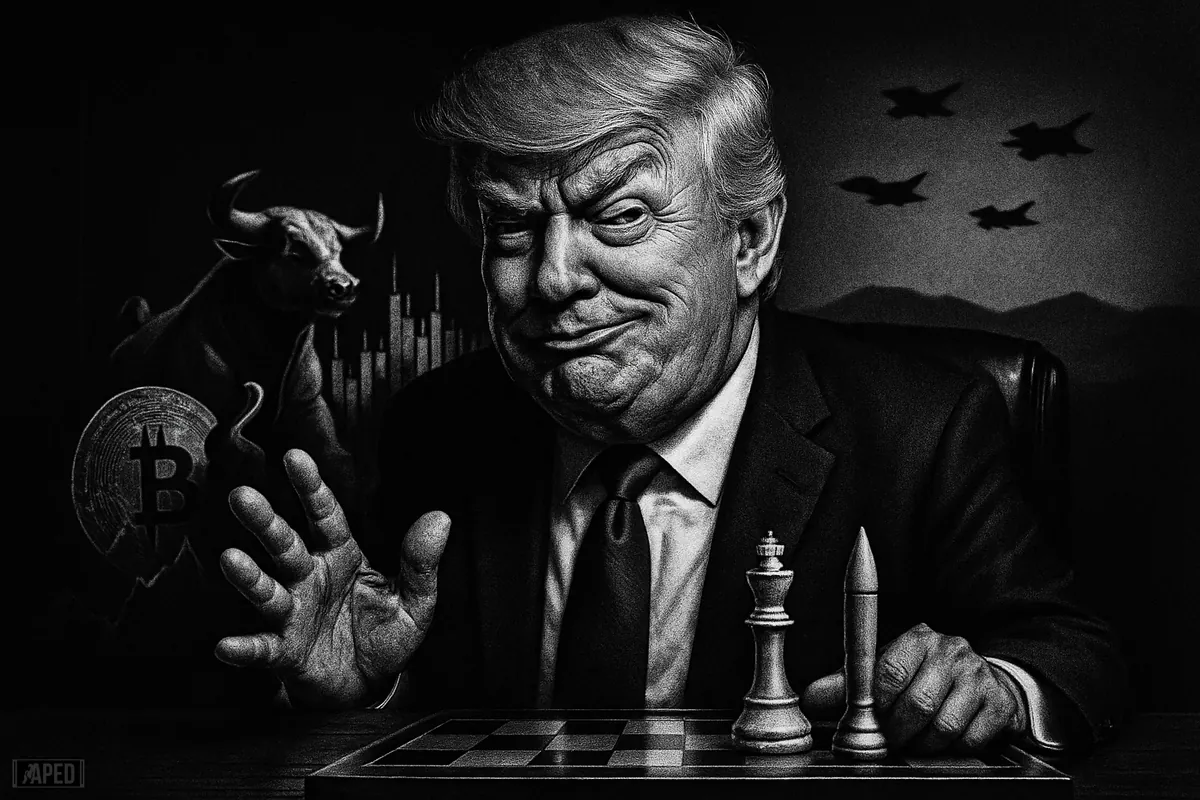
CT got one of those classic mood swings again. One minute macro panic, the next minute risk assets are ripping because a headline sounds slightly less apocalyptic than the one before it. Bitcoin$80,213.89 did its part this cycle, jumping as traders reacted to fresh remarks from Donald Trump that mixed threats toward Iran with talk that also hinted at room for negotiation. [1]
The move was less about crypto-specific news and more about the market's favorite game: repricing geopolitics in real time. Bitcoin climbed as traders interpreted Trump's comments as lowering, at least temporarily, the odds of an immediate escalation with Iran. That helped reverse some of the risk-off tone that had been pressing both digital assets and equities. [2]
Register for free and get unlimited access to all articles.
Why Bitcoin Moved
Headline-driven trading is not exactly new, but this episode showed how tightly bitcoin is now wired into broader macro sentiment. When Trump's rhetoric appeared to leave open a diplomatic path rather than signal a straight-line march toward conflict, traders rotated back into risk.
That mattered because Bitcoin$80,213.89 had already been trading like a high-beta macro asset, meaning it often amplifies moves seen in stocks and other risk-sensitive markets. A softer read on Iran headlines gave buyers a reason to step in, especially after recent whipsaws had left positioning shaky and short-term sentiment fragile. [3]
Reports tied the move to a broader market rebound as fears around the Middle East eased from their peak. Bitcoin's rally was part of the same pattern seen when stocks stabilized and safe-haven flows cooled. For crypto traders, it was another reminder that the biggest catalyst on the day did not come from ETFs, halving chatter, or onchain data. It came from politics. [4]
The Trump-Iran Signal Traders Heard
Threats, but not only threats
Markets were reacting to nuance, which is always a dangerous sentence but also the truth here. Trump's comments reportedly combined hardline language with indications that talks with Iran remained possible. That mix created enough ambiguity for traders to lean toward de-escalation, or at least toward a delay in any worst-case scenario. [5]
A delay is often all markets need. Investors do not require perfect clarity to bid assets higher. They just need the immediate tail risk to look a little less ugly than it did an hour earlier.
Why that helps bitcoin
Bitcoin tends to benefit when panic recedes and liquidity comes back into risk markets. Gold and oil often reflect fear more directly during geopolitical shocks, while bitcoin can swing between behaving like digital gold and behaving like a tech stock with extra caffeine. On this occasion, it leaned toward the second category.
That distinction matters. If traders believed the Iran story was spiraling toward a direct military confrontation, bitcoin could just as easily have sold off alongside equities. Instead, the market heard enough of a diplomatic opening to justify buying the dip.
This was not the kind of rally that screams deep fundamental repricing. It looked more like a fast reset in expectations.
Bitcoin has spent much of the past year responding to a stack of overlapping forces: spot ETF flows, Federal Reserve rate expectations, dollar strength, equities, and geopolitical shocks. Add a Trump headline to that mix and you get exactly what traders hate and secretly love, a chart that can reverse in minutes.
The broader lesson is that bitcoin remains highly sensitive to macro crosscurrents, especially when uncertainty is elevated. Crypto may still market itself as a parallel financial system, but on days like this it trades squarely inside the global one.
Community read: relief, not euphoria
On crypto social channels, the vibe around moves like this tends to be tactical rather than celebratory. Traders on X and Telegram were treating the bounce as a headline trade, not a clean all-clear signal. That is a key difference. Relief rallies can be real and still lack staying power.
You could see the same caution in how market participants framed resistance levels and near-term upside. The tone was less "new bull leg unlocked" and more "okay, but does this hold through the next headline?"
That skepticism is healthy. It suggests buyers were opportunistic, not blindly euphoric. In crypto, that is usually a better setup than full send optimism.
Bitcoin's Macro Identity Crisis Is Still the Story
Digital gold, until it isn't
Every geopolitical flare-up revives the same debate: is bitcoin a safe haven or a speculative asset? The honest answer remains inconveniently conditional.
When traditional finance gets stressed in a way that undermines faith in sovereign systems or fiat plumbing, bitcoin can attract safe-haven narratives. When the stress looks more like classic risk aversion, rising uncertainty, tighter liquidity, or a rush into cash, bitcoin often trades like a volatile risk asset instead.
This latest jump fits the second pattern. Traders were not hiding in Bitcoin$80,213.89 from geopolitical danger. They were buying bitcoin because the danger suddenly looked a touch less immediate.
Correlation still matters
Research around similar episodes has pointed to bitcoin moving alongside stocks when Trump's Iran comments shifted the market mood. That correlation is important because it undercuts the idea that crypto is operating in a totally separate lane during moments of geopolitical stress. [4]
For investors, the practical implication is simple: if you are trading bitcoin around major international headlines, watch equityfutures, oil, the dollar, and Treasury yields too. Crypto-native indicators help, but they are not enough when macro is driving the tape.
Short-term traders got the kind of setup they wait for, a sharp narrative reversal with enough uncertainty to fuel volatility. That can create opportunity, but it also raises the odds of fakeouts. One contradictory statement, one new escalation, or one hawkish macro datapoint can wipe out a headline rally fast.
Longer-term holders should read this differently. Bitcoin's ability to bounce on reduced geopolitical fear shows there is still strong demand on dips, but it also confirms that the asset is not insulated from global political shocks. If anything, it is becoming more reflexive as institutional participation grows and macro funds treat it as part of the broader risk complex.
That does not weaken the long-term bitcoin thesis. It just means the path remains messy, and occasionally dictated by comments that have nothing to do with blockspace, mining difficulty, or ETF inflows.
The Bottom Line
Bitcoin jumped because markets heard a possible off-ramp in Trump's Iran messaging and repriced risk accordingly. The move says less about a sudden crypto-specific breakthrough and more about how fast digital assets now absorb shifts in geopolitical tone. [6]
For readers, the practical takeaway is boring but useful: do not treat headline rallies as thesis changes. Treat them as information about positioning, sentiment, and how the market is currently classifying bitcoin. Right now, that classification still looks a lot like a macro-sensitive risk asset with a very online fanbase. If the Iran story cools further, bitcoin may keep benefiting. If the rhetoric hardens again, the bounce could look very temporary, very quickly.
Your reviews help us improve the quality of both current and future articles. All reviews are public and visible to other readers. We use both ratings and comments to improve future articles and to revise any articles that do not meet our standards.
 See more like this on Google