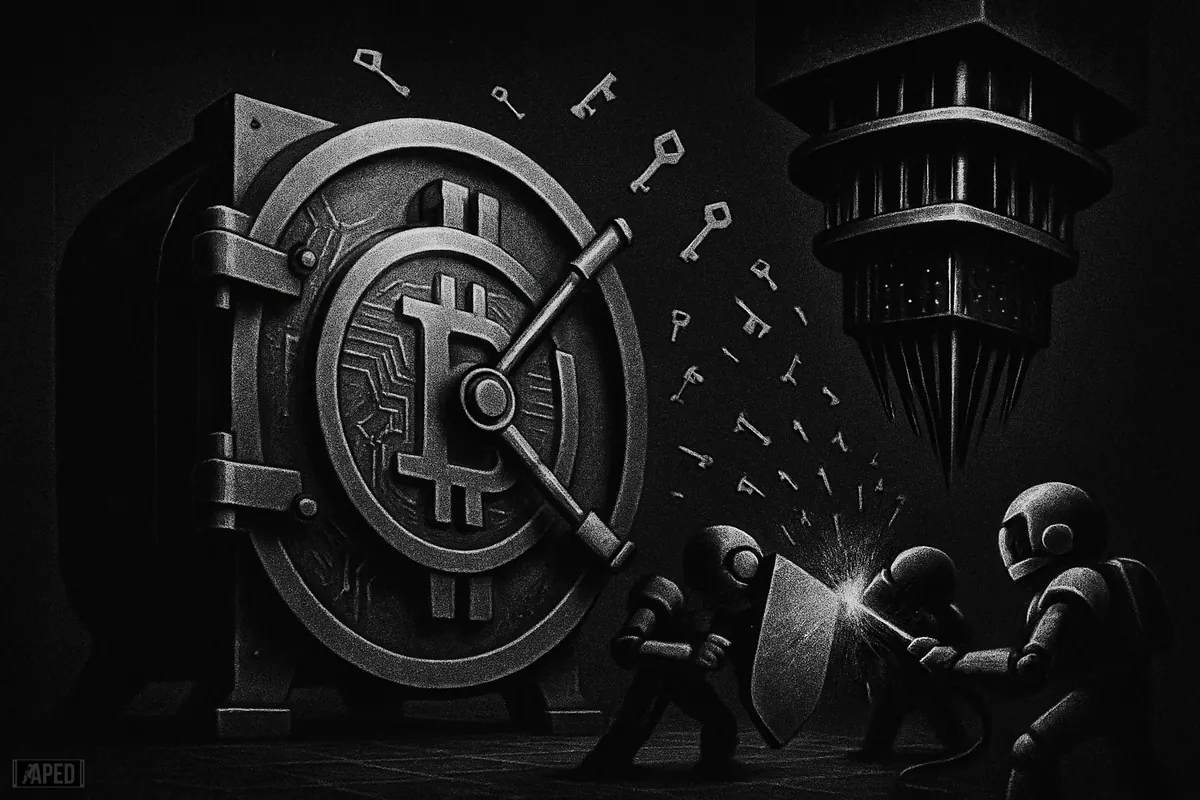
Bitcoin$80,477.01's latest "threat model" is not macro, miners, or ETF flows. It is quantum. A group of Bitcoin$80,477.01 developers has floated a proposal to harden the network against a future where quantum computers could crack today's cryptography, exposing old coins and vulnerable wallets. For traders, this is not a price catalyst today, but it is a serious long-tail risk narrative worth watching as BTC sits near $74,673. [1][2]
Register for free and get unlimited access to all articles.
The proposal: a quantum migration path for Bitcoin
The core idea is straightforward: give the network a structured way to move funds away from address types that could become vulnerable to quantum attacks, and eventually restrict or freeze coins that fail to migrate in time.
Research around the proposal points to a draft plan often described as a "quantum migration" framework, with some observers calling it a "tripwire" model. The logic is simple enough. If quantum machines ever become strong enough to derive private keys from exposed public keys, some Bitcoin outputs would be easier targets than others. That especially matters for older coins, reused addresses, and wallets whose public keys are already visible on-chain. [3]
Under the concept being discussed, Bitcoin could introduce new post-quantum secure address formats or signature rules, then set a migration window. Coins left in older, quantum-vulnerable outputs after that deadline could be treated differently, including being frozen from spending under legacy rules. [4]
This is not because quantum computers are suddenly about to drain the chain tomorrow. The push is more about lead time. Bitcoin changes slowly by design, and any consensuschange that touches ownership rules would need years of debate, testing, and social buy-in. [5]
That makes this one of those "fix the roof before it rains" conversations. If the threat ever becomes real, reacting at the last minute would be a mess. Exchanges, custodians, hardware wallet makers, and long-dormant holders would all need time to upgrade. The earlier the design work starts, the less likely the network gets caught flat-footed.
The hard part: social consensus
The technical challenge is only half the trade. The political challenge is bigger. Any plan that could freeze unmigrated coins instantly runs into Bitcoin's most sensitive fault line: property rights.
That is why this debate is likely to get spicy. A defensive fork that protects active users may still be seen by critics as confiscatory, especially if it affects lost coins, Satoshi-era holdings, or wallets whose owners never update. Supporters will argue that leaving vulnerable outputs untouched could hand them to quantum attackers anyway, which is not exactly a cleaner outcome. [6]
Right now, this is a governance story, not a market panic story. BTC's day-to-day price action is still being driven by the usual stack of liquidity, rates, and risk appetite. But the proposal matters because it shows Bitcoin developers are treating quantum risk as an engineering problem, not sci-fi clickbait.
The watchlist is clear: formal BIP language, whether major core contributors rally around a migration framework, and how the community reacts to any mechanism that could freeze old UTXOs. If that debate gains traction, the real battleground will not be code first. It will be consensus.
Your reviews help us improve the quality of both current and future articles. All reviews are public and visible to other readers. We use both ratings and comments to improve future articles and to revise any articles that do not meet our standards.
 See more like this on Google