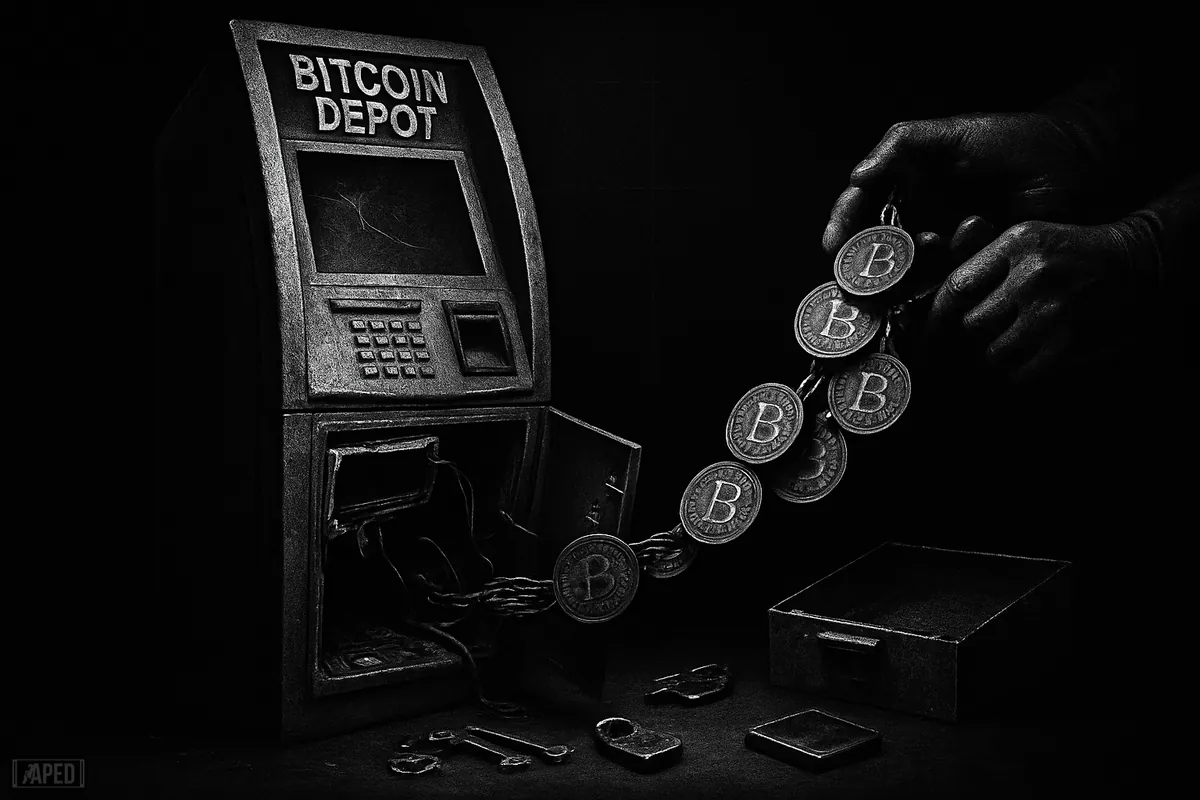
Bitcoin$81,987.96 Depot just ate a $3.6 million loss after attackers got into credentials tied to its settlement accounts and drained 50.9 BTC. The key point is simple: this was not a smart contract exploit or some exotic blockchain failure. It was a classic internal access problem, and that matters because it hits one of crypto's weakest links, off-chain operations. [1]
The company disclosed the incident in an 8-K filing with the US Securities and Exchange Commission, saying it identified the breach on March 23. According to the filing, an unauthorized party accessed parts of Bitcoin Depot's internal IT environment, obtained credentials connected to digital asset settlement accounts, and used them to move company-held Bitcoin$81,987.96. [2]
Enjoy articles without ads?
Register for free and get unlimited access to all articles.
What happened
Bitcoin Depot said the stolen amount totaled about 50.9 BTC, worth roughly $3.66 million at the time of disclosure. Those funds were taken from company-controlled wallets tied to settlement activity, which usually means operational liquidity rather than customer balances. [3]
That distinction matters. The company said there is no evidence that customer-facing systems, customer funds, or personal data were affected. So this looks contained to corporate infrastructure, at least based on what is known so far. [4]
The company has since activated incident response procedures, brought in external cybersecurity specialists, and notified law enforcement. The investigation is still ongoing, which means the exact attack path, and whether any weaknesses remain, are still being worked through.
Why settlement accounts are the real story
Settlement accounts are not the flashy part of a crypto business, but they are where operational risk lives. They sit between customer activity, treasury management, and liquidity flows. If attackers get credentials there, they do not need to break Bitcoin$81,987.96 itself. They just need the keys to the right internal door.
That is the bigger lesson here. Crypto firms still spend plenty of time talking about wallets, chain security, and custody design. Fair enough. But a lot of damage still comes from traditional failures, compromised credentials, internal system access, and weak operational controls.
This is also why the phrase "blockchain is secure" does not save anyone in practice. The chain can be fine while the company around it gets rekt.
Financial impact looks manageable, reputational risk less so
Bitcoin Depot said it does not expect the incident to materially affect its overall operations or financial condition. Still, it treated the event as material enough to disclose publicly, which suggests the regulatory and reputational angle is very real. [5]
The company recorded a preliminary loss estimate of $3.66 million, though it said that figure could change as the investigation develops. It also noted that it carries cyber insurance, but recovery is not guaranteed and the final reimbursable amount remains uncertain.
For a public crypto company, that uncertainty is the part to watch. The direct hit is one thing. Questions around controls, disclosure timing, and insurer response can linger longer than the wallet outflow.
Why it matters
This breach fits an industry pattern that keeps repeating: attackers often do not need a protocol bug when credential theft and internal access can do the job faster. For crypto operators, the attack surface is not just on-chain. It is every admin panel, settlement workflow, access key, and employee endpoint connected to funds.
The near-term watchlist is straightforward: whether Bitcoin Depot discloses more detail on how the credentials were compromised, whether insurance offsets most of the loss, and whether regulators push for tighter controls around operational wallets. For the rest of the industry, the message is blunt. If your off-chain stack is soft, your bags are not as safe as you think.
Your reviews help us improve the quality of both current and future articles. All reviews are public and visible to other readers. We use both ratings and comments to improve future articles and to revise any articles that do not meet our standards.
 See more like this on Google