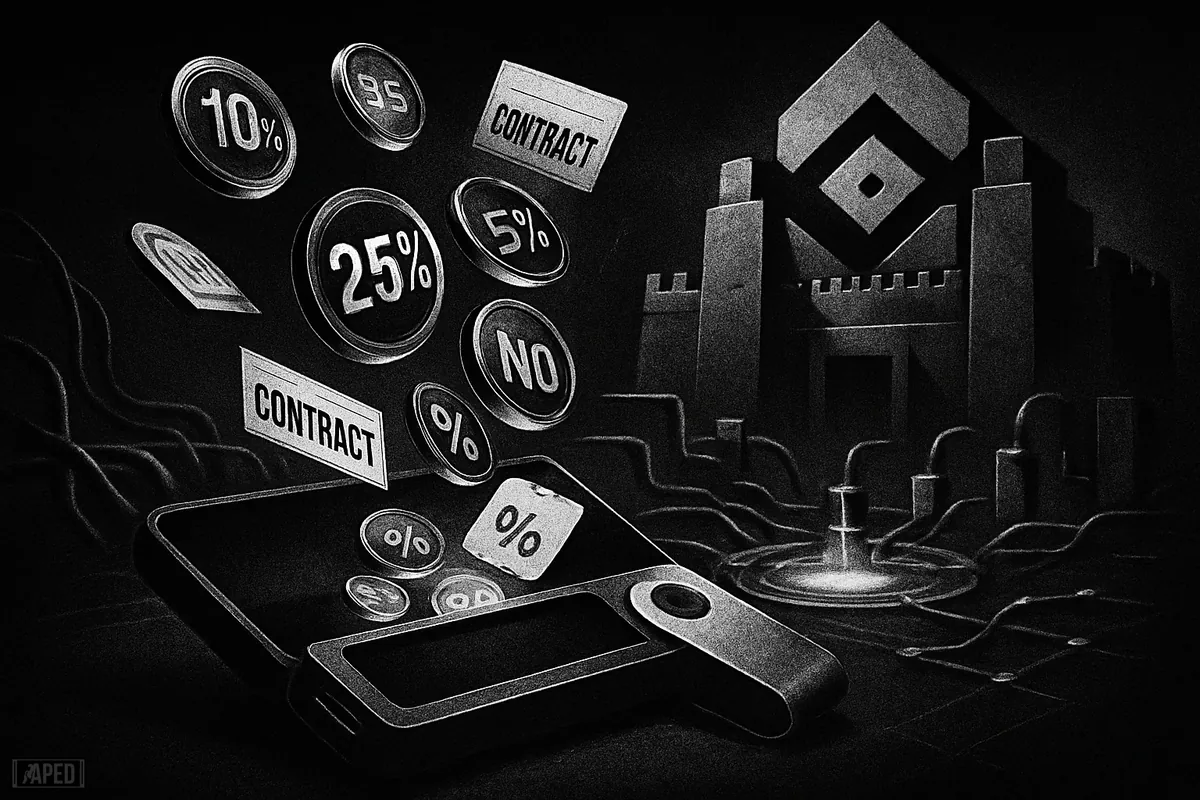
CT loves a new casino with a spreadsheet attached, and prediction markets are the latest one to make it into the main app flow. This time the notable part is not the format, it is the distribution. Binance has added access to Predict.fun inside Binance Wallet, bringing on-chain prediction markets a lot closer to the exchange's massive retail user base. [1]
The rollout was announced Thursday and plugs Binance Wallet into Predict.fun, a decentralized prediction platform built on BNB$547.09Smart Chain. Users can trade on the outcomes of real-world events without leaving the Binance app experience. Binance is not running the markets itself. Instead, it is acting as the access layer for a third-party application, a distinction that matters both operationally and, likely, legally. [2]
Enjoy articles without ads?
Register for free and get unlimited access to all articles.
What Binance actually launched
The new feature lives inside Binance Wallet and gives users in supported regions direct entry to Predict.fun markets. The basic pitch is familiar to anyone who has watched prediction markets go mainstream over the last two years: pick an outcome, buy exposure to it, and get paid if the crowd or the final settlement breaks your way.
What makes this launch feel bigger than a standard product integration is the reduction in friction. Binance said the setup covers gas fees, meaning users do not have to think about blockchain transaction costs just to place a trade. For retail traders, that is not a small UX tweak. It removes one of the classic on-chain pain points that tends to scare off non-crypto-native users before they even click "confirm." [3]
Why gas-free matters
Gas is the network fee paid to process a blockchain transaction. Crypto veterans barely notice it anymore. New users absolutely do. Covering that cost turns a prediction market from "download a wallet, bridge funds, keep extra tokens for fees, good luck" into something much closer to a normal in-app trading feature.
That simplification is the whole play here. Prediction markets have grown fast, but they still often feel like products built by and for people who already live on CT. Binance is trying to package the category for the broader crowd.
A timely bet on a booming sector
The integration lands as prediction markets are having a real growth moment. Monthly trading volume across the sector has climbed above $20 billion, according to the source reporting, marking roughly 200 times growth over the past two years. That is no longer niche experimentation. It is a proper category. [1]
Still, the market is far from fragmented. Polymarket and Kalshiaccount for more than 97% of activity, which means most of the volume is concentrated in just two venues. Binance is not trying to out-Polymarket Polymarket overnight, but it is positioning BNB Smart Chain and its wallet stack to capture some of the spillover as user interest broadens.
Predict.fun gives Binance a way into the space without the exchange directly operating a prediction market book. That lowers the burden of building a fully native product while letting Binance test demand, engagement, and regional appetite through an embedded partner experience.
It also helps BNB$547.09 Smart Chain. Every time a major app funnels users into a chain-native product, the chain gets a fresh distribution boost. If the integration gains traction, Predict.fun benefits from Binance's audience, and BNB Smart Chain benefits from more consumer-facing activity that is not just token swapping.
The real story is distribution
Prediction markets are not new. Easy distribution at exchange scale is. That is why this move matters more than the underlying mechanic of "betting on future events." Binance already owns attention, wallet rails, and user habits. Sliding Predict.fun into that loop could do more for adoption than a dozen standalone prediction apps posting charts on X.
That said, availability is not global. Binance noted the feature is not supported in every region, which is a reminder that prediction markets remain one of crypto's more regulation-adjacent products. The category touches finance, gaming, derivatives, and information markets all at once, which tends to attract plenty of legal interpretation. [2]
For crypto-native users, the response will likely split into two camps. One side will see this as bullish plumbing: fewer steps, more access, more on-chain activity. The other will ask the usual fair questions about market quality, settlement trust, liquidity depth, and whether retail users understand what they are trading.
That skepticism is healthy. Prediction markets work best when they have deep liquidity, clear resolution rules, and strong confidence in how disputes are handled. Binance can make access smoother, but it cannot magically solve the hard parts of market integrity if a third-party venue falls short.
Why it matters
This launch says something bigger about where major crypto platforms think the next consumer products are. The trade is no longer just spot tokens and perpetuals. It is packaged participation in narratives, news cycles, elections, sports, culture, and macro events, all wrapped in simpler app UX.
For Binance, the upside is obvious. If users spend more time inside the wallet, place more trades, and engage with a broader set of products, that strengthens the app's role as a full-stack crypto gateway. For Predict.fun, this is the kind of distribution most startups can only dream about.
The bottom line
Binance did not just add another tab. It put a fast-growing crypto product category in front of millions of users and removed one of the biggest frictions along the way. The next thing to watch is whether that convenience translates into real liquidity and repeat usage, or just a short burst of novelty clicks. Retail loves easy access. The harder part is building markets worth staying for.
Your reviews help us improve the quality of both current and future articles. All reviews are public and visible to other readers. We use both ratings and comments to improve future articles and to revise any articles that do not meet our standards.
 See more like this on Google