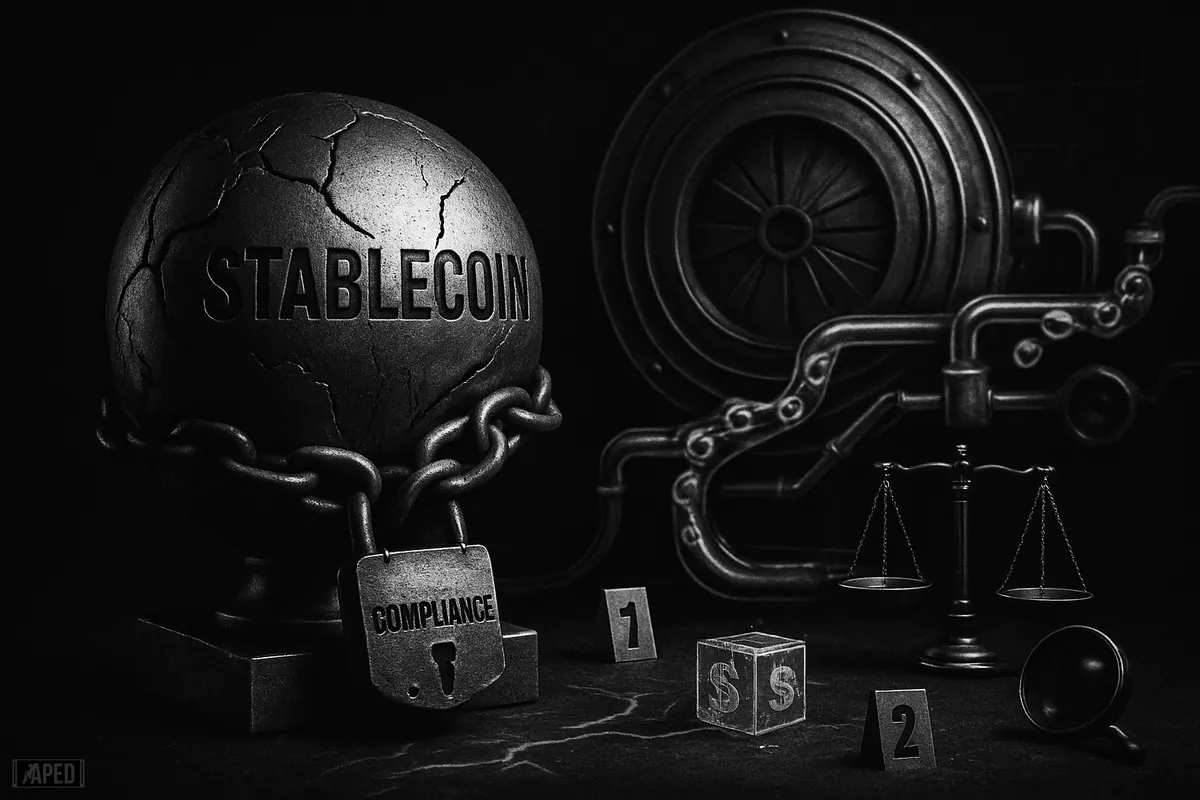
ZachXBT has put Circle under a harsh spotlight after alleging roughly $420 million in suspect USDC$1.0005 moved with little or delayed intervention. The claim is not about a depeg or a smart contract exploit. It is about compliance response, specifically whether one of crypto's biggest stablecoin issuers acted fast enough when stolen or illicit funds were visible on-chain. [1]
The allegation matters because USDC's pitch has always rested on trust, redemption access, and tighter controls than offshore alternatives. If a prominent on-chain investigator can map hundreds of millions in questionable flows that were not frozen promptly, that hits the asset's governance story more than its market price, at least for now.
Register for free and get unlimited access to all articles.
What ZachXBT is alleging
ZachXBT's findings, circulated under the label "The Circle USDC Files," argue that more than $420 million in suspicious transfers linked to hacks, thefts, and other flagged activity moved through USDC$1.0005 while Circle's enforcement response appeared inconsistent or slow. The core criticism is not that Circle lacked the technical ability to blacklist addresses. USDC has long included freeze functionality. The issue is whether that power was applied decisively when red flags were already public. [2]
That distinction is key. Stablecoin issuers sit in a strange middle ground between neutral infrastructure and active financial gatekeepers. Once an issuer can freeze assets at the token level, market participants expect that control to be used in obvious theft cases. ZachXBT's reporting suggests that expectation and actual practice may not have lined up.
Why this hits a sensitive part of the USDC story
USDC is often treated as the "cleaner" major stablecoin because Circle has leaned heavily into regulation, banking relationships, and compliance branding. That positioning helped it win institutional users and made it a preferred quote asset across many venues even after market share pressure from rivals.
A claim of weak oversight cuts directly against that image. If true, the problem is less about one bad incident and more about operational standards. Traders can tolerate volatility in risk assets. They are less forgiving when the main value proposition of a dollar token is discipline and controls, but the controls look selective, delayed, or opaque.
There is also a second-order effect for counterparties. Exchanges, OTC desks, and DeFi protocols use stablecoins as settlement plumbing. If a token issuer's freeze decisions appear unpredictable, that creates legal and market structure uncertainty for everyone holding collateral, routing payments, or warehousing customer balances.
The on-chain angle
This story is tailor-made for blockchain forensics because the receipts are visible. Investigators like ZachXBT typically build these cases by tying exploit-linked wallets, laundering routes, exchange deposit clusters, and token issuer actions into a timeline. The important metric is not just total value. It is when funds became identifiable, when alerts were public, and how much moved before any blacklist action happened.
That timeline determines whether the criticism is procedural or overstated. If suspect wallets were labeled quickly and large USDC balances still traversed fresh addresses before intervention, the complaint gains weight. If identification was uncertain or happened after funds were already fragmented across chains and venues, Circle has a stronger defense.
The $420 million figure also deserves careful framing. Aggregate totals in forensic reporting can span multiple incidents and time periods. That number should not automatically be read as a single event, or as money Circle could have cleanly frozen in full at one moment. It is better understood as the cumulative scale of alleged compliance gaps. [3]
What Circle's freeze power means in practice
USDC is centrally issued, which gives Circle tools most crypto projects do not have. It can blacklist addresses and render specific token balances non-transferable. That mechanism has been used before in response to sanctions, law enforcement requests, and major exploit cases.
That same capability creates a burden of consistency. Every high-profile hack now triggers the same question from victims and sleuths: why was this address not frozen already? In fast-moving exploit cases, minutes and hours matter because attackers bridge funds, split them across wallets, or swap into other assets to break the trail.
Critics argue that if Circle wants the legitimacy premium that comes with regulated branding, it also inherits the expectation of near-real-time incident response. Supporters of Circle would counter that freezing funds is not a vibes-based call, and a mistaken freeze can create legal exposure and hit innocent parties. [4]
Market reaction has been muted, but that may not last
So far, there is little sign of direct stress in USDC$1.0005 itself. The token's dollar peg has remained intact, which is not surprising. Compliance criticism does not usually trigger immediate redemption panic unless it raises doubts about reserves, banking access, or broad sanctions exposure.
Still, this kind of story can matter more over time than in the first 24 hours. Institutional treasury teams, compliance departments, and exchange risk managers pay attention to operational credibility. They may not dump USDC over one report, but repeated claims of delayed freezes could influence which stablecoin gets favored for custody rails, exchange collateral, or cross-border settlement.
Competitively, that matters. Stablecoin market share is increasingly a trust contest wrapped inside a distribution war. Any dent in Circle's compliance reputation gives rivals an opening, especially if they can argue their own issuer controls are either more responsive or more transparent.
The harder question for stablecoins
The deeper issue is not limited to Circle. It is whether centralized stablecoin issuers can credibly market themselves as both neutral infrastructure and selective enforcers. Crypto users want censorship resistance when they hold the asset, then demand instant intervention when a hacker holds it. Those two expectations clash.
That leaves issuers making judgment calls in public, with on-chain investigators grading them in real time. ZachXBT's allegations show how narrow that lane has become. Once flows are visible, delay itself becomes part of the story.
Why It Matters
If the $420 million figure holds up under scrutiny, this is less a headline about one investigator versus one issuer and more a warning about stablecoin accountability at scale. USDC did not wobble on price, but the more important peg here is reputational. Circle's strongest defense has long been that it offers a more supervised dollar on-chain. Allegations of weak or inconsistent action test that claim where it counts. [2]
For traders and builders, the takeaway is simple: watch the response playbook, not just the token ticker. The thesis that USDC carries lower operational risk weakens if future theft-linked flows again sit untouched for too long. It holds if Circle can show clear timelines, documented constraints, and faster action in the next major incident.
Your reviews help us improve the quality of both current and future articles. All reviews are public and visible to other readers. We use both ratings and comments to improve future articles and to revise any articles that do not meet our standards.
 See more like this on Google