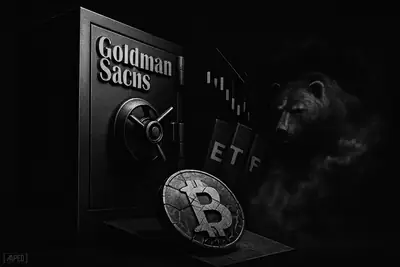
XRP$1.518 slipped to about $1.37 on Friday, down roughly 3.5% over 24 hours, even after Goldman Sachs disclosed a $152.17 million position across spotXRP$1.518 ETFs. The market is treating that filing as a slow-burn institutional signal, not an immediate bid, and the chart still looks heavy. [1]
Enjoy articles without ads?
Register for free and get unlimited access to all articles.
Goldman's ETF exposure is real, but price has not cared yet
Goldman Sachs' reported exposure spans four spot XRP ETF products and, based on the source material, makes the bank the largest disclosed institutional holder in that slice of the market. That matters for narrative. It suggests a major Wall Street player is willing to carry meaningful XRP-linked exposure despite the token's regulatory baggage and still-choppy altcoin tape. [2]
But the market reaction has been muted. XRP traded lower after the disclosure, which tells you positioning and broader risk appetite are doing more work than the headline. When a bullish catalyst lands and spot still fades, traders usually read that as a sign of weak demand at current levels.
That disconnect is important. ETF ownership can support a longer-term adoption case, but it does not guarantee near-term price strength, especially when crypto beta is rolling over or traders are rotating into assets with cleaner momentum.
The technical setup points to a breakdown risk
The bigger issue is structure. According to the source report, XRP is pressing against a bearish setup that implies a potential 50% drawdown if support gives way. The exact pattern matters less than the message: price is compressing near a key level after failing to turn a positive institutional headline into upside. [3]
Volatility has also contracted to levels that previously came before large moves. Low-volatility squeezes are not directionally bullish by default. If they happen inside a weakening chart structure, they often resolve lower.
For XRP$1.518, that means traders are watching whether the token can hold the current support zone around the mid-$1 range. A clean breakdown there would open the door to a much deeper retrace, potentially toward the area implied by the source article's 50% downside scenario. [4]
There are at least three reasons the Goldman disclosure has not triggered a reflex rally.
First, ETF exposure is not the same as aggressive spot accumulation in the open market. It signals portfolioallocation, but it does not automatically create the kind of visible order book pressure that reprices a token quickly.
Second, institutional interest can coexist with tactical bearishness. Funds can hold exposure while traders hedge, reduce risk, or wait for confirmation before adding. That is especially true when volatility is compressed and macro sentiment is fragile.
Third, XRP remains a highly narrative-driven asset. When the market is focused on chart breakdown risk, even strong headlines can get sold into. That is classic crypto market structure: bullish news landing into weak liquidity often becomes exit liquidity unless follow-through buying appears fast. [5]
What traders should watch next
The near-term battleground is simple. Bulls need to reclaim momentum and defend current support convincingly. If XRP can stabilize above the recent range and convert the Goldman news into sustained spot demand, the bearish setup starts to lose credibility.
If not, the downside case stays live. A break below support on rising volume would likely confirm that the market values the ETF disclosure as a long-term endorsement, not a catalyst for immediate repricing.
For now, the clean read is this: Goldman Sachs putting $152 million into spot XRP ETFs is a meaningful institutional data point, but the tape still looks vulnerable. The bullish thesis improves if XRP reclaims higher levels and volatility expansion comes with net buying. It gets invalidated the other way if support breaks and sellers take control of the next leg lower.
Your reviews help us improve the quality of both current and future articles. All reviews are public and visible to other readers. We use both ratings and comments to improve future articles and to revise any articles that do not meet our standards.
 See more like this on Google