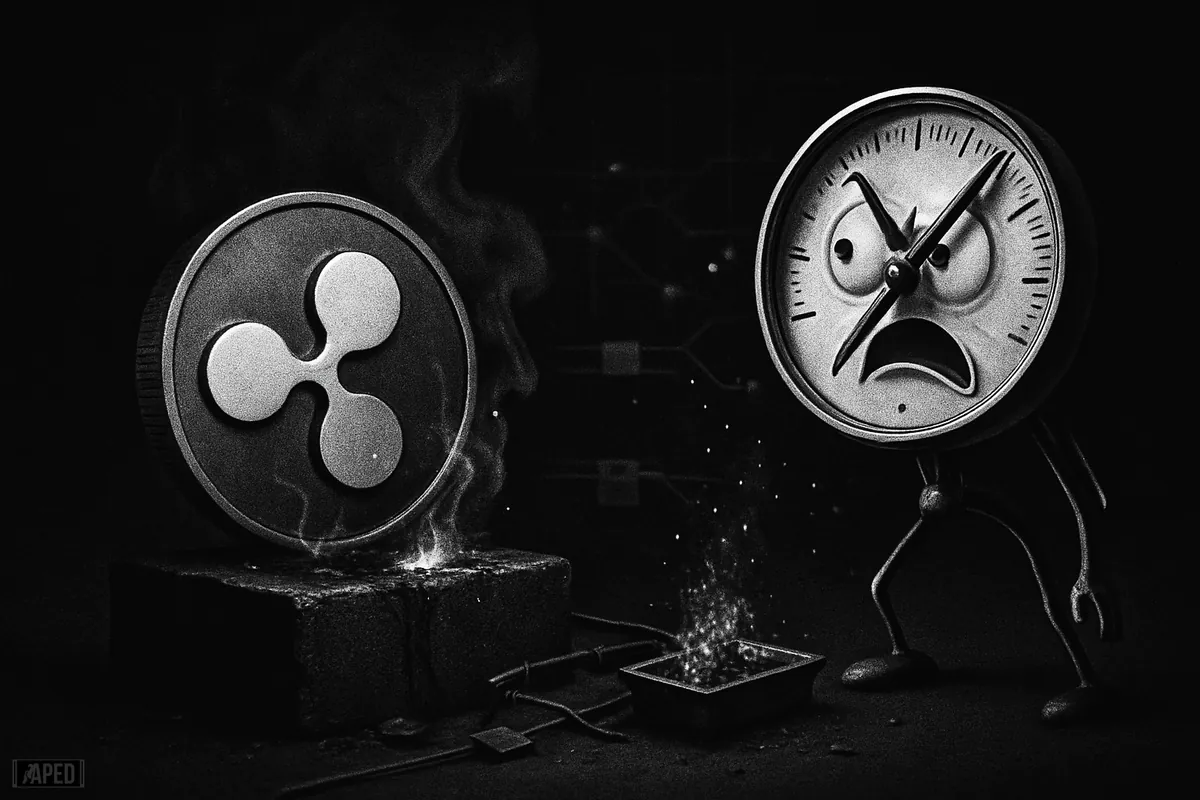
Burn a few extra XRP, wait for moon? Sure. March's data says not so fast.
XRP$1.518's burn rate jumped several times this month as transaction fees briefly rose and more tokens were removed from circulation. The headline number looked flashy, but the underlying pattern was less exciting: the spikes were short, reactive, and tied to bursts of network use rather than any durable shift in supply dynamics. When activity cooled, the burn rate dropped back toward normal levels. [1]
Enjoy articles without ads?
Register for free and get unlimited access to all articles.
What actually spiked
XRP$1.518 burns a tiny amount of the token with each transaction fee, a design choice meant to prevent spam rather than create a serious deflation engine. That distinction matters. During March, on-chain fee burns climbed in a few noticeable bursts, especially around periods of heavier ledger activity. One reported surge in successful transactions pushed past 2.6 million, showing the network can process meaningful throughput when usage picks up. [2][3]
But the burn story faded almost as quickly as it appeared. Those higher-fee periods did not persist, and neither did the elevated burn levels. That makes the mechanism passive, not structural. More traffic means more XRP destroyed. Less traffic means the effect largely disappears. It is not a self-reinforcing supply squeeze, and the market seems to understand that.
The basic issue is scale. XRP$1.518's total supply is so large that fee-based burns, even during active stretches, remove only a negligible amount relative to circulating inventory. A temporary increase in burned XRP can look impressive in percentage terms if measured against a low baseline, but that does not automatically translate into a meaningful reduction in supply. [4]
The second problem is consistency. For burn narratives to matter, the network would need sustained high transaction volume, not a few brief surges. March did show moments of stronger usage, but not a steady trend strong enough to support a lasting deflation thesis. In plain English, a spike is not a regime change.
Price action added another reality check. While burn activity flared up, XRP did not suddenly break out on the back of it. That disconnect suggests traders are treating the metric as secondary at best. If the market believed fee burns were materially changing supply conditions, that conviction would likely show up more clearly in price and trend structure. [5]
The market's actual read
The more plausible interpretation is that burn spikes are a byproduct of usage, not a catalyst on their own. They can confirm that network activity has improved for a window of time, but they do not create a durable bullish case unless that activity keeps compounding.
This is where some of the broader XRP commentary has gotten ahead of the data. Reports of triple-digit burn-rate jumps sound dramatic, because of course they do. Yet percentage surges from a small base can exaggerate significance. Without sustained transaction growth, the burn metric is mostly noise with decent branding.
Three things matter more than the burn rate by itself.
First, whether XRP Ledger transaction counts stay elevated through early April rather than falling back after short bursts. Second, whether fee pressure reflects organic usage or one-off congestion. Third, whether price starts responding to on-chain improvements instead of ignoring them.
If transaction success counts keep rising and burns remain above baseline for weeks, not days, the story changes. Until then, XRP's fee burn mechanism looks like what it has always been: a useful network feature, not a magic supply shock. Mildly interesting, not thesis-changing. [6]
Your reviews help us improve the quality of both current and future articles. All reviews are public and visible to other readers. We use both ratings and comments to improve future articles and to revise any articles that do not meet our standards.
 See more like this on Google