 See more like this on Google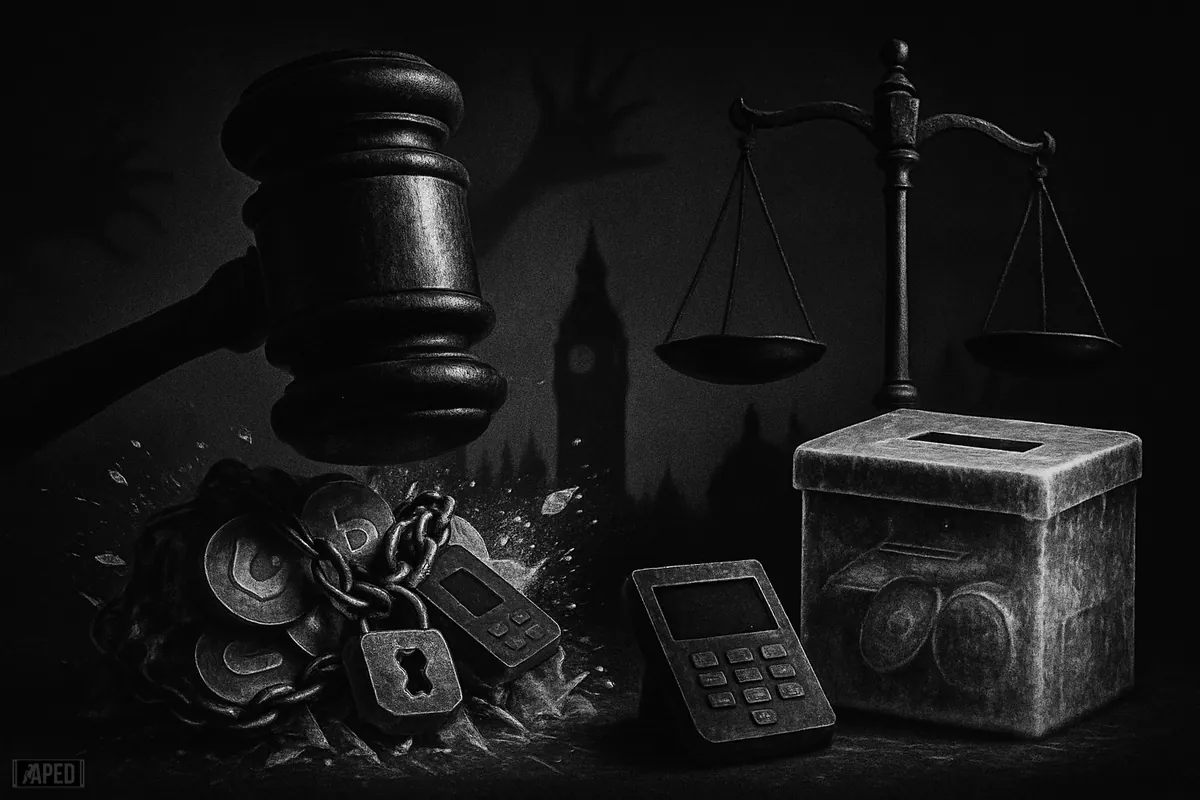
Share article
Share article
The catalyst is a newly announced moratorium that effectively tells parties and campaign units: do not take coins until there is a clearer, enforceable standard for provenance checks, identity verification, and reporting. [2]
Enjoy articles without ads?
Register for free and get unlimited access to all articles.
What the UK actually did, and why it matters
The other shoe: overseas funding caps and foreign influence controls
The additional research points to a broader package, not a single-issue crypto headline. Alongside the crypto moratorium, policymakers are pushing tighter limits on overseas political funding, including caps tied to overseas electors. [2] The connective tissue is straightforward: foreign influence risk is easier to police when donor identity, jurisdiction, and source of funds are clear and auditable.
Why this is a "freeze" instead of a full-on permanent ban
Calling it a moratorium is the tell. This is less "crypto is illegal in politics forever" and more "the compliance perimeter is not ready yet."
A workable regime would likely need at least three pillars:
- Donor identity certainty: parties need to tie a donation to a real, permissible person or entity, not just a wallet address.
- Source-of-funds evidence: documentation or analytics strong enough to show the donation did not originate from prohibited sources.
- Clean reporting and valuation standards: clear rules on how to value volatile assets at the time of receipt, how quickly they must be converted, and how to report refunds if a donation later becomes non-compliant.
What this means for parties, campaigns, and "bags" trying to influence policy
For political parties, the immediate impact is operational. A crypto donation ban or freeze is not just a payments decision, it is a compliance posture. If a party accepts coins and later cannot prove permissibility, it risks forced forfeiture, reputational damage, and scrutiny that can swallow campaign cycles.
For the broader crypto industry, this is a reminder that "on-chain transparency" is not the same as "regulatory-grade attribution." Chain data can show flows, but elections regulators care about who ultimately controls the funds and whether that person is allowed to donate under UK law.
Market structure angle: why stablecoins do not magically solve it
Stablecoins can actually make the compliance story harder in edge cases, because they are optimized for fast movement across venues and chains. If the policy goal is to stop prohibited foreign money and opaque intermediaries, stablecoins do not reduce the need for strict identity controls. They often increase the speed at which funds can be layered.
What to watch next: implementation details and enforcement posture
Two things will determine whether this is a temporary speed bump or the start of a longer ban.
1) How the rule is written and who polices it
If enforcement is delegated with clear guidance and penalties, parties will treat this as hard law even if it started as "guidance." If it is loosely defined, parties may seek workarounds via third-party processors, which would likely trigger a second, stricter round of rules.
2) Whether compliant "regulated-rail" crypto donations get carved out
A future regime could allow donations only if they come through UK-registered, fully KYC'd entities with strong source-of-funds checks and robust recordkeeping. Another path is a flat prohibition on crypto rails for politics, regardless of KYC, on the grounds that the provenance burden is too high and the reputational downside too large.
