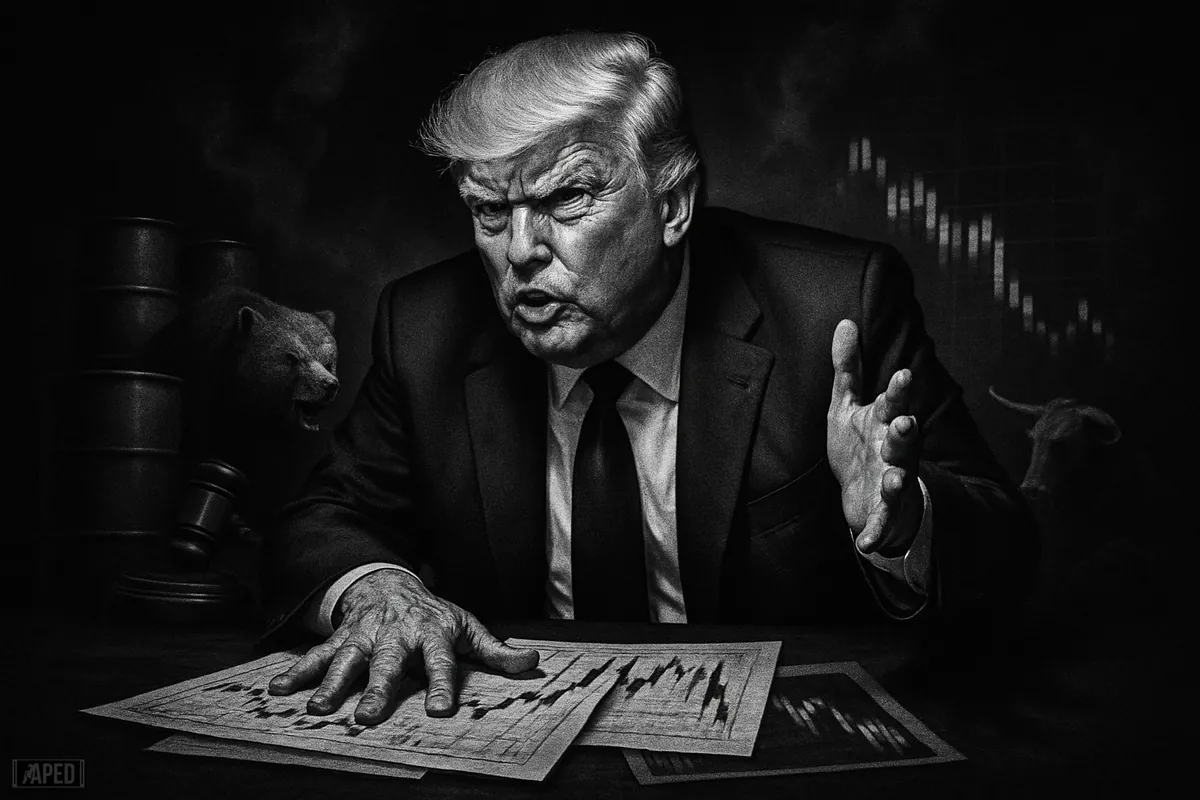
Risk assets do not like war budgets, and crypto usually gets hit first when traders smell a bigger macro mess.
President Donald Trump's reported $200 billion funding ask tied to a possible Iran conflict is adding a fresh layer of risk-off pressure across markets, including digital assets. The headline matters less for its politics than for what it signals to traders: higher geopolitical uncertainty, a possible oil shock, and another excuse to cut leverage. [1]
Bitcoin$80,326.14 was recently quoted around $68,035, up 1.85%, while Ethereum$2,327.25 traded near $2,099.91, up 2.89%. Those green prints do not cancel the broader point. Crypto has been trading like a high-beta macro asset for a while now, and war-related headlines tend to tighten liquidity, push up hedging demand, and make degens de-risk fast. [2]
Register for free and get unlimited access to all articles.
Why the market cares
A $200 billion military ask is not just a Washington budget story. It feeds directly into three market variables that matter for crypto: energy prices, Treasury issuance expectations, and general appetite for speculative exposure.
If conflict risk around Iran escalates, oil is the first chart to watch. A move back above $100 crude would revive inflation concerns and make the Federal Reserve's path harder to price. That usually supports the dollar and pressures assets that benefit from loose liquidity. Bitcoin$80,326.14 can still act as a long-term hedge in some narratives, but in the short run it often trades more like a tech proxy than digital gold.
Bond markets are the second channel. More defense spending, especially at this scale, raises questions about deficits and future funding needs. Traders do not need a full macro thesis to react. They just need enough uncertainty to rotate into cash, Treasuries, or defensive positioning. Crypto, particularly altcoins, tends to get rekt first when that happens. [3]
How crypto has been reacting
The recent price action looks split, which is pretty normal when geopolitical headlines hit in waves. Some reports earlier in the cycle described Bitcoin$80,326.14 diving on fears of a wider US operation, while later coverage showed BTC bouncing with broader risk assets when headlines suggested a pause or delay in escalation. [4][5]
That back-and-forth is the real story. The market is not pricing a clean outcome. It is trading the probability of escalation, de-escalation, and policy response, almost headline by headline. That usually means higher volatility, weaker conviction, and faster liquidations on both sides.
Altcoins remain the softer part of the tape. Large caps like BNB$547.09 at $617.40 and XRP$1.518 at $1.34 have held up better than the more speculative end of the market, but Solana$76.56 at $82.83 slipping 0.59% is a reminder that beta gets sold first when sentiment turns shaky. Meme names such as Pepe$0.00000386, Bonk$0.00000634, dogwifhat$0.1796, and Popcat$0.06067 can still bounce on isolated flows, but they are not where serious money hides during geopolitical stress.
The oil and liquidity link
Crypto traders sometimes overcomplicate this stuff. The cleaner framework is simple: higher oil can mean stickier inflation, stickier inflation can mean tighter policy expectations, and tighter policy expectations are bad for speculative liquidity.
That does not mean every war headline sends Bitcoin straight down. Sometimes BTC catches a bid if traders start to worry about fiscal credibility or broader fiat instability. But that trade usually takes time to develop. The immediate reaction is more often blunt risk reduction, especially in derivatives-heavy markets where open interest can unwind quickly.
This is why the Iran angle matters more than the dollar figure alone. Iran sits too close to global energy plumbing for markets to shrug off conflict talk. Even without actual disruption, the fear premium can be enough to move commodities and reset positioning elsewhere. [6]
What traders should ignore, and what they should not
There is plenty of spin in politically loaded stories like this. Traders should separate campaign rhetoric, congressional theater, and actual military commitment. A funding ask is not the same thing as money deployed, and money deployed is not the same thing as a prolonged conflict.
Still, dismissing it entirely would be lazy. Markets trade expectations, not final invoices. If participants believe the odds of escalation are rising, they will trim crypto exposure before the details are settled.
The key on-chain or industry-specific crypto catalysts have not disappeared, but right now macro can overwhelm them. ETF flows, stablecoin activity, and exchange liquidity still matter, just not as much as a geopolitical headline that can yank oil, yields, and the dollar in one shot.
Watch crude oil, Treasury yields, and Bitcoin's ability to hold the upper $60,000s. If oil stays contained and war rhetoric cools, crypto can recover with broader risk assets and rotate back into beta. If oil spikes, yields climb, and BTC loses that support zone, expect more defensive positioning and sharper pain in alts. [7]
If macro holds, watch for a relief bid. If it breaks, expect crypto traders to cut bags first and ask questions later.
Your reviews help us improve the quality of both current and future articles. All reviews are public and visible to other readers. We use both ratings and comments to improve future articles and to revise any articles that do not meet our standards.
 See more like this on Google