See more like this on Google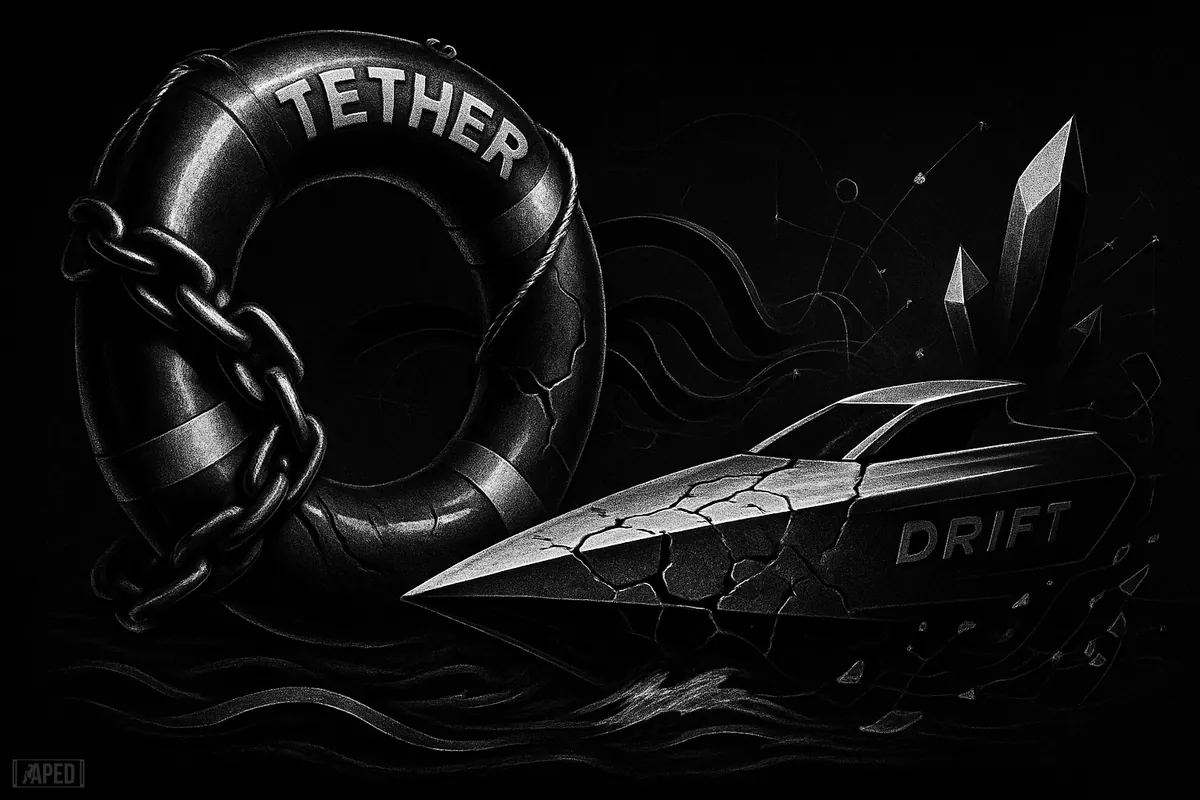
Share article
Share article
Enjoy articles without ads?
Register for free and get unlimited access to all articles.
A rescue package tied to actual usage
That structure shifts the burden from pure treasury recapitalization to platform performance. If volumes return and traders come back, reimbursements can accelerate. If activity stays thin, recovery stretches out. For users with bags trapped by the exploit, the thesis is straightforward: Drift needs to relaunch, rebuild liquidity, and hold enough bid on its own product to keep revenue flowing.
The exploit still sets the terms
The backdrop here is ugly. Drift halted operations on April 1 after confirming an active exploit, with early loss estimates around $285 million. That number is far above the current recovery pool, which explains why the plan is being framed as staged and activity-dependent rather than immediate full restitution. [4]
Why the USDC to USDT switch matters
That could improve confidence for users who prefer the deepest global stablecoin liquidity profile. It also introduces concentration risk. If one issuer becomes both rescue financier and core settlement provider, the platform's recovery becomes more tightly coupled to that partner's operational and market posture.
What the market should focus on next
The headline number, $127.5 million, is large enough to stabilize the narrative around Drift, but traders should watch the actual relaunch mechanics, not just the PR. Key signals include whether meaningful liquidity returns to the books, whether fee generation is strong enough to support reimbursements, and whether users accept USDT-centric collateral and settlement without friction.
Another important checkpoint is transparency. A revenue-linked recovery plan needs clear reporting: how much has been reimbursed, over what period, and against what revenue base. Without those receipts, the market is left trading vibes after a $285 million exploit, which is not a serious framework for rebuilding trust.
The Bottom Line
Tether's backing gives Drift a path back to market, but not a clean reset. The platform is relaunching with a partial recap, a performance-based recovery model, and a full switch from USDC to USDT. That is enough to keep the recovery thesis alive. It is not enough to remove execution risk.
For now, the invalidation level is simple: if trading activity does not return, the reimbursement engine stalls. If liquidity comes back and revenue prints, Drift has a real shot at grinding through the damage. If not, this rescue package will look less like a comeback and more like a bridge to a slower unwind.