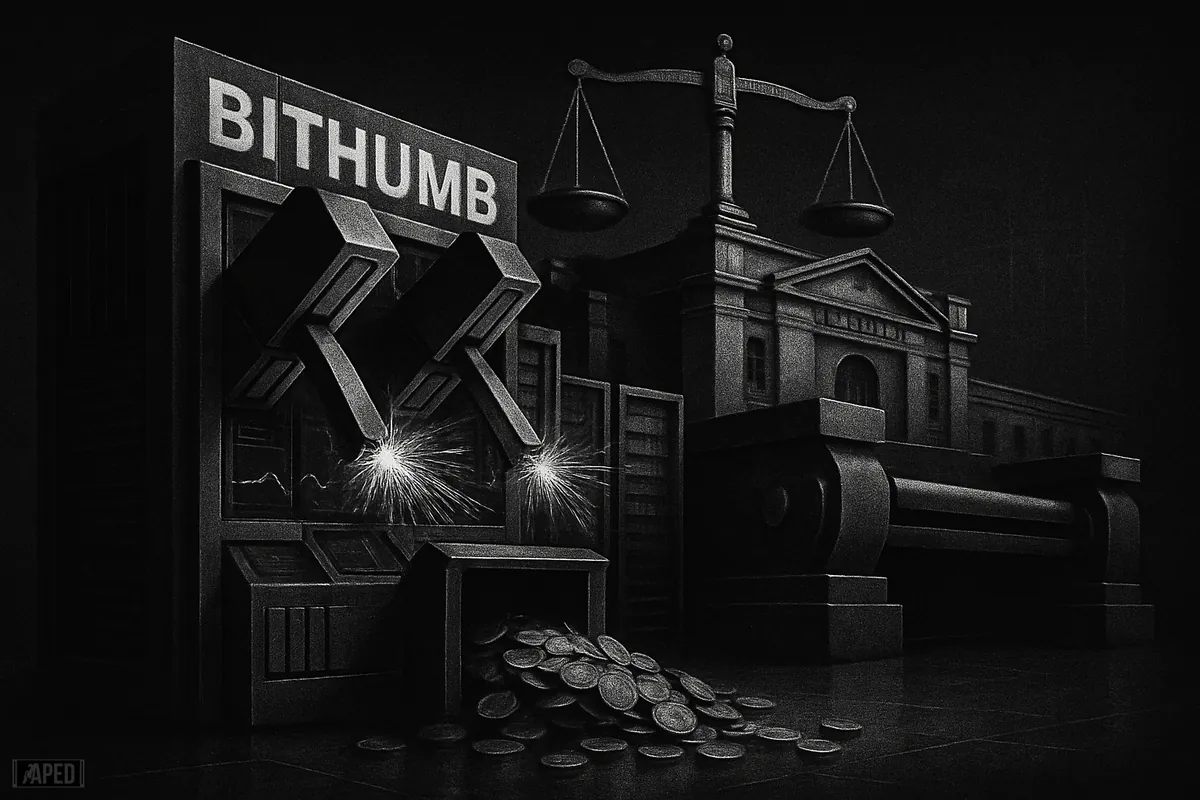
Crypto finally got the "maybe we should put a guardrail on this thing" treatment from South Korea. After Bithumb's now infamous February error sent customers 620,000 Bitcoin$80,660.10 instead of 620,000 won, the Bank of Korea is floating stock market style circuit breakers for local crypto exchanges. [1]
That is the headline, and it is not a small one. The proposal appeared in the central bank's payments report released Monday, where officials argued lawmakers should consider emergency trading halts similar to those used on the Korea Exchange. The goal is simple: stop obvious accidents or disorderly moves from cascading across the market before anyone can hit refresh. [2]
Register for free and get unlimited access to all articles.
Why the BOK is stepping in
The trigger was Bithumb's operational failure earlier this year, which briefly turned a routine payout into a glitch worth more than $40 billion on paper. The mistaken transfer sent Bitcoin$80,660.10, not Korean won, to users. Some customers reportedly returned the funds, while others did not, setting up a mess that moved from technical issue to legal and regulatory headache fast. [3]
For the Bank of Korea, the episode highlighted something regulators have worried about for years: crypto exchanges now sit close enough to the financial mainstream that exchange errors are not just "CT drama" anymore. They can create payment risks, liquidity shocks, and public trust problems, especially in a market like South Korea where retail participation is deep and trading activity can spike quickly. [4]
What "circuit breakers" could mean for crypto
In traditional markets, circuit breakers pause trading when prices move too far too fast. Applied to crypto, the concept could go beyond price volatility alone. South Korean officials appear focused on broader market disruption, including operational mistakes, abnormal orders, and sudden swings tied to exchange specific incidents. [5]
That matters because crypto trades 24/7 and does not have the natural cooldowns of stock markets. A halt mechanism could give exchanges time to verify balances, reverse clear errors, and communicate with users before panic selling or opportunistic trading takes over. In plain English, it is a timeout button for when the dashboard starts flashing red.
This is less about capping crypto's volatility and more about market plumbing. The BOK's language suggests concern with infrastructure resilience, not just speculative excess. That puts the discussion closer to exchange risk management than to an outright anti-crypto stance.
South Korea has taken this lane before. Regulators have generally preferred tighter oversight of trading venues, banking ties, and consumer safeguards rather than broad bans. A circuit breaker framework would fit that pattern: more compliance stack, not less crypto.
What traders and exchanges should watch
For exchanges, the obvious implication is heavier operational standards. If lawmakers act, platforms may need automated halt systems, stricter reconciliation checks, and clearer incident response playbooks. Smaller venues could feel that pressure most, since building these controls costs money and engineering time.
For traders, especially retail users, temporary halts could be annoying in the moment but reduce the odds of getting caught in a glitch-driven wipeout. The trade-off is familiar: less uninterrupted access, more market integrity.
Why it matters
This story is bigger than one Bithumb mistake. South Korea is effectively testing whether crypto market structure should start borrowing more openly from equities. If that happens, expect other regulators to watch closely. [6]
The practical takeaway is pretty straightforward: exchanges that still treat operational risk like a side quest may be next in the regulatory spotlight. For users, the new metric to care about is not just volume or fees, but whether a platform has a real kill switch when things go sideways.
Your reviews help us improve the quality of both current and future articles. All reviews are public and visible to other readers. We use both ratings and comments to improve future articles and to revise any articles that do not meet our standards.
 See more like this on Google