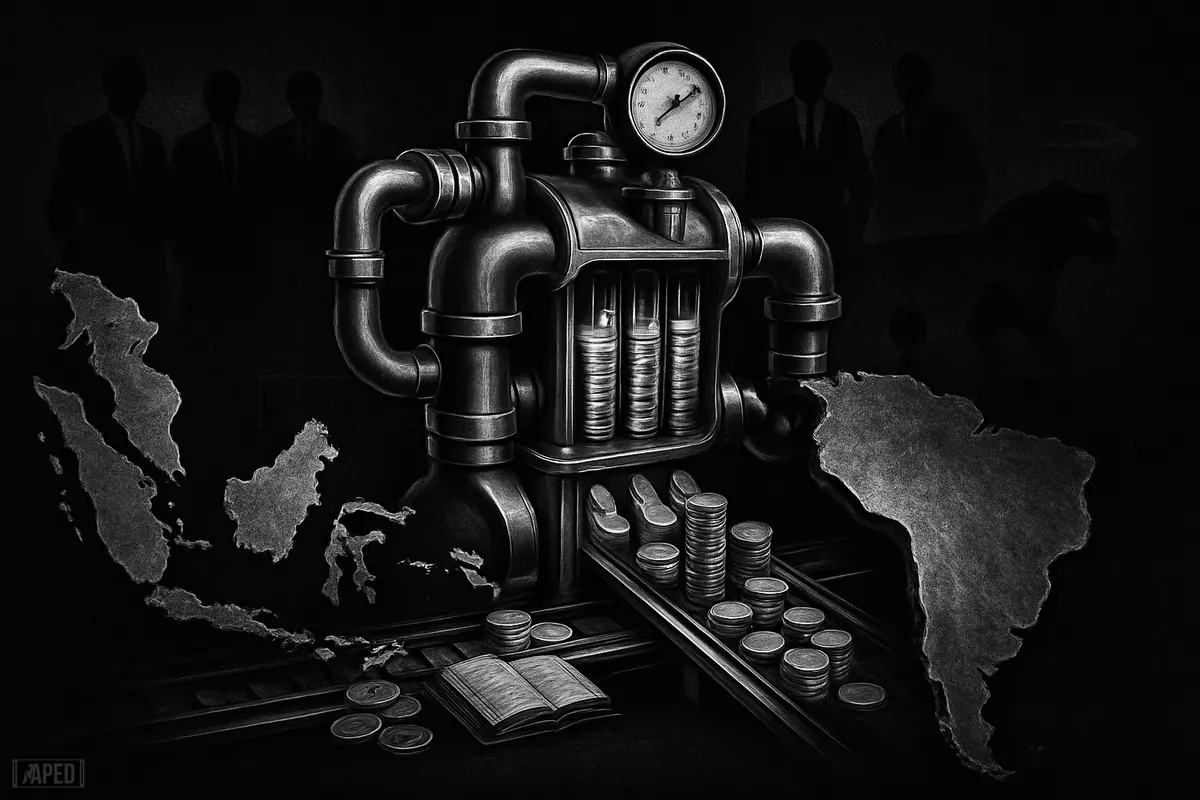
Cross-border payments have spent years being described as broken, slow, and expensive. They are still all three, which is why a startup raising $94 million to move dollars around faster with Stablecoin$0.000000399 sounds less like a moonshot and more like the market finally admitting the plumbing needs replacing.
OpenFX said Tuesday it closed a $94 million Series A to expand its stablecoin-based foreign exchange and remittance network. The round included Accel, Atomico, Lightspeed Faction, M13, Northzone, and Pantera. The company says the capital will go toward deepening liquidity, opening more payment corridors, and pushing harder into Southeast Asia and Latin America, two regions where cross-border transfer costs and settlement delays remain a very real tax on businesses and households. [1]
Enjoy articles without ads?
Register for free and get unlimited access to all articles.
The core bet: stablecoins as FX rails, not just crypto collateral
OpenFX is positioning itself in a lane that has become a lot more crowded, and a lot more credible, over the past year: using Stablecoin$0.000000399 to handle the ugly middle section of international payments. Rather than relying entirely on correspondent banking networks, prefunded accounts, and batch settlement windows, firms in this category use tokenized dollars or similar fiat-backed assets to move value between markets faster, then convert back into local currency at the edge.
That matters because the problem is not just speed. Traditional cross-border flows often tie up capital in multiple jurisdictions, add fees at each handoff, and leave users with poor visibility on final settlement. Stablecoin rails can, at least in theory, reduce all three. Theory, of course, is cheap. The harder part is sourcing liquidity consistently and operating in enough corridors to make the model useful outside a demo deck.
OpenFX says that is exactly where the new funding goes: more market-making capacity, more route coverage, and more scale where remittance and SME payment demand is already high. For a payments company, liquidity depth is not a side detail. It is the product. [2]
Why investors are writing nine-figure checks
A $94 million Series A is large by any standard, and it says something about where investor conviction is clustering in crypto. Capital is still available for businesses tied to digital assets, but increasingly it is flowing to infrastructure with a revenue path, not vague token narratives dressed up as "adoption."
Stablecoins fit that profile unusually well. They have become one of crypto's most durable product categories because the use case is painfully obvious: moving fiat-linked value quickly, globally, and around the clock. That has made them attractive not only for trading, but also for treasury operations, remittances, merchant settlement, and B2B payments.
OpenFX is trying to capture the FX layer of that stack. If it can make conversions cheaper and settlement more predictable across hard-to-serve corridors, the upside is meaningful. Global cross-border payment volume is massive, and even a thin slice of that market can support a large business. Investors clearly think the timing has improved enough to back scale early. [3]
Southeast Asia and Latin America are not random expansion targets
The company's focus on Southeast Asia and Latin America is notable because those regions combine several traits that make alternative payment rails appealing: fragmented banking infrastructure, expensive international transfers, active dollar demand, and growing familiarity with digital wallets.
For remittance-heavy routes, settlement time is not a cosmetic metric. Delays can directly affect household cash flow. For small and mid-sized businesses dealing with imports, supplier invoices, or payroll across borders, FX friction can be the difference between manageable working capital and constant operational strain. Stablecoin settlement does not eliminate local off-ramp complexity, but it can remove some of the slower and costlier layers in the middle.
That is the commercial case. The regulatory case is messier. Expansion in these markets will depend not just on technical integration, but on local licensing, banking partners, compliance controls, and the legal treatment of stablecoin-linked payment activity. Payments startups love to talk about frictionless flows. Regulators, for reasons everyone definitely predicted, tend to prefer friction with documentation.
OpenFX's pitch lands at a time when stablecoin payments are moving from concept to operating model. That does not mean the hard problems are solved. Cross-border settlement businesses live or die on operational details: liquidity coverage by corridor, spread management, counterparty risk, compliance screening, local payout reliability, and customer acquisition costs.
Deepening liquidity, one of the company's stated uses of funds, is especially important. Any provider promising faster FX settlement needs enough inventory and trading capacity to avoid punishing users with slippage or inconsistent pricing. Stablecoin rails can reduce settlement latency, but they do not magically erase currency risk or local market fragmentation.
There is also a competitive angle. OpenFX is not building in a vacuum. Banks are modernizing parts of their own cross-border stacks, fintechs are pushing local payout networks, and crypto-native payment firms are targeting the same stablecoin thesis from different directions. The market opportunity is real, but so is the race to own the most useful corridors first.
The funding round is another signal that stablecoins are becoming less of a crypto subculture product and more of a financial infrastructure layer. That shift has been visible for a while, but rounds like this make it harder to dismiss as niche. Investors are not backing stablecoins here as a speculative asset. They are backing them as settlement technology. [4]
That distinction matters. The winners in this category are unlikely to be the loudest brands. They will be the firms that can integrate with banking systems, manage compliance at scale, keep liquidity tight, and make the end user barely notice crypto is involved at all. Not glamorous, sure. Also how real payments businesses are built.
What to watch next
Three things matter from here.
First, corridor expansion. OpenFX will need to show that the new capital translates into real coverage in Southeast Asia and Latin America, not just partnership announcements with good lighting.
Second, liquidity quality. Faster transfers only matter if pricing stays competitive and settlement remains reliable during periods of market stress.
Third, regulatory durability. Stablecoin payment models are gaining traction, but they still depend on compliant issuance, banking access, and local legal clarity. If any of those wobble, growth gets expensive quickly. [1]
For now, the takeaway is simple: OpenFX has raised a serious amount of money to attack a very boring, very lucrative problem. In payments, boring is usually a compliment.
Your reviews help us improve the quality of both current and future articles. All reviews are public and visible to other readers. We use both ratings and comments to improve future articles and to revise any articles that do not meet our standards.
 See more like this on Google