 See more like this on Google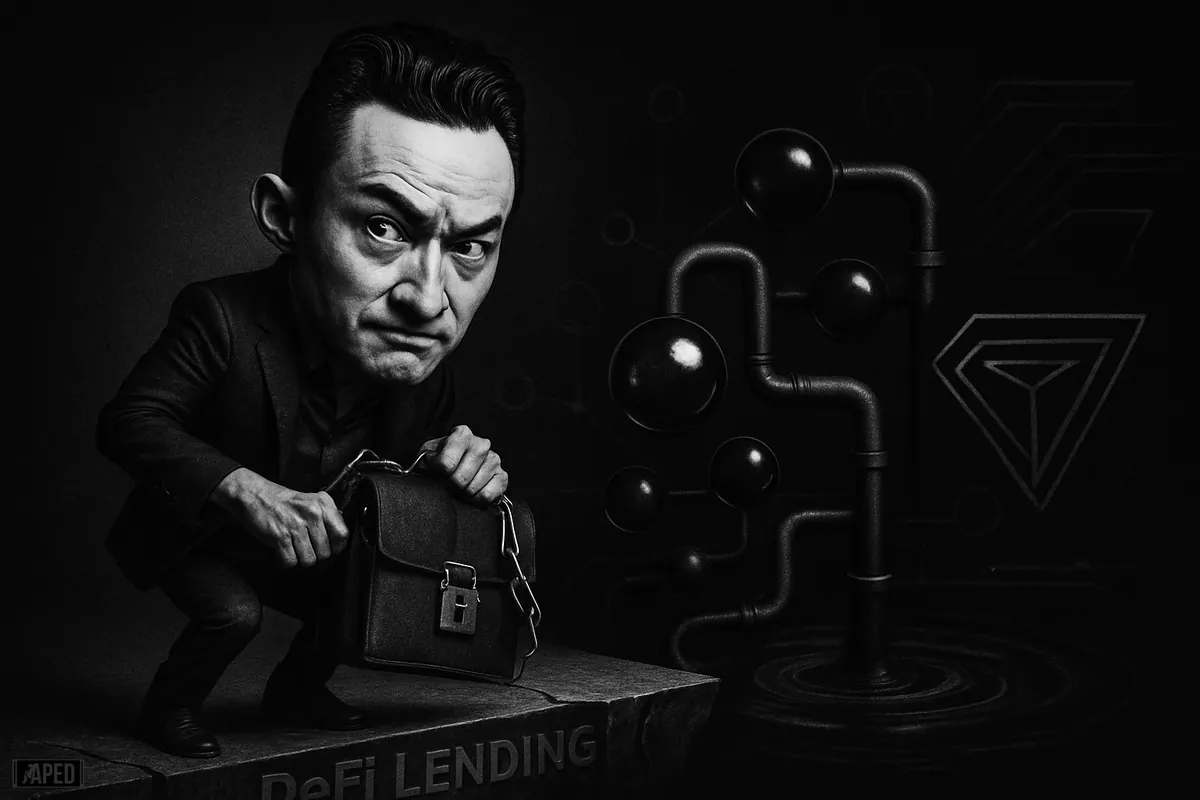
Share article
Share article
Intelligence Brief
72
WLFI Collapse Deepens: Justin Sun's Locked Tokens Down $80M
Justin Sun's WLFI token faces deepening losses with locked tokens down $80 million after the team borrowed over $50 million in stablecoins using WLFI as collateral, reportedly draining lending pool liquidity. The 10% price decline marks an escalation of the governance and solvency concerns surrounding the protocol.
Apr 10 10:00
WLFI's slide just got steeper. Bubblemaps said Friday that Justin Sun's locked WLFI position is now down $80 million, as the token fell another 10 percent after the project allegedly posted its own token as collateral to borrow more than $50 million in stablecoins, draining the relevant lending pool. [1]
The post was a follow-up to Bubblemaps' earlier warning that Sun, who remains blacklisted by WLFI, had already seen the value of his locked tokens drop by $60 million over the prior three months. That earlier note mattered because it highlighted a strange market structure from the start: a major backer sitting on a large, illiquid position, unable to exit, while the token kept repricing lower. Friday's update suggests the situation has worsened materially in a short window, with another $20 million in marked losses layered on top of the previous drawdown. [1]
Enjoy articles without ads?
Register for free and get unlimited access to all articles.
Borrowing against the token itself
What changed, according to Bubblemaps, is not just market sentiment but protocol behavior. The team is accused of using WLFI as collateral to borrow $50 million or more in stablecoins, a move that effectively pulled liquidity out of the system and intensified stress on the token. Intelligence tied to the post points to Dolomite as the venue where the borrowing occurred, with roughly $75 million in stablecoins borrowed against WLFI. The borrowing reportedly drained the USD1 pool to 100 percent utilization. [1]
That detail is critical. When a lending pool is fully utilized, lenders cannot easily withdraw, borrowers face growing scrutiny, and the market starts to price in reflexive risk. If the collateral backing those loans is the same token under pressure, the structure can look circular fast: the protocol depends on a falling asset to support debt, while that debt extraction removes stables that otherwise could have cushioned redemptions or market confidence.
Why Justin Sun's position matters
Sun's role here is notable because Bubblemaps frames him as both exposed and constrained. His WLFI is locked, and the project has blacklisted him, meaning the losses are not just paper volatility on a tradeable bag but losses tied to a position he cannot freely manage. In practical terms, he is watching the token mark down without a clear path to de-risk. [1]
That also gives the market a rough barometer for how much value has been erased. The $80 million figure is less about Sun personally than what it signals about WLFI's deterioration since those tokens were valued much higher. For crypto traders, this is the kind of datapoint that sharpens attention on token unlock terms, blacklist controls, and whether governance or treasury structures can be weaponized against even prominent holders.
Market structure risk is now the story
The bigger issue for WLFI is that the controversy is shifting from price action to solvency optics. A token dropping 10 percent in a day is one story. A team borrowing tens of millions in stables against its own token, while a lending pool gets emptied, is another. That raises questions about treasury management, related-party exposure, and whether liquidity conditions around WLFI are more fragile than headline valuations imply. [1]
If the reported Dolomite position remains open and the USD1 pool stays heavily utilized, counterparties will likely focus on collateral quality and liquidation risk. Any further WLFI weakness could increase pressure on whatever debt stack sits against it. Even absent a formal liquidation event, the perception that insiders extracted stable liquidity while leaving the market with the token downside is the kind of setup that tends to worsen confidence quickly.
WLFI now faces a credibility problem as much as a pricing problem. Bubblemaps' update puts a hard number on the damage to one high-profile holder, but the more important takeaway is structural: when a project leans on its own token to pull out cash, every additional price drop starts to matter more. For holders and lenders alike, the key question is no longer just how far WLFI has fallen, but whether the system built around it can absorb another leg down.
People Referenced

Companies Referenced

Tags
Original tweet