See more like this on Google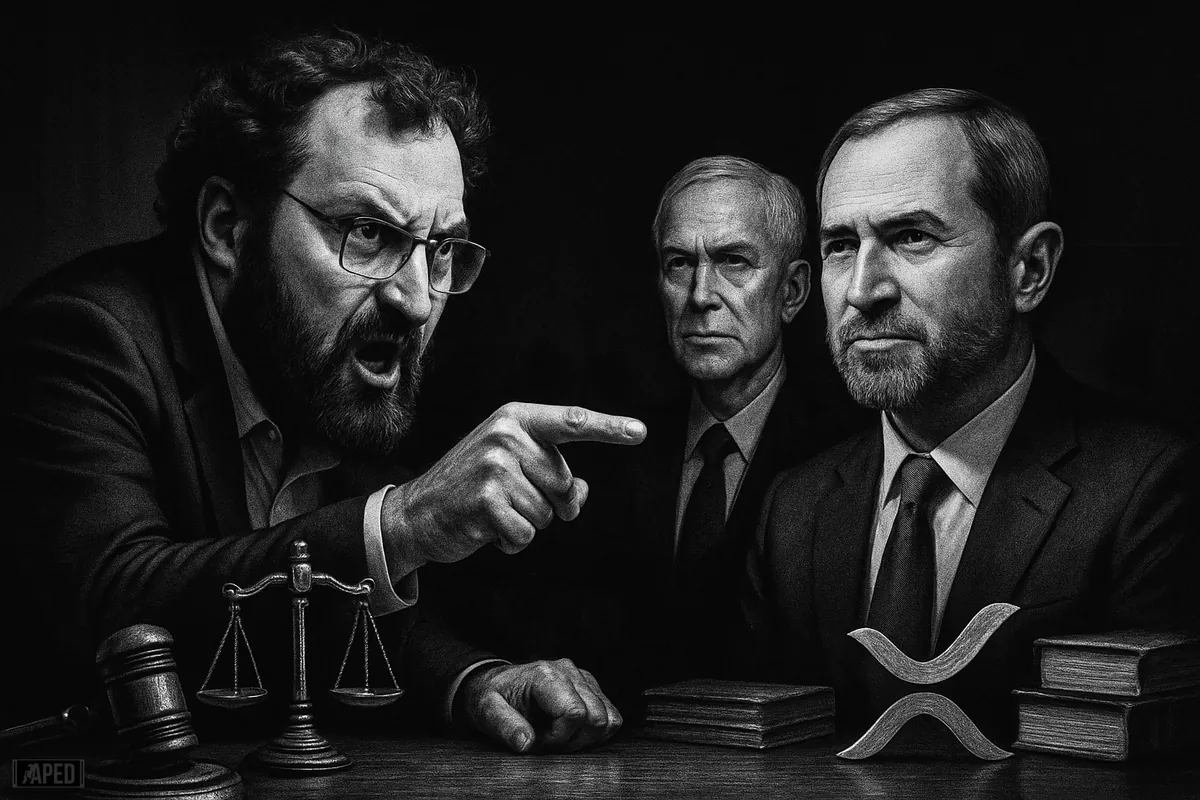
Share article
Share article
Enjoy articles without ads?
Register for free and get unlimited access to all articles.
What Hoskinson is attacking
Why this matters beyond the XRP versus ADA feud
This is bigger than another founder spat. Crypto policy in the US is entering the phase where wording matters more than slogans. A single definition around decentralization, issuer control, secondary sales, or token distribution could decide which assets trade cleanly on US venues and which remain stuck in legal gray zones.
Ripple's political strategy is under the microscope
Hoskinson's attack taps directly into that anxiety. The subtext is that crypto asked for clear rules, not custom rules. If legislation starts looking like it was designed by the biggest lobbying desks in the room, expect more public pushback from rival chains and industry groups.
Reports circulating around the clash suggest Hoskinson specifically objected to the idea that Ripple executives were favoring legislative language that would help some networks secure clearer treatment while leaving others at a disadvantage. Even without full bill text becoming the center of the public debate, the accusation alone puts pressure on Ripple to show that its preferred framework is broadly applicable. [5]
The real fault line: open market rules versus tailored exemptions
The most important divide here is philosophical. One camp wants broad, technology-neutral standards that apply across networks. The other is comfortable with more tailored legal tests if that gets a bill through Congress and delivers certainty faster.
Ripple supporters, on the other hand, can argue that imperfect legislation is still better than endless SEC ambiguity. If a bill creates a usable path for large parts of the industry, they may see that as a win, even if some edges remain uneven. That is a politically realistic argument, but it is also exactly the tradeoff Hoskinson is rejecting.
What to watch next
The next catalyst is not another sharp quote on social media. It is whether lawmakers, trade groups, or other major founders start echoing the same criticism. If more industry players say the bill creates hidden winners and losers, the debate shifts from founder drama to a legitimacy problem for the legislation itself.
For now, the takeaway is simple: this is a fight over market structure dressed up as a founder feud. If the US gets crypto law this cycle, the projects that fit the final definitions could get a major advantage. The ones outside the fence may spend years trying to catch up.
People Referenced
Charles Hoskinson
Charles Hoskinson is an American blockchain entrepreneur and co-founder of Cardano, CEO and founder of IOHK (Input Output Global).

Brad Garlinghouse
Brad Garlinghouse is an American tech executive and CEO of Ripple Labs, focused on blockchain-based payments.
Larsen
Chris Larsen is a Ripple co-founder and executive chairman, an American tech entrepreneur and crypto angel investor.