 See more like this on Google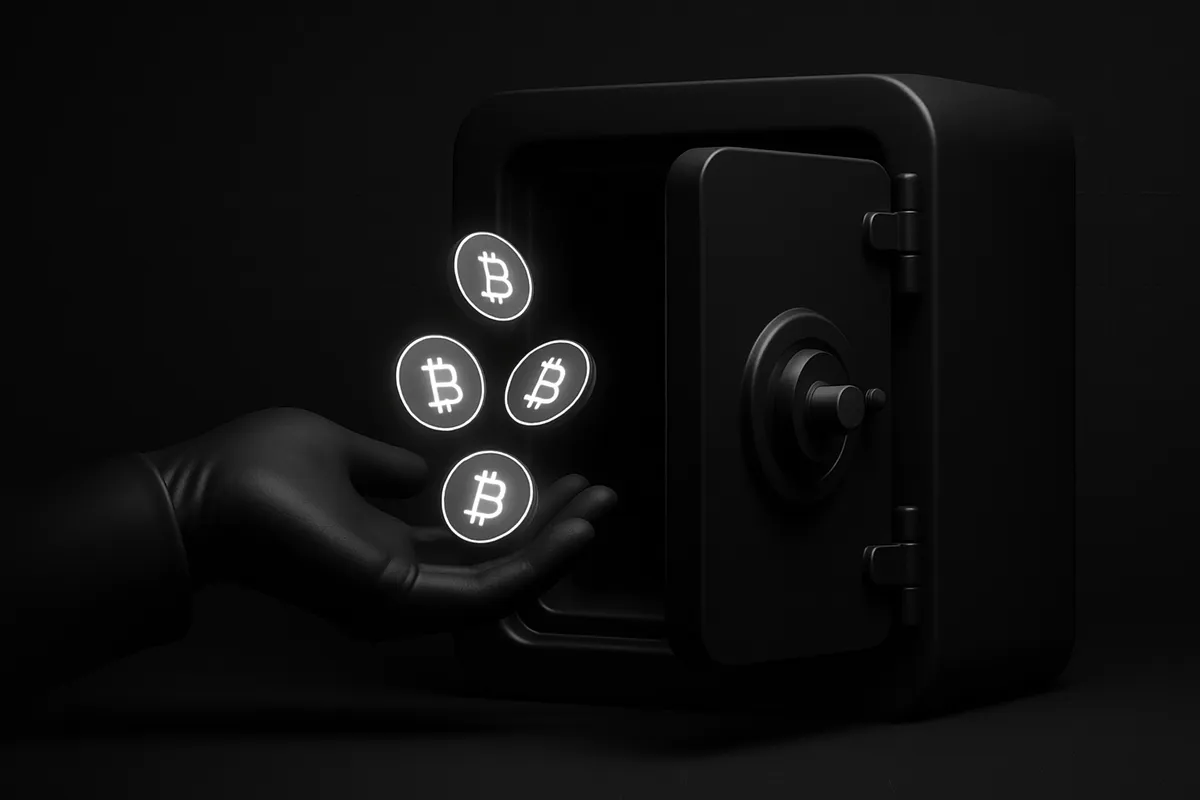
Share article
Share article
The case, cited by Cointelegraph and attributed to reporting from The Chosun Daily, centers on the Gwangju District Prosecutors' Office, which said the Bitcoin was unexpectedly returned to an official wallet. The identity of the party behind the transfer remains unknown.
Enjoy articles without ads?
Register for free and get unlimited access to all articles.
What reportedly happened: a 320 BTC "boomerang" transfer
Here is what is known from the reporting so far:
- The asset: 320.88 Bitcoin
- The value: about $21.3 million at Bitcoin roughly $66,492
- The custodian: South Korean prosecutors (Gwangju District Prosecutors' Office)
- The timeline: coins went missing in 2025, returned this week
- The mechanism: Bitcoin was sent back to an official wallet controlled by authorities
No credible public details were provided in the source report about how the coins left custody in the first place, whether the private keys were compromised, or whether the coins moved through intermediaries before being returned. Those missing details matter because "stolen from authorities" can mean several things in practice, from a compromised hot wallet to an internal access issue to a procedural failure in key management. [1]
What the reporting does suggest, plainly, is that the return was not expected. Prosecutors characterized the recovery as sudden, implying there was no negotiated repayment announcement beforehand.
The numbers, without the fantasy math
The headline figure, 320.88 Bitcoin, is straightforward. The value estimate depends on the Bitcoin price at the time of reporting. Cointelegraph's price widget placed Bitcoin around $66.5k, which aligns with the cited valuation of about $21.3 million.
What is not available from the provided sourcing:
- Transaction hash(es) and timestamps
- Whether the funds were returned in one transfer or multiple
- Any on-chain routing (mixers, peel chains, exchanges, bridges, or OTC desks)
- Wallet attribution evidence beyond the statement that it was an "official wallet"
- Any confirmed suspect or motive
So, no, this is not the moment to declare that "crime doesn't pay." It just occasionally pays to give the money back.
Why would a hacker return $21 million?
A voluntary return of stolen funds is rare, but it is not unheard of. The motivations typically fall into a few unromantic buckets:
1) Traceability caught up with them
Bitcoin is pseudonymous, not private. Once an address is tied to a real-world identity through an exchange account, a KYC leak, or a seized device, "holding" stolen Bitcoin becomes more like sitting on evidence. [2]
Even if coins are moved, blockchain analytics firms and law enforcement have a long track record of tracking flows and pressuring centralized exchanges to freeze deposits. A thief may decide the best outcome is to reverse course before converting to fiat becomes impossible.
2) Legal bargaining, formal or informal
Some jurisdictions treat restitution as a mitigating factor. Returning the funds does not erase the underlying offense, but it can influence sentencing and prosecutorial posture. [1]
If the actor believes they are already identified, returning the Bitcoin can be a rational attempt to downgrade the outcome from "catastrophic" to "merely awful."
3) The bounty and "white hat" precedent effect
The industry has normalized payouts for recovered funds, especially in DeFi exploits. Even outside DeFi, large bounties have become a standard tool. Coinbase, for example, previously announced a $20 million bounty tied to a ransomware-related incident, helping set expectations that "returning money" can sometimes be monetized legally. [3]
This South Korea case is different because the victim is the state, and because it involves Bitcoin reportedly held in official custody. Still, the broader norm matters: hackers have seen others negotiate exits.
4) Operational security failure
Sometimes returns happen because the attacker loses access, panics, or misjudges the risk of cashing out. A failed attempt to launder funds through exchanges or brokers can quickly turn stolen crypto into an unspendable liability.
The uncomfortable custody question
The most important issue here is not the feel-good recovery. It is how a six-figure, nine-figure, or in this case eight-figure custody stack becomes vulnerable.
Government agencies hold crypto for a growing list of reasons: seizures, forfeitures, evidence, tax enforcement, and settlement proceeds. That makes public-sector custody a prime target, because attackers assume (often correctly) that government security practices vary widely across departments and contractors.
Key questions the reporting has not yet answered:
- Was the Bitcoin stored in a hot wallet (online) or cold storage (offline)?
- Who controlled the keys, and was access multi-signature (multiple approvals required)?
- Was the "theft" an external compromise, an insider incident, or a procedural breakdown?
- Were third-party custodians involved?
If the coins were truly in government custody and still left without authorization, then the return is a relief, not a solution. The security model still failed once, which means it can fail again.
Takeaways for the market and for institutions
- Bitcoin's transparency cuts both ways. It enables theft, and it also enables tracking, freezing pressure, and public scrutiny once an address cluster is flagged.
- Custody is the story. A recovery headline does not answer why the coins were accessible in the first place.
- Returns can be strategic, not moral. Without an identified actor and a verified motive, "change of heart" is just a narrative placeholder.
- Public-sector crypto holdings are now a standing target. Any institution that holds seized or strategic crypto has to assume it is being actively mapped and probed.
What to watch next (the practical, mildly unimpressed edition)
-
On-chain proof and wallet attribution: If prosecutors or reporters publish transaction IDs or wallet addresses, analysts will be able to verify the return, map prior movements, and assess whether the Bitcoin sat dormant or traveled.
-
Confirmation of custody setup: Look for statements on whether the coins were held via a third-party custodian, a government-run wallet system, or an exchange account. The difference determines whether this was a key compromise, an account compromise, or something messier.
-
Any freeze orders or exchange cooperation: If the hacker attempted cash-out and failed, there may be subpoenas, freezes, or compliance actions that nudged the return.
-
Criminal procedure updates: If South Korean authorities later announce an arrest, extradition request, or suspect identification, that will clarify whether the return was voluntary, coerced, or simply the least bad option.
For now, the only firm datapoint is that 320.88 Bitcoin is reportedly back under government control. The rest is unanswered: who took it, how they did it, and why they suddenly decided to become a model citizen, at least for one transaction.