See more like this on Google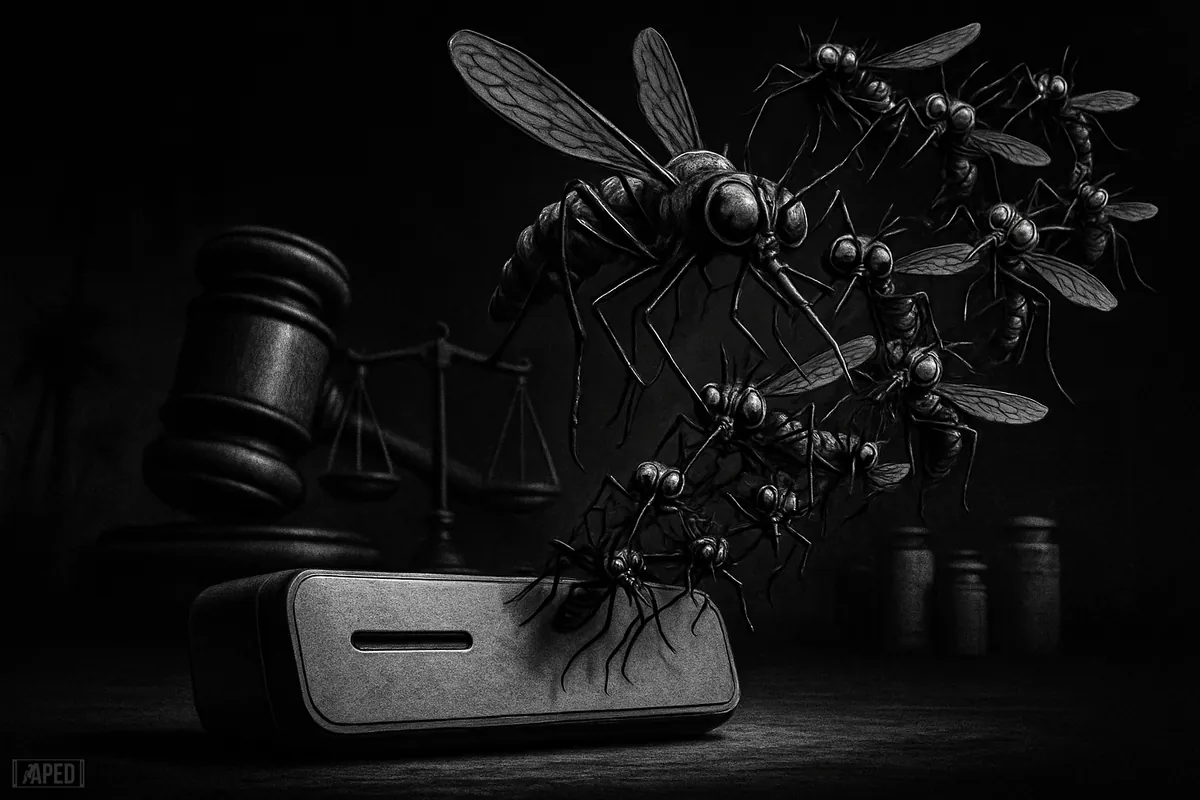
Share article
Share article
Enjoy articles without ads?
Register for free and get unlimited access to all articles.
What Google Actually Filed
For Florida alone, Google wants permission to release up to 16 million male mosquitoes in the first year and another 16 million in the second. That gets the state-level total to 32 million. Across both states, the broader application could reach 64 million if the full programme goes ahead. [4]
Why Mosquitoes, and Why These Ones
The species named in the filing is Culex quinquefasciatus, commonly known as the southern house mosquito. That matters because this species is associated with the spread of mosquito-borne illnesses, including West Nile virus.
The application focuses on male mosquitoes infected with Wolbachia pipientis strain wAlbB. The basic mechanism is straightforward. Male mosquitoes do not bite humans. When Wolbachia-carrying males mate with wild females that do not carry the same bacterial profile, the eggs fail to hatch properly, which can suppress the target population over time. [6]
That is the whole trade here. Release enough sterile-effect males, crowd out successful reproduction, and drive numbers down without spraying broad chemical insecticides across an area.
Why the EPA Treats This Like a Pesticide
Under EPA logic, the bacteria-assisted mosquito release is being used to suppress a pest population. That places it within the agency's review framework. So while "pesticide" sounds a bit dodgy in this context, it is really a legal classification tied to function, not a sign that Google has invented some mutant bug weapon.
The Florida trial is also meant to generate field data. That is important because experimental permits often act as stepping stones toward a later full product registration, assuming the results hold up and regulators are satisfied with the safety profile.
The Tech Angle Behind Debug
Google's Debug initiative has been developing mosquito-control systems for years, with a heavy focus on automation. The wider concept blends biology with machine-driven production, including AI-assisted sex sorting and robotics that can separate males from females at scale. [7]
That operational detail is not trivial. The strategy only works cleanly if you release males, because females bite and males do not. If your sorting process is sloppy, the public-health optics become a proper mess very quickly.
Automation is meant to solve the scale problem. Releasing thousands of insects is a lab stunt. Releasing tens of millions in a controlled, repeatable way is an industrial process. Debug's pitch is that it can industrialise that process without turning it into a biological free-for-all.
Why Florida Is a Logical Test Bed
Florida is no random pick. Warm weather, dense mosquito populations, and repeated public-health concerns around vector-borne disease make it one of the more relevant places to test suppression strategies.
Google is effectively arguing that Florida can provide useful real-world data on whether this method works outside controlled pilot conditions. California offers a contrasting environment, which may help regulators compare outcomes across different ecosystems and mosquito pressures.
Why This Is Already Stirring Pushback
Any plan to release millions of insects, even non-biting males, is going to trigger public concern. Some of that is knee-jerk reaction to the headline. Some of it is more substantive, especially around ecological effects, transparency, and whether residents near release zones get enough say.
Critics of similar programmes have previously raised questions about unintended consequences, how well field results translate over time, and whether suppression programmes simply create a treadmill of ongoing releases. If the population rebounds once releases stop, the model may require continuous intervention rather than a one-off fix.
What Happens Next
The immediate next step is regulatory. The EPA will review public comments and the underlying application before deciding whether to approve the trial, reject it, or impose conditions.
If approval comes through, the Florida test would become part of a broader evidence-gathering exercise for possible future registration. If it does not, Debug may need to revise its approach, narrow the trial, or provide more safety and efficacy data.
Why It Matters
The key invalidation is simple: if regulators are not convinced the benefits outweigh the ecological and operational risks, the mosquitoes stay grounded. Until then, the story is less about hype and more about whether industrial-scale bio-control can survive contact with public scrutiny.