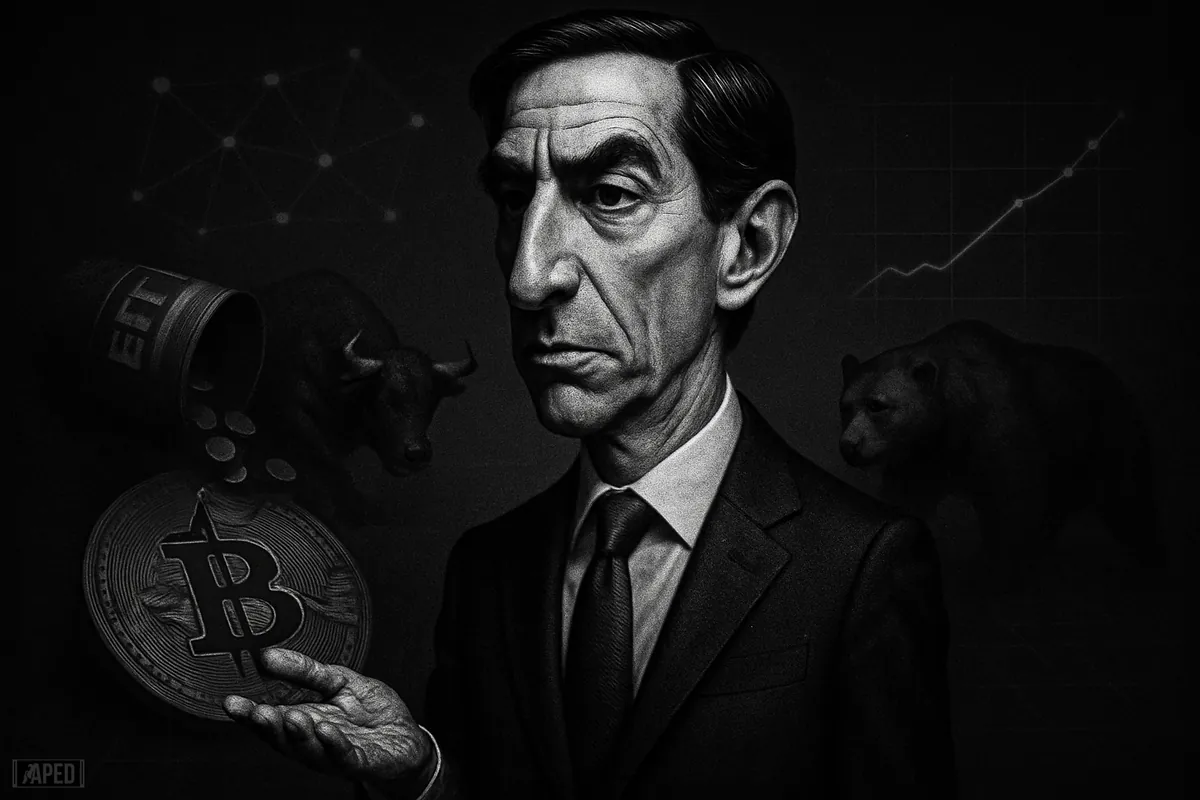
Bitcoin$80,660.10 spent March 30 trying to stabilise after last week's wobble, but the tape never looked fully convincing. ETF outflows, geopolitics and a cautious relief rally set the tone, while DeFi governance and prediction markets provided the few cleaner growth narratives on-chain.
Enjoy articles without ads?
Register for free and get unlimited access to all articles.
Market mood: relief bounce, soft conviction
The day started with a reminder that yesterday's setup was already fragile. March 29's backdrop was one of Bitcoin$80,660.10 defending key support while fear stayed elevated, with treasury and institutional buying helping offset weak momentum rather than igniting a proper trend.
Fresh ETF data then reinforced that softer tone. U.S. spot Bitcoin ETFs logged a net $296 million weekly outflow last week, snapping a four-week inflow streak. That matters because ETF demand has been one of the cleaner sources of spot absorption this cycle. When it flips negative, traders start questioning whether dips will still get hoovered up as quickly. [1]
By early morning UTC, majors were still mostly trading as if they were waiting for the next macro headline. Dogecoin$0.09301 sat awkwardly below $0.10, with the chart threatening another leg lower if buyers fail to defend that psychological level. XRP$1.518 and Shiba Inu$0.00000613 were both described as sitting at pivot zones rather than showing any confirmed breakout. That is usually code for a market with plenty of CT chatter and not much follow-through.
Bitcoin did manage a relief rally later in the sequence, helped by the passing of March 27 options expiry pressure after roughly $14 billion in contracts rolled off. But the rebound came with visible caution. The key point was not that BTC bounced, it was that traders were unwilling to chase it aggressively while macro risk remained live. A relief move with cautious positioning is very different from a broad risk-on impulse.
Macro pressure: oil, rates and risk appetite
Macro did not do crypto any favours. Oil jumped sharply, with Brent moving above $116 and WTI hitting $102 as US-Iran tensions escalated and markets priced in supply shock risk around a key Iranian export hub. Higher crude feeds directly into inflation fears, which then bleeds into rates expectations and risk assets. Crypto does not trade in a vacuum when energy markets are screaming. [1]
That tied into another closely watched item: Kevin Warsh's potential Fed chair hearing is reportedly being eyed for the week of April 13. Markets will treat that as an early signal on future rate policy and broader risk tolerance from Washington. With oil pushing higher, any hawkish read-through from Fed succession chatter could make life harder for BTC and high-beta alts over the next fortnight.
DeFi and governance: Lido gets active, Aave expands
DeFi was one of the few areas with an actual catalyst rather than just reactive price watching. Lido DAO$0.3523 moved forward with a proposal for a roughly $20 million LDO buyback, framed around the view that the token is undervalued relative to Lido's dominance in Ethereum$2,370.18staking. A follow-up report clarified the structure under discussion: a phased buyback funded with 10,000 Lido Staked Ether$2,048.77, worth about $20 million. [2]
There are two things to watch here. First, buybacks remain a strong signalling tool in crypto because they suggest a DAO thinks its treasury can be deployed more efficiently into its own equity-like token than sitting idle. Second, the market will want to see whether this is a one-off support bid or the start of a more disciplined capitalallocation framework. The proposal is constructive, but it does not magically fix governance discounting if tokenholders still lack a clear path to cash flow or control.
Aave$79.98 also pushed its multi-chain expansion further by launching on OKX's X Layer, marking its 21st supported blockchain. That gives OKX users native access to lending and borrowing rails and gives Aave another distribution channel. The upside is obvious: more users, more deposits, more fee opportunities. The risk is the usual one with chain sprawl, fragmented liquidity and the possibility that not every deployment reaches escape velocity.
Speculation rotates: prediction markets stay hot
Prediction markets were one of the day's clearer growth stories. March volume hit $23.7 billion, driven by geopolitics, elections and easier on-chain access. That is a meaningful number because it shows speculative demand is not leaving crypto, it is rotating into products where volatility can be expressed more directly than by simply punting altcoins. [3]
This trend also says something about sentiment. When users flock to event contracts over directional crypto bets, it often reflects a market that sees narrative opportunity but lacks conviction on broad spot upside. That is not bearish by itself, but it does suggest capital is getting more mercenary.
Company and token stress: Circle pressure, TRUMP unwind
Not every crypto-linked asset had a decent session. Circle stock remained under pressure, with investors reportedly reassessing valuation, regulatory risk and rising competition in stablecoins. That combination is awkward because each factor compounds the others. If regulation remains uncertain while more issuers crowd the market, premium multiples become harder to defend.
The ugliest token story of the day was Meme TrumpCoin$0.0000000524. The token is now down 96 percent from its early 2025 peak after team-linked wallets sold $57 million in unlocked tokens. That is the sort of flow that tends to kill any remaining trust in a chart. Once the market believes insiders are using liquidity as an exit ramp, bounces can turn into distribution traps very quickly. [3]
TRUMP's collapse also stands as a reminder that meme and political tokens can still be a bit of a mess long after the initial hype fades. If liquidity is thin and supply unlocks are concentrated, price can unravel far faster than retail expects.
Key takeaway
March 30 was not a washout, but it was hardly clean risk-on either. Bitcoin found some breathing room after options expiry, yet ETF outflows and geopolitical macro pressure kept conviction muted. On-chain, the healthier stories came from product expansion and governance, especially Lido's buyback push and Aave's continued rollout, while prediction markets showed that speculative appetite is still very much alive.
The near-term invalidation line for the bullish case is simple: if Bitcoin loses the support reclaimed during this relief rally while oil and rates expectations keep rising, traders will likely treat this bounce as dead-cat territory. If ETF flows stabilise and BTC holds those levels, the market may yet turn this cautious rebound into something more durable.
Your reviews help us improve the quality of both current and future articles. All reviews are public and visible to other readers. We use both ratings and comments to improve future articles and to revise any articles that do not meet our standards.
 See more like this on Google