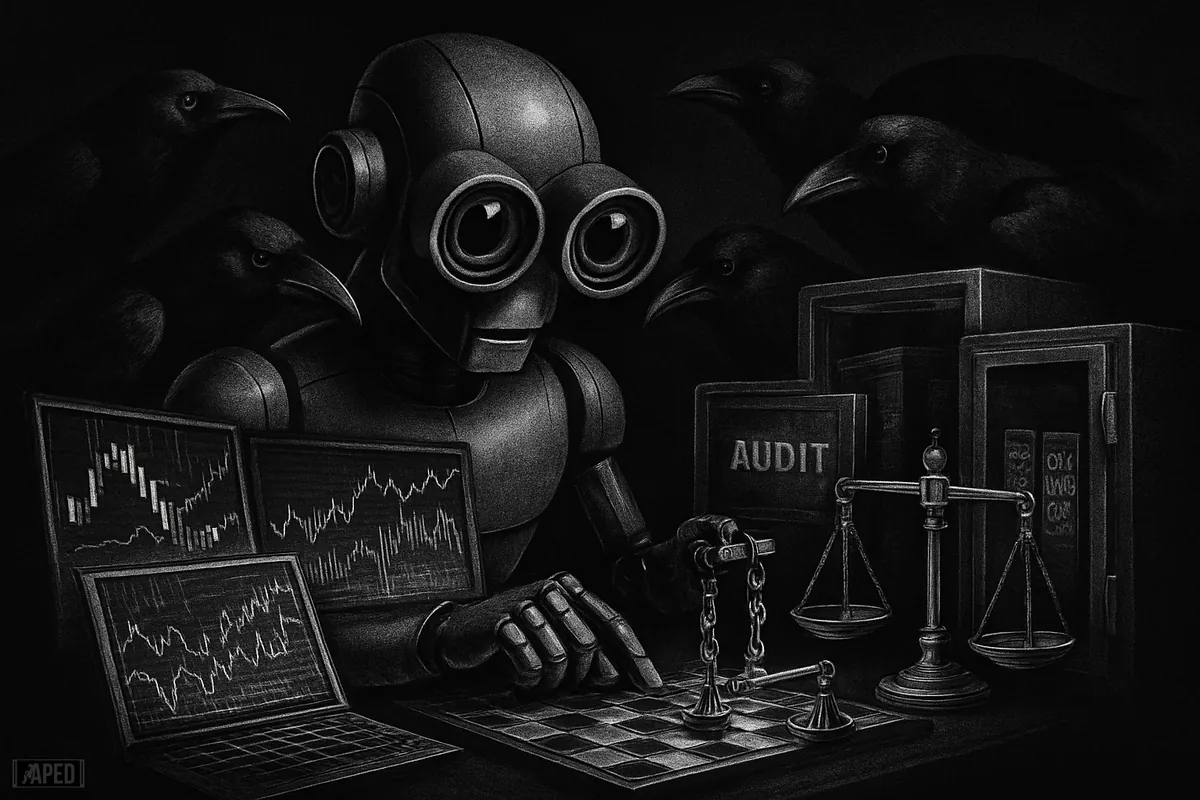
Markets were quiet enough for attention to drift somewhere familiar, AI trading claims, black-box bravado, and CT asking the only sensible question: show the receipts. With price largely behaving on August 27, the day's real story was less about a violent tape and more about where conviction now sits, namely proof, transparency, and whether anyone can separate product from pure vibes.
Enjoy articles without ads?
Register for free and get unlimited access to all articles.
Market Mood
The only story carried into August 27 was the aftermath of August 26's neutral session, when calm market conditions left room for a social and narrative rotation rather than a price-led one. That earlier summary framed the tone well: traders were less interested in heroic forecasts and more interested in verifiable performance, risk controls, and whether AI-flavoured trading products could survive basic scrutiny. [1]
That matters because quiet sessions often expose what the market actually cares about when there is no liquidation cascade to hide behind. Earlier attention on AI trading claims suggested a fairly sober backdrop rather than a euphoric one. Sentiment sat neutral at 52, which fits a market that is still willing to listen to new narratives, but no longer willing to hand out credibility for free.
The key debate spilling into today was simple enough: if a protocol, bot platform, or fund claims AI-driven edge, traders now want hard data, not slick dashboards and vague references to machine learning. August 26's reporting showed Crypto Twitter pushing for transparency around live performance, drawdowns, execution logic, and how risk is actually managed when markets stop being cooperative. [1]
That shift is worth clocking because it says something broader about this cycle's maturity. A year or two ago, plenty of products could have coasted on narrative alone. Now the burden is heavier. Market participants want to know whether returns came from directional beta, leverage, selective time windows, or survivorship bias dressed up as innovation. Fair enough, really.
Risk Controls Move to the Centre
The stronger sub-theme was risk. The audience was not merely asking whether AI systems can generate returns, but whether they can survive volatility, slippage, and model failure. Those are different questions, and the second is usually where the marketing deck gets a bit thin.
That puts risk controls at the centre of product credibility. Traders increasingly want to see maximum drawdown limits, stop logic, asset universe constraints, and some explanation of when a model stands down rather than forcing trades. In practical terms, that means the bar for adoption is rising. If the next wave of AI-linked crypto products wants sticky capital rather than tourist flows, transparency is no longer optional.
Why It Mattered
August 27 did not deliver a packed headline slate, but the carry-over from yesterday still mattered because crypto tends to test narratives hardest during quiet periods. When volatility compresses, there is less room for promoters to hide behind "the market did it." Products have to justify themselves on process, reporting, and repeatability. [1]
That leaves the broader market with a mildly constructive but skeptical tone. Neutral sentiment is not bearish, but it is selective. Traders appear open to new tooling and automation narratives, yet they want verifiable edge and they want it in a format that can withstand public scrutiny. Quite right too. "Trust me, it's AI" is not exactly a risk framework.
Key Takeaways
The day's takeaway was not a dramatic repricing event, but a useful signal about where market standards are heading. Attention remained on proof over promises, especially in the AI trading corner of crypto. That suggests future winners in the sector will likely be teams able to publish transparent performance data, explain their risk stack clearly, and survive adversarial questions from a market that has seen every flavour of magic box before. [1]
For now, the mood looks steady, cautious, and far less gullible than the marketing copy would prefer. The checklist from here is straightforward: audited results, real-time reporting, visible risk controls, and evidence that returns are not just leverage wearing a smarter hat.
Your reviews help us improve the quality of both current and future articles. All reviews are public and visible to other readers. We use both ratings and comments to improve future articles and to revise any articles that do not meet our standards.
 See more like this on Google