 See more like this on Google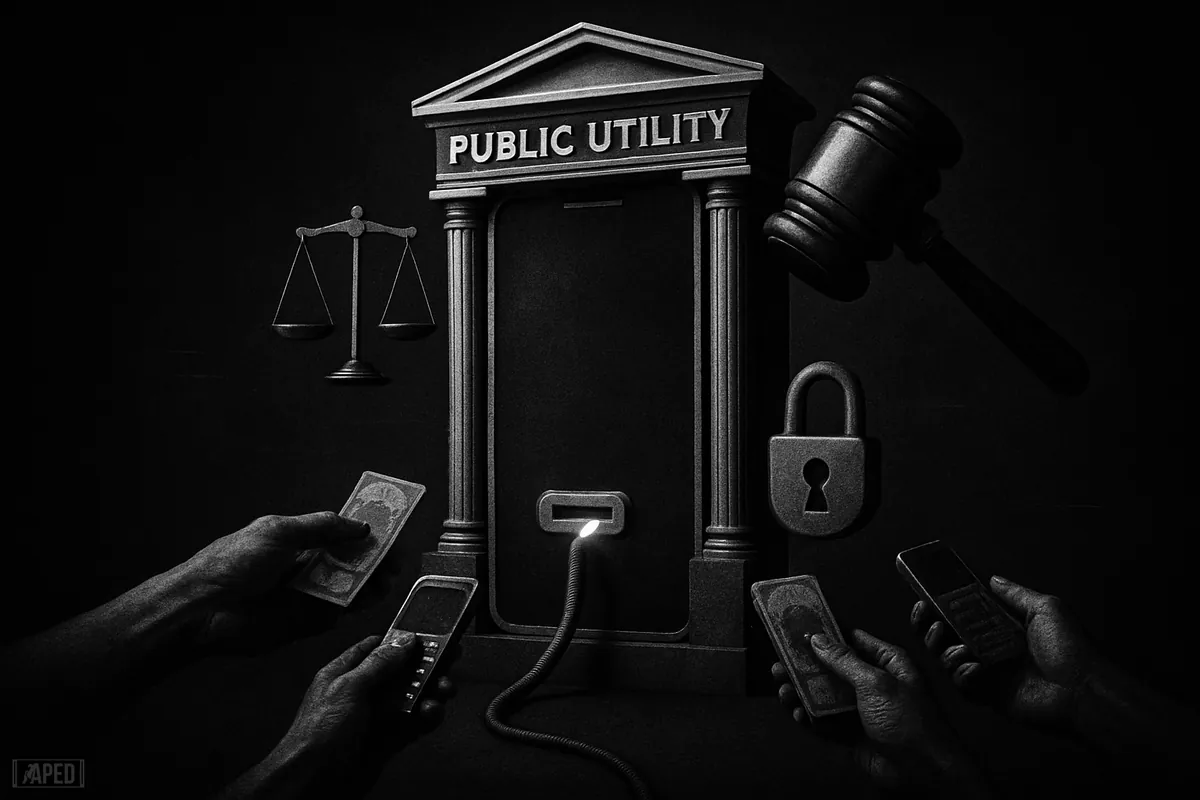
Share article
Share article
Enjoy articles without ads?
Register for free and get unlimited access to all articles.
The inclusion case for CBDCs, in plain terms
Financial inclusion is not just a moral argument. It is a plumbing problem. If people cannot store value safely, receive payments cheaply, or prove they exist in a system, they get locked out of jobs, credit, insurance, and public services. [2]
CBDC proponents argue governments should treat a retail CBDC (one usable by households and small businesses) as a public utility for payments, with three inclusion levers: [3]
- Low-cost access to digital money: A CBDC can be designed with minimal fees, reducing reliance on expensive cash handling, check-cashing, or informal intermediaries.
- Direct distribution of public funds: Governments can pay benefits, wages, and emergency support into CBDC wallets, potentially cutting delays and leakages.
- A bridge from cash to digital: For citizens living cash-first, a CBDC aims to be the first "account-like" tool that does not require a traditional bank relationship.
That last point is the core political pitch: CBDCs as a state-backed on-ramp to the formal economy for people banks do not profitably serve.
Design choices that actually determine whether inclusion happens
"Inclusion" is not a feature you add at the end. It is a set of design constraints that can make or break adoption.
Access models: bank-led vs. wallet-led
Most CBDC proposals lean on intermediaries (banks, fintechs, mobile money providers) to handle onboarding and customer support. That is practical, but it also risks reproducing the same exclusion patterns if providers treat low-income users as compliance costs.
A more inclusion-forward approach is a tiered access model, where small balances and low transaction limits can be opened with simpler identity checks, while higher limits require stronger verification. This is often discussed as "tiered KYC" (know-your-customer), basically identity requirements scaled to risk.
Offline payments: the unglamorous requirement
If the goal is to reach cash-dependent communities, offline functionality matters. Cash works in a blackout, during disasters, and in rural dead zones. A CBDC that requires constant connectivity is just a city product with a national press release. [4]
Offline CBDC designs typically involve secure hardware (cards, secure elements in phones, or dedicated devices) and careful fraud controls. It is doable, but it is not trivial, and it is not cheap.
Cash-in, cash-out: the real "bridge"
Unbanked users live at the edges of the financial system, which means the "CBDC moment" happens when someone can convert physical cash into CBDC conveniently, and back again, without predatory fees.
The trade-offs nobody can avoid
Calling something "financial inclusion" does not dissolve the usual risks. It just relocates them.
Privacy vs. compliance
A CBDC that is easy to use and private like cash is politically attractive. A CBDC that is fully traceable is attractive to tax authorities and law enforcement. Most governments want both, and those goals conflict. [5]
Banking sector concerns: disintermediation
If people can hold central bank money directly, commercial banks worry about deposits leaving the system, especially in stress periods. Many CBDC designs respond with holding limits or non-competitive remuneration (no interest, or low interest), but those limits can also reduce usefulness for households and small businesses. [6]
Trust is the adoption bottleneck
Unbanked populations are not "waiting for an app." Many rely on cash because it is familiar, accepted everywhere, and does not require permission. If a CBDC rollout feels mandatory, fragile, or politically weaponized, it will not become a gateway to inclusion. It will become a workaround economy with extra steps.
Takeaways (what this debate is really about)
- The inclusion argument is credible on paper: The unbanked figure is not abstract. It represents a massive cash-only segment that governments struggle to serve efficiently.
- CBDCs can reduce friction, but only if the state does the boring work: Offline capability, cash conversion, consumer protection, dispute resolution, and merchant acceptance matter more than the ledger architecture.
- Privacy design is not optional: The trust gap is wide, and a CBDC framed as "programmable money" without strong safeguards is an adoption killer, not an inclusion win.
- A CBDC is not a substitute for infrastructure: Without phones, connectivity, digital literacy, and local access points, inclusion remains a slogan.
What to watch next
- Whether CBDC pilots prioritize offline and cash conversion, not just app demos in capital cities.
- Tiered identity rules and wallet limits, because they reveal how serious policymakers are about inclusion versus surveillance and compliance optics.
- Fee policy and liability rules (who pays when funds are lost, stolen, or mis-sent), since the unbanked cannot absorb "learning costs."
- Interoperability with existing payment systems (mobile money, card networks, bank transfers), because a CBDC that cannot plug into daily commerce will not replace cash, it will just sit there looking official. [7]
Governments may indeed "need" CBDCs to narrow the cash-digital divide. But needing something and delivering it competently are, as everyone definitely predicted, two very different projects.
