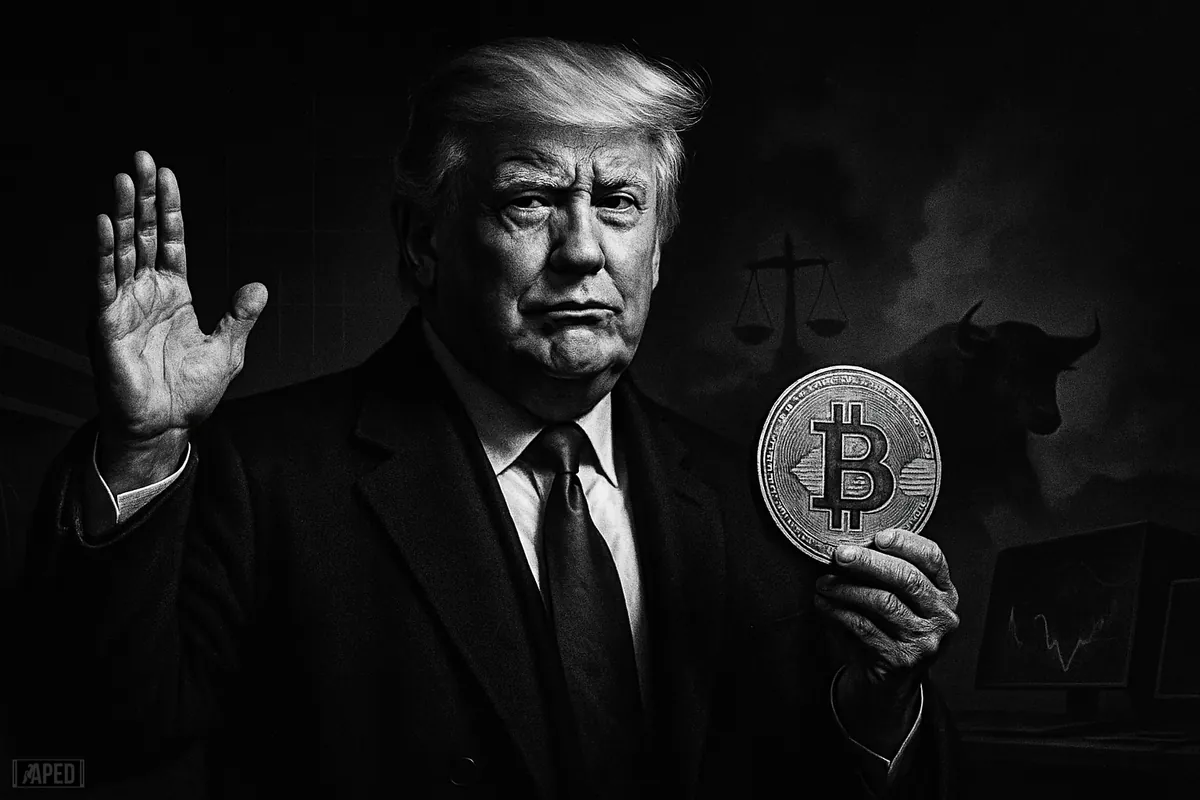
Memes move fast, but macro still moves markets. Bitcoin$80,500.00's latest pop had both energy: a geopolitics headline, a rush of liquidations, and CT scrambling to decide whether this was the start of a real leg higher or just another classic squeeze.
Bitcoin jumped about 4.6% over the past 24 hours and traded near $71,800 on Wednesday, April 8, after President Donald Trump said the United States and Iran were "very far along" on a peace agreement tied to a two week ceasefire around the Strait of Hormuz. Risk assets broadly caught a bid on the news, and crypto joined the move quickly. [1]
Enjoy articles without ads?
Register for free and get unlimited access to all articles.
Ceasefire hopes gave traders the headline they wanted
The immediate catalyst was straightforward. Markets interpreted the ceasefire message as a sign that one of the most sensitive geopolitical flashpoints in global energy trade might cool, at least temporarily. That matters because the Strait of Hormuz sits at the center of oil shipping, and any reduction in conflict risk tends to ease pressure across commodities, equities, and other risk assets. [2]
Bitcoin$80,500.00's rally looked partly like a macro relief trade. Reports tied the move to a wider rebound as oil prices fell and traders rotated back into higher beta assets. Crypto market capitalization also expanded sharply, with the broader market up roughly 3.9% on the day. [3]
That said, this was not a clean "peace is bullish" narrative. The ceasefire appears to be a short-term pause, not a final resolution. Markets were pricing less immediate danger, not a permanent fix. That distinction matters because Bitcoin has spent much of the past month reacting to uncertainty in bursts, then giving back momentum just as quickly.
The squeeze was real, and it was big
The rally was amplified by forced buying from bearish traders getting wiped out. According to CoinGlass data cited in the source material, roughly $425 million in crypto short positions were liquidated over the past 24 hours, including about $212 million in Bitcoin shorts alone. [4]
For newer readers, a short liquidation happens when traders betting on lower prices are forced to close their positions as price rises against them. That buying can push the market up even faster, turning a solid move into a sharp spike. It is one of crypto's favorite genres, right up there with "ETF rumor candle" and "weekend fakeout."
This matters because liquidation-driven rallies can look stronger than the underlying demand really is. A squeeze can turbocharge price in the short term, but once those positions are cleared out, the market usually needs genuine spot buyers to keep climbing.
Spot demand still looks soft
That is where the story gets less euphoric. March spot trading activity was weak, suggesting that many investors stayed on the sidelines during the latest stretch of geopolitical stress.
CryptoQuant analyst Darkfost noted that Binance spot volume fell to about $69 billion in March 2026, the lowest monthly reading since September 2023. Lower spot volume usually signals reduced conviction from buyers and sellers transacting in the actual asset rather than in derivatives. Put simply, fewer people were stepping in with real directional commitment.
The decline fits the broader mood of March. Elevated tensions made long-term positioning difficult, so many market participants appeared to wait for clearer signals instead of building big exposure. Wednesday's rally may have broken that paralysis for a moment, but one green day does not erase a month of caution.
U.S. investors have not fully bought the bounce
Another sign of restraint came from the Coinbase Premium Index, a closely watched gauge of whether Bitcoin$80,500.00 trades at a premium or discount on Coinbase relative to offshore exchanges. Because Coinbase is heavily used by U.S. institutions and large domestic investors, a positive premium is often read as stronger American demand.
That index remained negative even after Bitcoin rebounded from its mid-March drop from roughly $76,000 to $65,000. In other words, U.S.-based buyers were not exactly stampeding back in.
This is an important detail because sustainable upside usually looks healthier when spot demand, especially from U.S. participants, confirms the move. A negative Coinbase premium does not kill the rally by itself, but it does suggest the market has not fully flipped into broad-based accumulation mode.
Whales are sending a more cautious signal
On-chain and positioning data also point to a less celebratory read than the price chart alone suggests. Alphractal data indicated that large holders, often called whales, were leaning toward short exposure or reducing long positions in both Bitcoin and Ethereum$2,341.07.
That does not automatically mean a reversal is imminent. Whale behavior can reflect hedging, profit taking, or tactical positioning rather than a pure directional bet. Still, it is notable that larger players were not uniformly chasing the breakout.
Retail traders tend to read a fast move as confirmation. Bigger players often read it as a volatility event to manage. When those two groups diverge, markets can get messy fast. April has historically delivered high volatility and heavy liquidation activity, so the setup remains fragile even after the jump.
Even with the caveats, the move says something useful about Bitcoin's current market structure. Traders are still highly sensitive to macro headlines, and the market remains crowded enough on the short side that sudden shifts in narrative can trigger violent upside reactions.
That is a reminder that Bitcoin is still trading as both a risk asset and a liquidity instrument. When geopolitical stress eases and positioning is skewed too bearish, it can rip. But if those macro conditions worsen again, the same reflexes can work in reverse. [5]
The bigger cultural signal is that CT is once again treating geopolitics as a chart catalyst in real time. That does not mean every headline deserves a trade, only that Bitcoin remains deeply plugged into global risk sentiment rather than operating in some detached "digital gold only" vacuum.
The Bottom Line
Bitcoin's surge on ceasefire hopes was real, but so was the mechanical fuel behind it. Relief over a possible U.S.-Iran de-escalation helped spark the move, while roughly $425 million in short liquidations helped accelerate it. [6]
The catch is that underlying demand signals still look mixed. Spot volume has been weak, the Coinbase Premium Index remains negative, and whale positioning suggests caution rather than full conviction. For traders, the practical takeaway is simple: do not confuse a squeeze with a clean trend. If this rally is going to stick, the next confirmation likely needs to come from stronger spot buying, not just more shorts getting deleted from the timeline.
Your reviews help us improve the quality of both current and future articles. All reviews are public and visible to other readers. We use both ratings and comments to improve future articles and to revise any articles that do not meet our standards.
 See more like this on Google