 See more like this on Google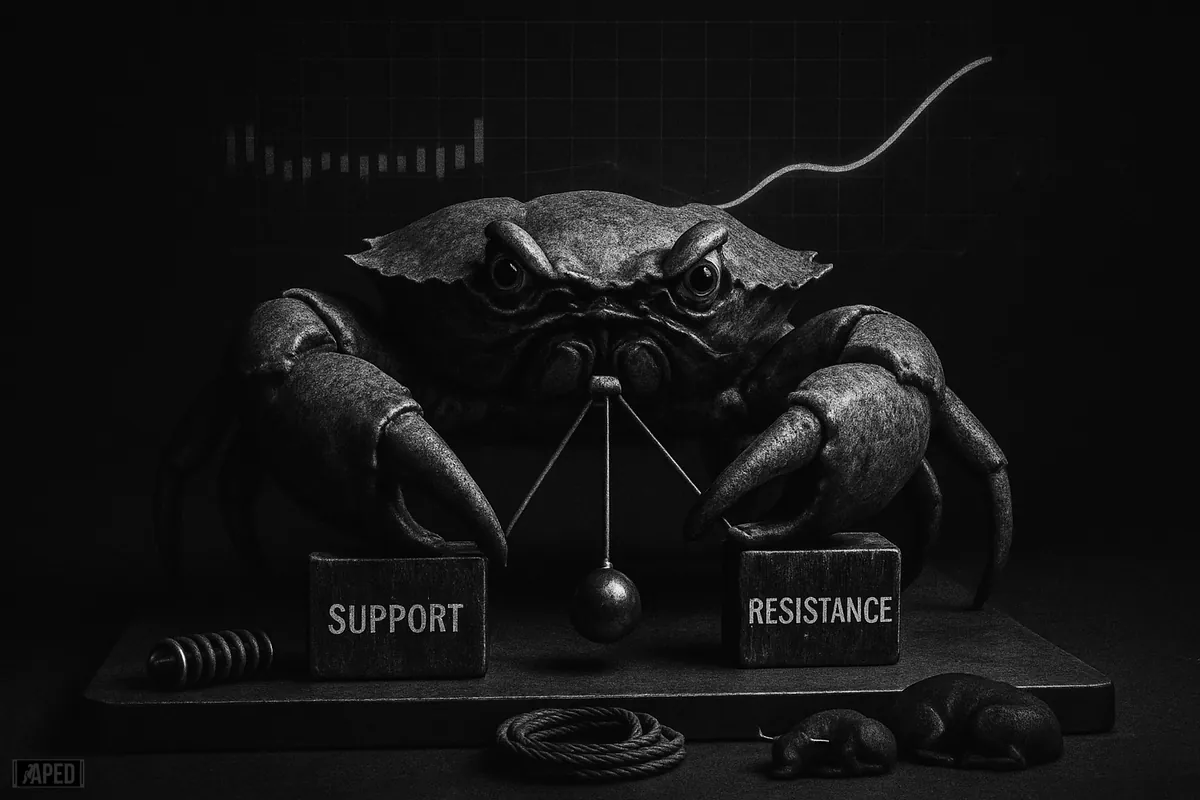

Share article
Share article
Enjoy articles without ads?
Register for free and get unlimited access to all articles.
Rangebound price action, loud signals, quiet tape
Sideways Bitcoin is a cultural moment because it breaks both sides of the timeline at once. Bulls keep quote-tweeting "higher lows," bears keep pointing at "failed breakouts," and everyone else rotates into alts, memes, or simply logs off.
What the "Fundamental Index" is saying (and what it usually captures)
While methodologies vary by provider, these indices typically pull from buckets like:
- On-chain activity: signs of real network usage (transactions, active entities, settlement behavior).
- Liquidity and flow: exchange balance trends, realized profit and loss behavior, and whether coins are moving into or out of liquid venues.
- Supply dynamics: long-term holder behavior, coin dormancy, and the pace at which newer supply is being distributed.
- Market structure: leverage conditions, volatility regime, and spot versus derivatives dominance.
This week's key takeaway is simple: the index is ticking up even though spot is not. That divergence is the entire story. It suggests the market may be repairing itself internally, likely through some combination of de-leveraging, steadier spot accumulation, and reduced "hot potato" coin movement.
Why fundamentals can improve while price goes nowhere
Three mechanics can push a fundamental composite higher without immediately lifting price.
1) Coins stop moving, and that can be bullish
2) Leverage gets washed out without a dramatic crash
This is also where the "range is a feature" crowd has a point: a tight band can act like a pressure cooker if it coincides with healthier positioning.
3) Macro and liquidity signals can stabilize even if narratives don't
Even when the timeline is stuck arguing about the next catalyst, broader liquidity conditions can quietly turn from "headwind" to "less of a headwind." A composite index will often reflect those incremental improvements faster than price, especially if large players are accumulating passively and refusing to chase.
What could break the range, and what could invalidate the signal
A rising Fundamental Index is a setup, not a guarantee. Two kinds of catalysts matter most from here.
Bullish catalysts to watch
- A decisive spot-led breakout: not a leverage spike, but sustained spot bids that hold above the range ceiling.
- Follow-through in on-chain flow: continued reduction in "sell-ready" supply and steadier accumulation behavior.
- Volatility expansion: compression phases often end with a volatility burst. Direction depends on flows, but expansion itself is the tell.
Risks that can flip the script
- A liquidity shock: macro surprises, sudden risk-off moves, or correlated selloffs can drag BTC lower regardless of on-chain health.
- False positives in composites: indices can rise because one component improves while another quietly deteriorates. If exchange inflows pick up or leverage ramps back up, the "healthy" read can vanish quickly.
- Range breakdown: if support levels that traders have defended repeatedly give way, fundamentals may not matter until the market finds a new clearing price.
Practical takeaway
Bitcoin is still trapped in a range, so trading it like a trending market is how people donate to the chop. The notable development is the Fundamental Index turning up, which suggests internal conditions are improving and a larger move may be getting closer. [5]
What to watch next: whether spot demand can push price out of the range and hold it there, and whether the same fundamental measures keep rising during that attempt. If the index rolls over while leverage heats up, treat the next "breakout" as suspect. If the index keeps climbing and the range finally breaks, the boredom era may end fast.