 See more like this on Google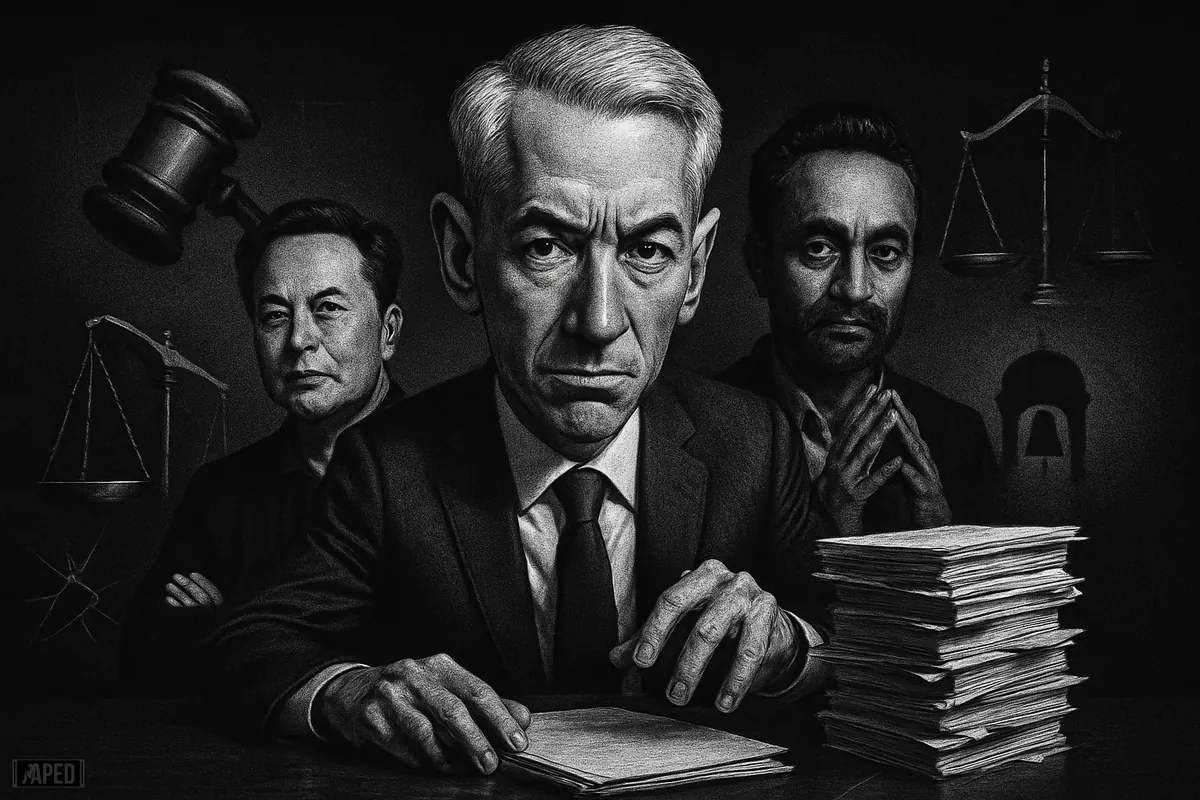
Share article
Share article
Enjoy articles without ads?
Register for free and get unlimited access to all articles.
The fight Ackman chose, right before IPO season
That is the real nerve he is trying to hit. Not whether one lawsuit exists, but whether a large share of employment cases function like a recurring tax on employers, especially founders and CEOs trying to avoid bad press, distraction, and disclosure risk. Ackman's argument is that even when management believes a claim is meritless, the rational financial move is often to settle quietly. He wants to break that math in public.
The family office details behind the dispute
That part of the story matters because it gives context for the employment decisions that followed. Family offices often operate with less public scrutiny than listed companies, but they can develop the same bureaucratic drag, interpersonal politics, and compliance headaches as much larger organizations. Ackman's post suggests he came to see TABLE as inefficient and ultimately took action that led to the dismissal now being challenged.
By taking the story public himself, Ackman is trying to front run the narrative instead of letting a legal filing define it. That is a familiar play in markets. If you think bad headlines are coming anyway, you leak your own version first and force everyone else to react to your framing. Sometimes it works. Sometimes it turns a manageable issue into a larger one because now every detail gets stress tested in public.
Why this matters more than one $2 million claim
For a billionaire investor, $2 million is not financially material. For a CEO on the road to an IPO, it can be reputationally material if it raises questions about culture, supervision, internal controls, or judgment. That is why Ackman keeps describing these cases as a hidden tax. The payment is only one line item. The bigger cost is management time, document production, legal strategy, distraction, and the possibility that underwriters or public investors start asking whether there are more skeletons in the drawer.
That is where the market-first angle gets sharper. IPOs run on confidence and clean narratives. Investors want growth, fees, performance, and a manageable risk profile. They do not want a side order of employment drama that could mutate into a due diligence rabbit hole. Even if the claim goes nowhere, the existence of a public fight can complicate the story at exactly the wrong moment.
Musk and Chamath back the thesis
The IPO angle is where this gets real
Pershing Square's prospective IPO is the real scoreboard. If the listing proceeds smoothly, Ackman can argue that investors separated a small employment dispute from the value of the underlying business. If underwriters, regulators, or investors push for extra disclosures or discount the deal, then the cost of the principle becomes much easier to measure.
Large listings are built on discipline. Bankers want surprises minimized, management teams scripted, and open litigation contained. Ackman is doing almost the opposite. He is elevating the issue into a public campaign before the market gets a chance to price the distraction.
That does not mean the IPO is in danger by default. Big firms have gone public with legal baggage before. The actual risk depends on whether this stays a narrow dispute or opens up broader questions about employment practices, internal governance, or patterns of behavior. One case is manageable. A narrative of avoidable controversy is harder.
Why founders and investors are watching closely
Plenty of CEOs will recognize the incentive problem Ackman is describing, even if they would never litigate it on X. Employment claims, especially around discrimination or wrongful termination, can be expensive to contest and awkward to disclose. Quiet settlements are often treated as operating expenses, not moral statements.
Ackman is trying to force a different equilibrium. If high-profile executives stop settling claims they view as meritless, maybe fewer get filed in the first place. That is his implied thesis. But it is also a high-beta strategy. If you lose, or if ugly facts emerge in discovery, you do not just pay the claim. You hand critics proof that the bravado was misplaced.
The bottom line
Ackman is risking a clean IPO narrative to make a broader point about what he sees as the lawsuit tax every CEO pays. He may be right about the incentives. He may even win the case. But markets tend to punish noise before they reward principle.
People Referenced
Bill Ackman
Bill Ackman is the founder and CEO of Pershing Square Capital Management, a major U.S. activist hedge fund.
Elon Musk
Iconic entrepreneur steering Tesla, SpaceX, X (Twitter) and AI ventures, reshaping transportation, space, and social media.
Chamath Palihapitiya
Tech investor and founder of Social Capital, former Facebook executive, known for long-horizon bets.