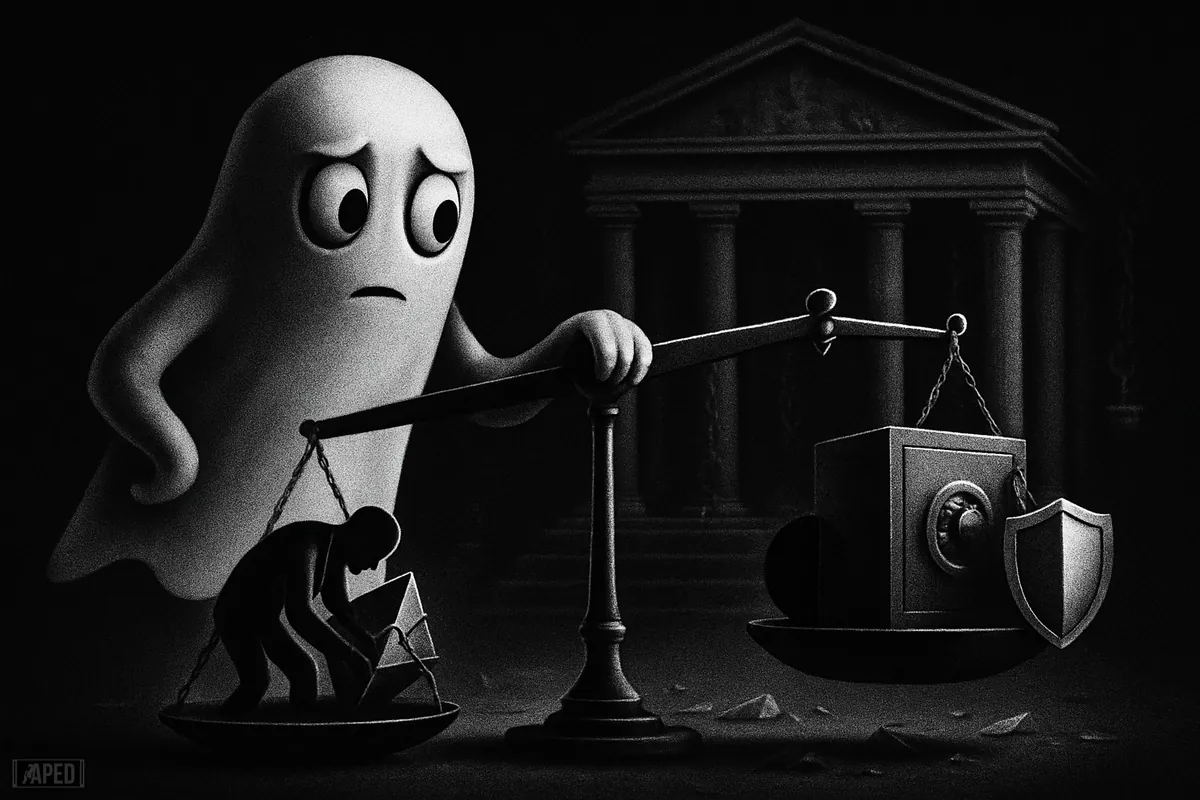
Aave$79.98 managed to keep bad debt at zero in its Ethereum$2,406.19 V3 market through 2024, according to a new Bank of Canada staff paper. The catch, and it is a meaningful one, is that the protocol did it by pushing liquidation losses onto borrowers rather than lenders. [1]
That finding matters because Aave is often held up as DeFi's cleanest proof that code can do what banks struggle with, namely keep loans performing through volatile markets. The bank paper suggests the result is real, but not exactly free. [2]
Enjoy articles without ads?
Register for free and get unlimited access to all articles.
What the study found
The Bank of Canada paper analysed transaction-level data from Jan. 27, 2023, to May 6, 2025, focusing on Aave$79.98 V3's Ethereum lending market. Its headline conclusion was straightforward: the protocol recorded zero non-performing loans in 2024. [3]
Researchers said Aave's combination of overcollateralisation and automated liquidations allowed positions to be closed before collateral values dropped below the value of the outstanding loan. In plain English, lenders got paid because borrowers were required to post more value than they borrowed, and positions were forcibly unwound when that cushion got too thin.
That is the whole design brief of overcollateralised DeFi lending, of course. Still, it is notable to see a central bank study spell it out with the data rather than the usual CT chatter.
The paper's main criticism is not that Aave failed. It is that the protocol's risk controls redistributed losses.
Instead of lenders eating unrecovered debt when markets moved quickly, borrowers absorbed the pain through liquidations. Once a position crossed a risk threshold, Aave's mechanism allowed liquidators to repay part of the debt and claim collateral at a discount. That discount is effectively the borrower's penalty for falling behind the protocol's safety buffer. [4]
From the lender side, that is proper protection. From the borrower side, it can be a rough trade, especially during sharp drawdowns when liquidations bunch together and slippage worsens execution. Aave avoids the classic bad-loan problem by making borrower loss the first line of defence.
The bank also argued this architecture limits capital efficiency. Because loans must remain overcollateralised to stay safe, users cannot borrow as aggressively as they could in traditional credit markets built on underwriting, legal recourse and unsecured lending. DeFi gets transparency and automatic enforcement, but it gives up balance-sheet flexibility.
Why Aave's model held up
Aave V3's structure is designed to act early, not heroically. Health factors, liquidation thresholds and collateral parameters are meant to stop accounts becoming undercollateralised in the first place. If that sounds dull, good. Boring risk plumbing is usually what keeps lending venues alive.
The paper indicates those controls worked as intended across the sample period. Positions were generally liquidated before collateral values dipped below debt balances, preventing a build-up of unrecoverable losses on the lender side. [5]
That does not mean every borrower got a fair or painless exit. It means the system prioritised solvency over borrower comfort. For a permissionlessmoney market, that is arguably the whole point.
The study lands in a broader debate about whether DeFi lending is actually reinventing credit or just reformatting margin loans on-chain. Aave's results strengthen the latter argument.
If lenders are protected mainly because borrowers overpost collateral and accept automatic liquidation, then the protocol is not eliminating risk so much as hard-coding who wears it first. That is still useful. It is also less revolutionary than some marketing decks would have you believe.
There is a second takeaway here for regulators and institutions watching the sector. Aave's transparency makes this kind of diagnosis possible. Every liquidation, parameter tweak and repayment sits on-chain. Compare that with traditional credit markets, where stress often shows up late and opaquely. The system may be unforgiving, but it is visible.
The bigger picture
For DeFi, the Bank of Canada paper is both a compliment and a warning. Aave V3 appears to have done exactly what it promised for lenders, which is no small feat in a market that has seen plenty of dodgy risk management dressed up as innovation.
But zero bad debt should not be mistaken for zero losses. The losses did happen, they were simply crystallised earlier and assigned to borrowers through liquidation mechanics.
That distinction is worth keeping in mind as DeFi platforms pitch themselves as resilient alternatives to traditional finance. Aave's model looks robust because it is strict, overcollateralised and quick to liquidate. If that discipline slips, or if market liquidity dries up badly enough that liquidations cannot clear cleanly, the "no bad debt" story could look a bit less tidy.
Your reviews help us improve the quality of both current and future articles. All reviews are public and visible to other readers. We use both ratings and comments to improve future articles and to revise any articles that do not meet our standards.
 See more like this on Google